Scaling — that’s the state of the autonomous delivery industry, no longer a futuristic vision for food ordering but one already soaring through the skies and navigating busy city sidewalks.
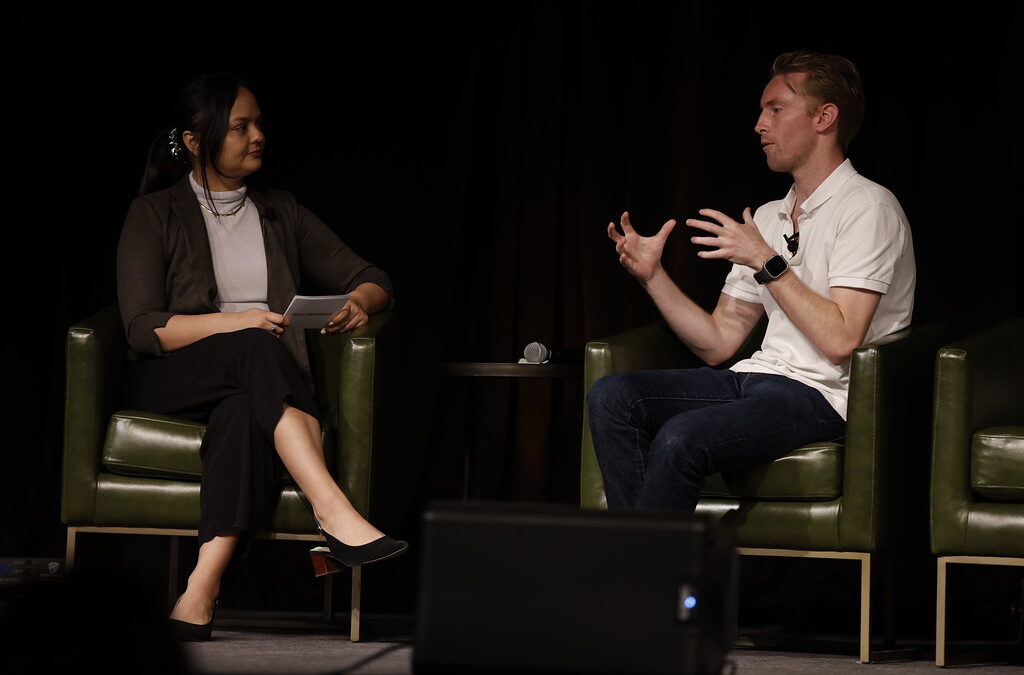
That’s the diagnosis CEOs Zach Rash of Coco Robotics and Keller Rinaudo Cliffton of Zipline made during the “Future of Delivery” address May 5 at the 2026 Food On Demand Conference in Dallas, where they discussed their companies’ growth and sat down with FOD managing editor Bernadette Heier.
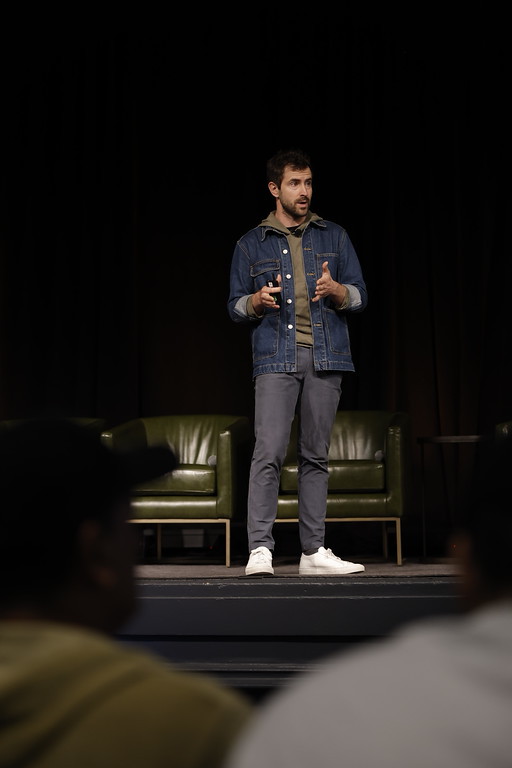
During the “Future of Delivery” address at the 2026 Food On Demand Conference in Dallas, Zipline CEO Keller Rinaudo Cliffton said the company plans to expand service to Austin, Texas, and Phoenix by the end of the quarter, and another six major metro areas by the end of the year.
The CEOs said autonomous delivery addresses the largest headaches on food delivery faced by both consumers and restaurants. After years of building technology and infrastructure capable of carrying out their AI-powered ambitions, the company leaders said their companies are ready and positioned to transform delivery and commerce as a whole.
“There are about 5.5 billion instant deliveries happening in the U.S. every year via a 4,000-pound gas combustion vehicle driven by a human,” Rinaudo Cliffton said during the address. “If you were to look at the buying behavior that we’re observing in customers right now in Dallas, and expand that to the rest of the U.S., there would be 55 billion instant deliveries happening in the U.S.”
Rinaudo Cliffton reported a massive wave of consumer adoption of Zipline in the Dallas area, where the company spent much of 2025 scaling operations to serve 22 municipalities. Last month, the drone delivery platform launched operations in Houston, with Austin and Phoenix expected to join the list of service areas by the end of the quarter, and another six major metro areas to follow by the end of the year.
Rash described Coco’s key target service areas as dense cities, where food delivery congests streets already congested with traffic and strained for parking. The robotics company already serves seven cities with diverse climates, including Miami and Chicago, but expansion is set to reach dozens of cities between this year and next.
“We’ve done over a million miles of deliveries in city environments around the world,” Rash said, noting the brand has a quickly growing fleet of robots already numbering well into four figures. “We work with almost 5,000 merchants at this point, that’s across grocery chains, mom and pop restaurants and some of the largest enterprise brands in the world.
While Zipline and Coco take different paths to deliver orders autonomously, both see severe weather as an opportunity rather than a roadblock to servicing consumers.
“Everyone wants to get things delivered when it’s miserable to walk outside, even if the place you’re ordering from is actually quite close to you; it’s a cold and miserable experience,” Rash said. “There’s this supply and demand mismatch that happens on the major delivery app today, and Coco aims to be the best partner for those sorts of conditions, which means we can get really good at solving a lot of hard engineering problems to deliver on a great experience.”
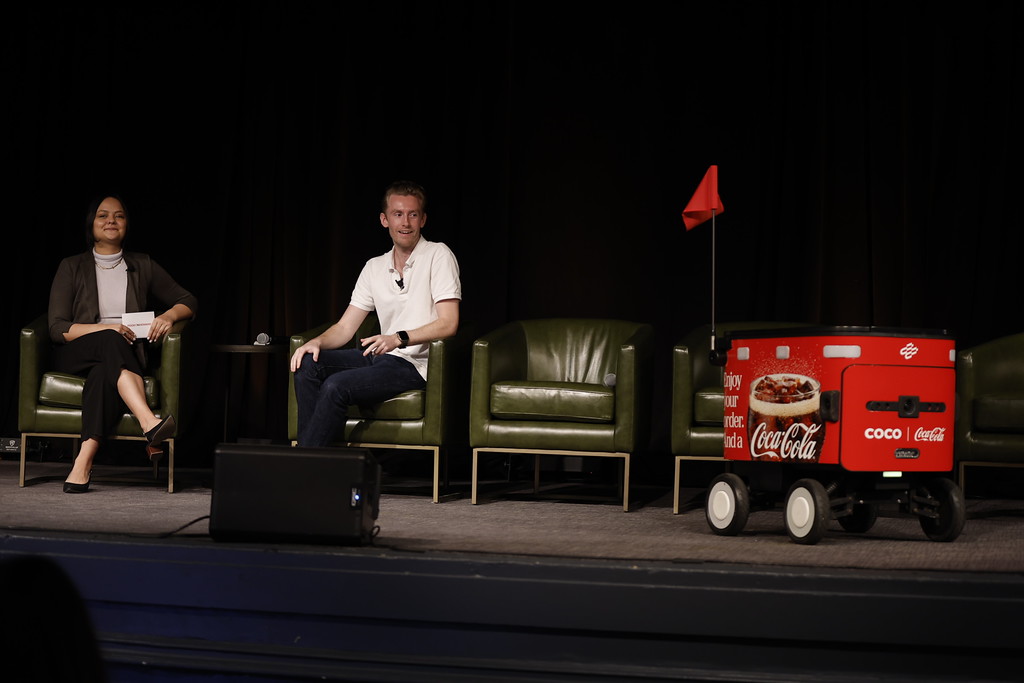
Coco Robotics CEO Zach Rash (right) looks at a delivery robot vision for the future of autonomous delivery with Food on Demand managing editor Bernadette Heier at the FOD Conference May 5 in Dallas.
For Coco, navigating those conditions means robots capable of trudging through flooded areas and dense snow. For Zipline, weather resistance means drones that can fly through hail and heavy rain.
“The challenge of building autonomous vehicles that operate reliably in the real world is that a lot of weird, extreme stuff happens in the real world,” Rinaudo Cliffton said. We actually ended up flying in hurricane-level winds a month ago.”
“This system is designed to handle all of this and ultimately operate 24/7/365, in a way that people can count on, day in and day out,” he added.
Beyond a willingness and capacity to deliver when human couriers prefer not to, both companies see a simple onboarding process with operators as crucial to expansion.
“When you enroll to start having your deliveries fulfilled with Coco, the robot arrives, your staff just comes outside, lifts the lid, puts the order in, and it goes on its way,” Rash said, noting an intentionally simple setup process with no costs for the operator.
Rinaudo Cliffton said Zipline followed a similar emphasis on simplicity, noting that the approach makes integration a more obvious decision for operators.
“None of the restaurant brands we work with want to do any kind of construction project or really want anything to do with drones, the FAA, or anything complex with technology,” he said. “All they want is teleportation. They want a magical portal in the wall (where) you make food, pass it through the magical portal and it’s immediately teleported directly in that moment.”
That magical portal Zipline uses is an in-house-designed product called “drop boxes,” an order drop-off space that can be installed outside restaurants without requiring power or permitting.
“We can deploy these drop boxes in just a few hours,” Rinaudo Cliffton said. … “Most of the new drop boxes that we’re doing, especially with the Chipotle and a lot of other brands, we’re now doing through-wall loading. So we actually attach the drop box directly to the wall, and then they can load the drop box without leaving the restaurant.”
Both CEOs said autonomous delivery methods have quickly gained traction among diverse demographics, with Rash recalling parents who insist on using Coco for delivery orders, and Rinaudo Cliffton mentioning the popularity of Zipline with nursing homes.
As companies expand, the solutions they offer will become more evident and increasingly available. The coming year, the CEOs predicted, will be one of skyrocketing adoption for autonomous delivery.
The 2026 Food on Demand Conference runs through Wednesday, May 7, at the Renaissance Addison Dallas Hotel.