Contributing editor, Peter Backman, is a long-term foodservice sector guru and founder of theDelivery.World, a platform that connects the delivery sector and makes sense of the myriad changes and challenges that affect the sector across the globe.
Autonomous delivery has been two years away for about a decade. But that description is becoming harder to sustain. The technology has crossed from experiment into commercial operation, the volumes – while still small – are growing rapidly, and a regulatory divergence between East and West is opening that could determine which markets industrialize the transition first.
The most instructive data comes from China. By December 2025, Meituan had completed 740,000 drone deliveries across 65 routes – up from 450,000 across 53 routes at the end of 2024, growth that was driven in part by an April 2025 milestone: a single national operating certificate from China’s Civil Aviation Administration, the first issued anywhere in the world, authorizing drone logistics across the entire country without route-by-route approval. Alongside its drone program, the company has accumulated nearly five million cumulative deliveries by autonomous ground vehicle. It has also expanded internationally, launching drone delivery in Dubai in December 2024 and Hong Kong in March 2025.
Elsewhere the picture is similarly uneven but directionally consistent. In Europe, Irish startup Manna has completed more than 250,000 drone deliveries, primarily in Dublin, and has since partnered with both Deliveroo and Uber Eats – the latter deal, struck in February 2026, marking Uber’s first drone deployment on the continent. Manna’s CEO claims it is the only drone delivery operator to have reached profitable unit economics, driven by high-frequency, short-radius coffee and food orders.
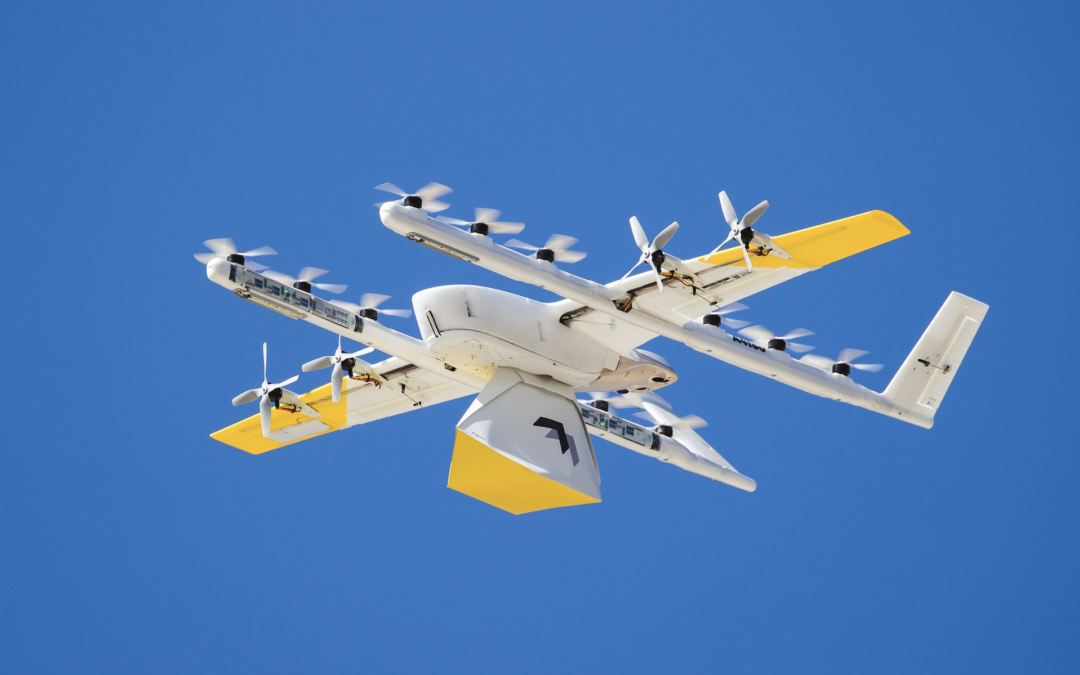
In the US, Alphabet’s Wing has passed 400,000 commercial deliveries across Dallas-Fort Worth, Atlanta, Australia, and Finland, with volumes tripling in the second half of 2025, and is expanding to 150 additional Walmart stores. Amazon Prime Air remains more limited in footprint than its investment suggests it should be.
The regulatory picture is the most telling variable. Meituan can now scale nationally in China under one certificate. The EU’s U-space framework – fully operational across multiple member states from 2025 – offers Manna and others a single regulatory passport across the bloc, a meaningful structural advantage over the FAA’s market-by-market, route-by-route approval model. That the Manna/Uber Eats deal is beginning in Ireland before expanding to other European cities reflects exactly this portability. Wing’s experience in the US illustrates the contrast: the Bay Area, where it recently launched, sits under some of the most restricted airspace the FAA assigns. Regulatory complexity will shape the geography of adoption as much as the technology itself.
For restaurant operators, the near-term implication is indirect but real. Autonomous delivery does not yet displace riders at scale – the volumes are still too small. What it does is begin to establish an alternative cost structure that platforms can point to in conversations about commission sustainability.
If a meaningful share of short-radius, high-frequency deliveries can eventually be handled without a human courier, the per-delivery economics of the entire model shift. How quickly that happens depends less on the technology, which is largely proven, than on the regulatory and infrastructure decisions now being made – and made very differently in different parts of the world.