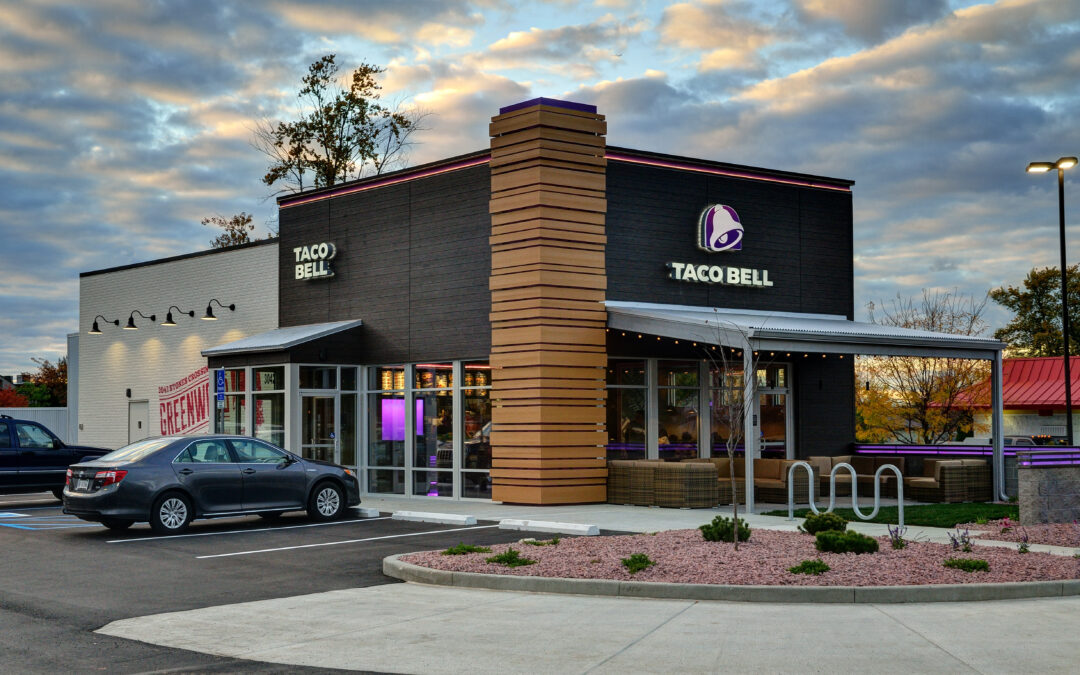
Taco Bell was an early adopter to using voice AI in its stores. But now it’s going through a rethink.
In an interview with the Wall Street Journal, Taco Bell’s chief digital and technology officer Dane Mathews said the brand is reconsidering how it deploys the technology. He indicated that the busier of its locations may benefit from a human handling orders.
The chain had been in the process of introducing voice AI in the drive-thru in hundreds of its domestic restaurants. But it’s had hiccups. A social media prankster tried to order 18,000 water cups and glitched out the system. That spooked company executives.
Of course Taco Bell isn’t the only brand that has voice AI not perform perfectly. Wendy’s had some well-publicized snafus. And consumers of many brands complained about botched orders and slow service. McDonald’s even pulled its drive-thru test altogether.
But Justin Foster, co-founder and chief research officer at Incept AI, advises against panic.
“A lot of problems are in utterance management,” he said in an interview. “What is an utterance? What is not an utterance? It can be difficult for a voice AI system to discern all the voices and noises coming from a vehicle. And there are acoustic echos.”
It can make the much-ballyhooed promise of labor savings hard to realize.
“For operators who are looking for labor savings, like pulling people off the floor, you really can’t do it,” he said.
Yet Foster says tech solves are on the way.
“We have scientists who specialize in audio process and are working on these issues,” he said. “We want the tech to operate in noisier environments.”
By the sounds of it, progress is halfway there.
“There’s a fairly basic piece of technology that can be used for measuring energy levels of speech that’s called voice-activity detection,” he said. “It can do a fairly decent job of picking out who’s closer and who’s further away, and which volume is louder and which volume is quieter. It’s not always the case that the loudest voice is the voice that you should listen to, although most of the time it is.”
Taco Bell maintains that it’s not giving up hope. “We remain focused on learning, improving, and scaling the technology, and are confident that both team members and customers will continue to benefit from these innovations,” it said in a statement to Nation’s Restaurant News.
Foster thinks that’s the right play.
“Voice AI gets better with the more data it’s trained on,” he says. “It’s choosing to iterate accuracy over a much larger data set.”
It’s important to be mindful that voice AI solutions are not one size fits all.
“They’re not created the same,” he said. “Whoever can crack the tough last-mile problems will come out on top.”