Suzie Tsai is candid about the state of her brand’s tech stack.
The CEO of Bonchon Korean Fried Chicken noted a recent meeting with a restaurant industry expert who bluntly told her the brand’s tech stack was bad, to which Tsai said, “I agree.” In her view, Tsai is OK with it, as any move to further digitize a restaurant has to be heavily considered.
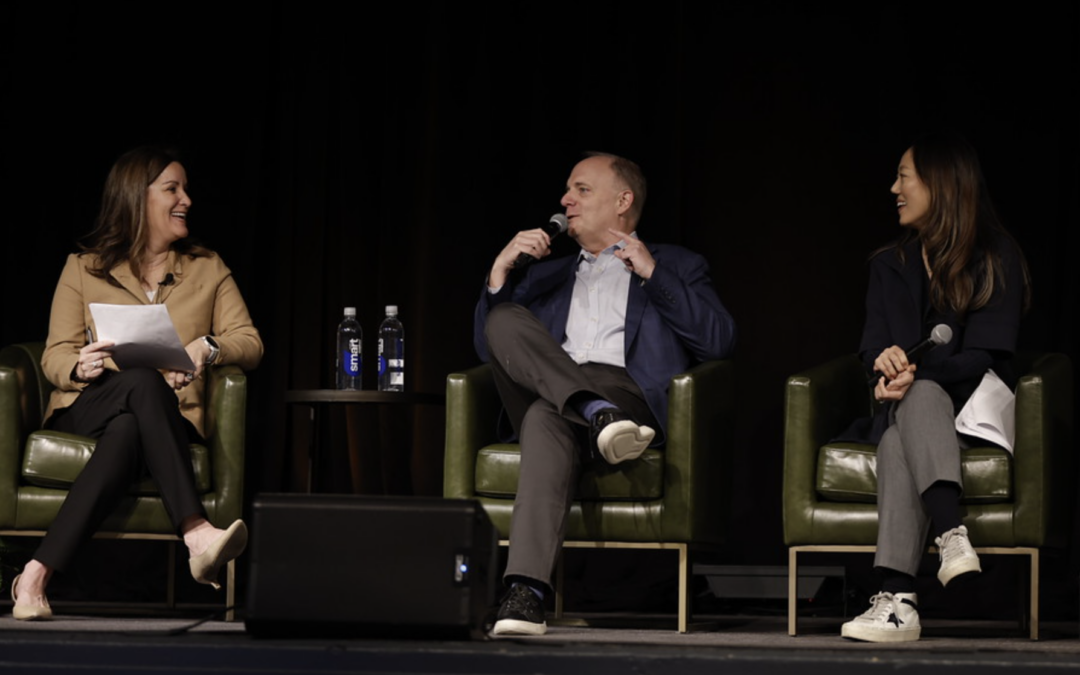
Tsai shared her experience with Bonchon interacting with industry changes during a discussion at the 2026 Food on Demand Conference, where she was joined by La Madeleine Bakery & Café CEO and President John Dillon. The conversation was moderated by Emily Williams Knight, CEO and president of the Texas Restaurant Association, who asked both brand leaders about how they’re handling those changes.
“Tech is so hard for us,” Tsai said during the session. “It’s a hard, expensive decision, and it feels like it’s one of those things that if it’s not done well, you’re not sure what’s on the other side, and then you’re constantly chasing to integrate or make it work. We haven’t provided some tools to our franchisees yet, because we’re not really sure if it’s going to truly make their lives easier, or if we feel like we have to do it because everybody’s using it.”
Instead, Tsai said Bonchon is adopting new technology at a slower rate, implementing new technology when it either serves the owner or the guest. An example where the brand moved forward is in implementing kiosks. The Korean fried chicken concept, which has 400 locations across eight countries, with 150 in the United States, now has kiosks at about a third of its units.
“They’re doing very well,” Tsai said. “They’ve shown to have higher check averages than the cashier. Our menu can be a little daunting, and there are some things you might not know how to pronounce. So, it helps our guests when they have that time to scroll through items.”
Dillon has a similar approach, particularly with the rise of more AI platforms available to restaurants.
“It’s hard to not chase the shiny object, because there’s a lot of them out there,” Dillon said. “The litmus test I put on it is what’s going to make the life of our café manager better? I’m not just going to give them a bunch of data. I want to show what we need to actually do with that data, and that’s where AI can come in.”
While Dillon considers what technology to incorporate for La Madeleine, a brand founded in 1983 with nearly 100 locations, he said it also must be weighed with maintaining the concept’s personality.
“I classify La Madeleine as a legacy brand,” Dillon said. “Like many legacy brands, there are periods in its history when it’s been a little bit asleep at the wheel. There are legacy elements we need to lean back into now while we modernize. There’s a way to do that, which is, don’t forget who you are. We’re working to go back to the DNA of the brand while modernizing at the same time.”
Tsai added the journey is similar at Bonchon, with leadership at the concept pushing to improve the product.
“We’ve been working with our franchisees on improving our core menu, doing the fried chicken well and preserving what we’re known for and what our guests love us for,” Tsai said. “In the last nine months, we’ve seen positive traffic and positive sales in double digits. I think that’s all driven by the food. No matter where the industry goes, we have to make the food right for the guests.”
That’s true for each brand regardless of how the customer orders their meal, and where they eat it. The majority of Bonchon’s business, 55 percent, takes place on digital platforms, and 75 percent of those orders are for off-premises. That has meant building strong ties with third party companies.
“For us, we’ve really just looked at how people wanted to consume our food and said third party is something we have to embrace, not only as a channel, but as a partner and an investment,” Tsai said. “You have to approach it in a way where you can manage it and use it to your advantage, even with all of the costs involved. We made it very intentional to partner with third parties. You have to make this channel right for your business, which can be expensive, but we’re seeing double our traffic on those channels.”
“When you think about our brand, you think about the dine-in occasion,” Dillon said. “Gathering around the fireplaces our cafes have. We’re very much a hospitality-focused brand. We’re seeing traction with dine-in traffic, but you’d be surprised at our off-premises numbers, which is about at 50 percent.”
The key, Dillon said, is translating the essence of the brand into the off-premises channels. While he said Le Madeleine has handled its delivery capabilities well, he noted it’s still a complex field to navigate.
“In the eyes of an operator, it’s still a tough conversation to have with the franchisees,” Dillon said. “Almost every day I speak with them on profitability of third parties. Speaking as an operator to the providers in the room, please continue to help us with that, because it’s something that needs to keep being a win-win, because both of our businesses depend on it.”
Tsai, meanwhile, said the delivery conversation also extends to what kind of locations franchises are opening.
“You think about building these restaurants and the franchisees who’re investing a lot of money to build them, and at the end of the day, you’re not always serving the guest inside,” Tsai said. So, what are you really building? There are a lot of things we have to reconsider on what this restaurant is in our world now.”
Some of those changes have been implemented at Bonchon, such as making locations with smaller front-of-house areas or making space for delivery. However, those changes aren’t happening in the back of the business.
“We said that we cannot change our kitchen size or the way we execute.”
The 2026 Food on Demand Conference runs through Wednesday, May 7, at the Renaissance Addison Dallas Hotel.