Having a loyalty program is no longer a differentiator, noted Olga Lopategui with Restaurant Loyalty Specialists, which helps optimize loyalty for restaurants. Where restaurants can gain ground is in the effectiveness of those programs—and understanding the gaps in retention and usage so they can identify a solution.
Alex Stucky, the director of digital marketing at Freddy’s Frozen Custard & Steakburgers, said when he joined the brand about 18 months ago, he set up a “leaky bucket report.”
“That’s the eternal brand question—am I losing customers faster than I’m filling the holes in the bucket?” he said. It’s important to analyze loyalty data from quarter to quarter or even more frequently, he continued, to gauge things such as frequency, churn rate, reactivations and more to formulate solutions.
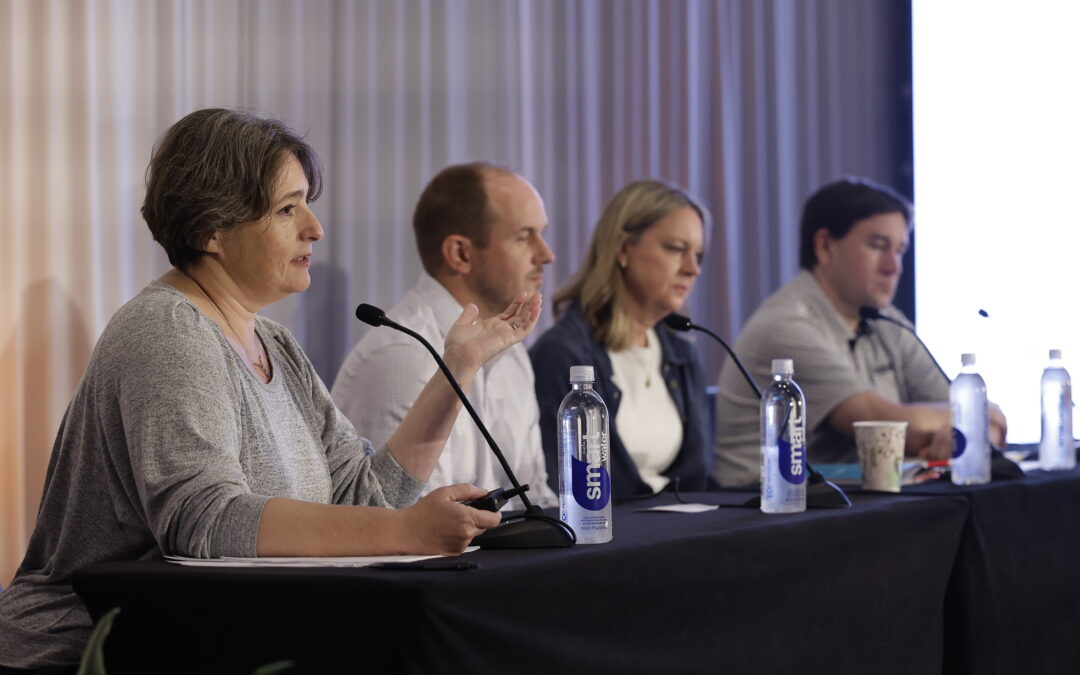
Speaking today at the Food On Demand Conference in Dallas, Stucky and Adam Porter, senior director of marketing at sandwich franchise Cheba Hut, stressed that with finite resources, they need to focus on using their loyalty programs to truly drive repeat visits and better engage with lapsed customers.
“There is a huge gap between what loyalty marketers want to be doing—which is personalization, omnichannel experiences, a scientific approach to getting the ROI on the campaigns—and the real reality of what most brands are doing,” pointed out Lopategui, who as part of her research interviewed roughly 50 chief marketing officers, vice presidents and marketing directors, and found a major disconnect between a marketer’s aspirations and the operational reality.
While there are loads of new tools, and vendors are promoting their latest artificial intelligence-powered platforms, the complex and often fragmented nature of many brands’ tech stacks means it can be difficult to layer in more technology—even if it would purportedly grow sales. At 580-unit Freddy’s, Stucky said he hasn’t implemented a marketing automation platform, for example, because the pace of change could mean an investment quickly becomes outdated.
“Everything’s moving so fast, and everything’s changing so quickly, I’m almost afraid to onboard with a new partner, because it’s like, what’s going to change in the next three to six months that will make that obsolete?” he said. “We’ll get there … we’re not there yet.”
Porter said for Cheba Hut and its 84 locations, it’s better for him to talk to his current vendors to see where AI adoption and integration, for example, are on their roadmaps, instead of bringing in a new supplier.
At The Melt, a 20-unit fast-casual concept based in California, Leslie Wilson-Lopez said she’s testing smart targeting and smart campaigns with third-party delivery partners at two restaurants to understand the potential return on investment before rolling it out to the system.
“We want to make sure that our ROI is where it needs to be,” said Wilson-Lopez, The Melt’s director of digital marketing. “And with the smart tools, it takes a little bit of time for the smart tool to actually do what it’s supposed to do.”
Before they let AI agents loose within their loyalty programs, the panelists said they need to be capable of setting up guardrails within those systems so, for example, the AI doesn’t hit the same customer with 10 different campaigns or offer discounts that wouldn’t be profitable for operators.
When it comes to loyalty overall, ease of use for customers, emphasized Porter, ultimately has to be at the forefront. “If you make things too complex, you’re going to eliminate a vast majority of your audience that would participate,” he said.
The 2026 Food on Demand Conference runs through Wednesday, May 7, at the Renaissance Addison Dallas Hotel.