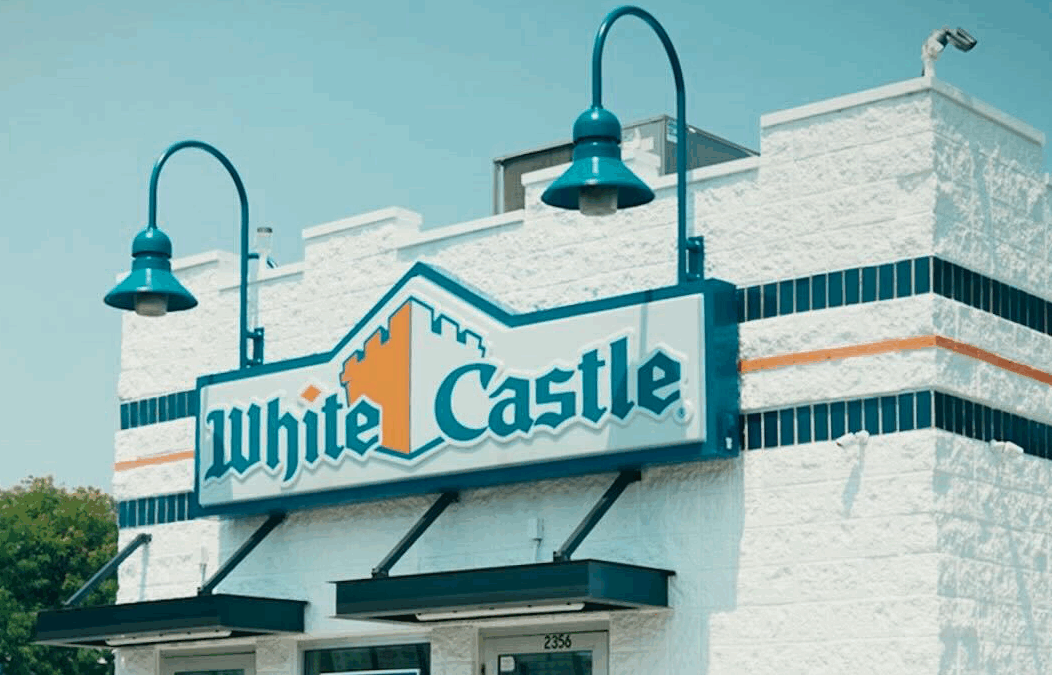
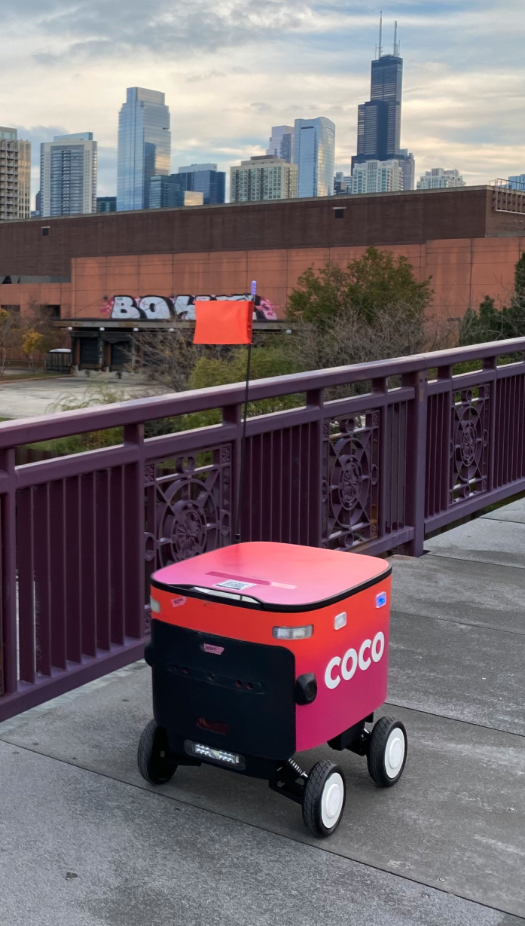
This marks the 101-year-old chain’s first foray into robotic delivery, through Coco Robotics.
“By testing Coco’s robots at a high-traffic location, we’re seeking to ease congestion, speed up service, and allow our team to stay focused on quality, helping us serve more customers, more efficiently,” said Chris Shaffery, vice president of operations at White Castle.
The move is made possible through an integration with Uber Eats. Once the bot arrives, customers receive an app notification to meet outside, unlock the secure lid, and retrieve their food.
 The chain, known for its sliders, is no stranger to automation. It was one of the first major brands to deploy Flippy, the robotic fry cook by Miso Robotics.
But tapping sidewalk-delivery robots is a new venture for White Castle. Chicago, though, is already used to seeing Coco’s bots roll around. It first began delivering there earlier this year through DoorDash.
Since its launch in L.A. in 2020, Coco has completed nearly 500,000 deliveries for restaurants. It has expanded internationally, making deliveries in Helsinki, Finland.
In a previous interview, CEO Zach Rash explained how it has spent the last few years fine-tuning the tech.
Originally, Coco’s sidewalk delivery bots were tele-operated, meaning a human oversaw the navigation remotely. The bots are now “hybrid,” meaning they operate autonomously but are still supervised by a human operator.
Checkmate simplifies operations
White Castle’s latest team-up with Uber Eats just got a boost with a new integration with Checkmate, a restaurant tech platform. It connects in-store systems with its Uber Eats setup, so menus, pricing, availability, and orders all stay in sync in real-time.
“With our platform, restaurants don’t need to manually update or reconcile online orders. Everything is automated, from the menu to the kitchen to the delivery handoff, even when autonomous bots are in the mix,” said Amit Solanki, VP of engineering at Checkmate.
Coco is part of a competitive field that includes Serve Robotics, Cartken, Starship, and Avirde, among others. The company continues to truck along, it recently raised $80 million in funding in June, boosting its fleet size.