While quick service restaurants have long used customer satisfaction surveys to gain insight into guest experiences, recent research indicates that the method often paints a different picture than patrons actually encounter.
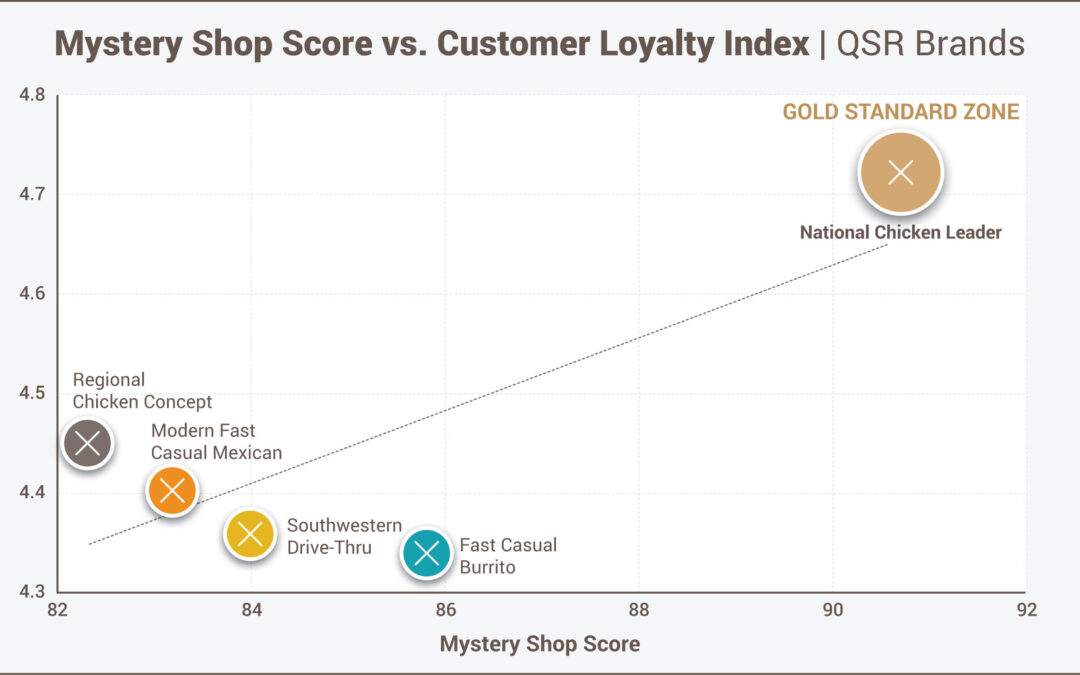
Market Force, a Georgia-based customer experience management platform, compared thousands of consumer rankings from its 2025 QSR benchmark study with data from mystery shoppers across five leading brands. According to a Nov. 19 press release, the results showcased that even brands with favorable reputations can be undermined by a lack of consistent execution.
A national chicken brand known for industry-leading sales volumes earned the rare distinction of landing in what Market Force dubbed the “Gold Standard Zone” — an alignment of perception and performance. However, the research showed that other brands had promising customer sentiment but suffered from weaknesses in key operational drivers, such as service speed, order accuracy, and value.
According to David Murray, Market Force’s senior director of customer experience strategy, the gap between customer sentiment and their actual experiences has significant implications concerning growth and profitability.
“Every operator measures guest satisfaction, but that only tells part of the story,” Murray said in a statement. “Independent performance validation helps leaders understand whether their brand promise is actually being delivered at the unit level—and that’s what protects market share and drives long-term growth.”
The data, according to Market Force, reinforces that consistent, measurable execution sustains brand perception and financial performance, and brands that independently validate their performance are better poised to preserve revenue and reputation.
Similarly, 2024 reporting from Forbes shared customer satisfaction surveys attracted a skewed audience of participants: Guests are more likely to complete a survey if they experience positive service. Meanwhile, 42 percent of customers said they choose not to complete surveys after a poor experience to avoid further interactions with the company or brand.
Additionally, Forbes found seven out of 10 customers assumed companies would not make adjustments as a result of their feedback, disincentivizing them from providing assessments. Still, a majority of people are willing to participate in satisfaction surveys under the right circumstances; just 14 percent of respondents said they rarely fill out surveys, and only 4 percent shared that they never do.
Although customer satisfaction surveys may lack complete accuracy in capturing guests’ experiences, Drive Research outlined that understanding such metrics is crucial to meeting and exceeding consumer expectations.
Measuring customer satisfaction, according to 2025 information from Drive Research, helps businesses identify areas for improvement, retain customers, attract new customers and maintain an advantage over competitors.
Thus, despite the shortcomings of customer satisfaction surveys, the potential value provided by their insight may be enough to outweigh the downsides of skewed results, particularly when performance validation is conducted independently.