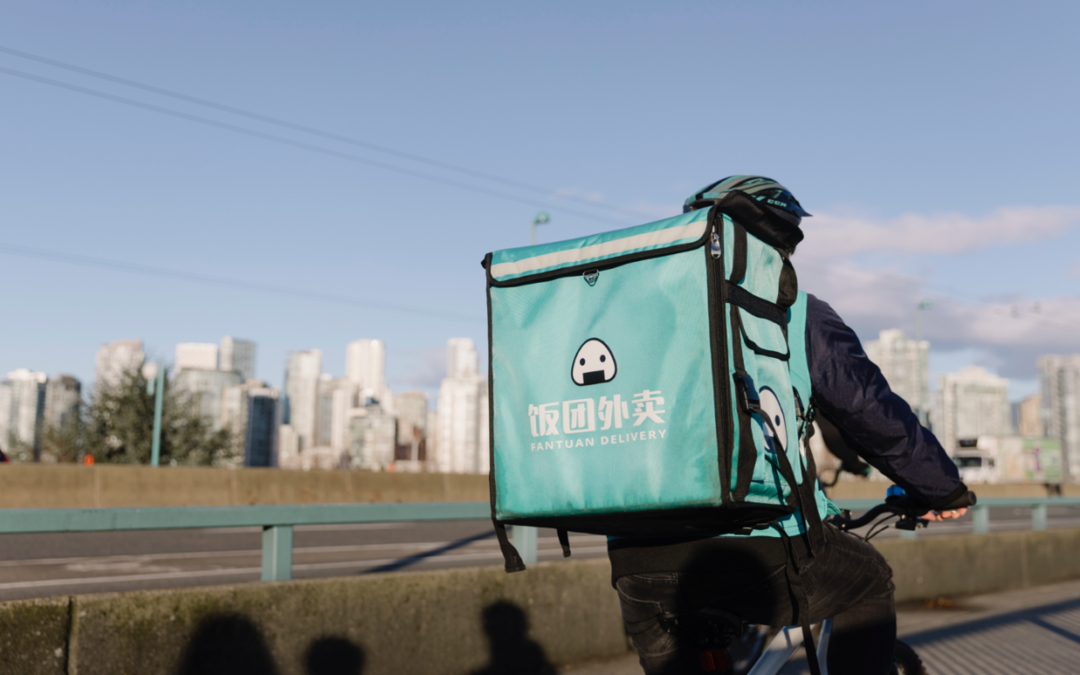
Even with 5 million users across four countries, Fantuan is a relatively small player in the third-party delivery space compared to giants like Uber Eats and DoorDash, which capture sizable market share.
Still, as the largest Asian food delivery platform in North America, Fantuan has something its mainstream competitors lack: a niche. Since its founding in 2014, the Canada-based company has leaned heavily into serving Asian immigrants and international students — a strategy that proved successful, garnering users through expansions into the U.S., U.K. and Australia.
The platform’s primary advantage over competitors is its diverse and authentic selection of Asian partner merchants, according to Crystal Li, Fantuan’s public relations director. She said the sales teams visit prospective partners directly, often speaking to owners of similar cultural backgrounds, to understand the restaurants’ needs and help them onboard.
“Their owners are also immigrants, and they do very authentic Chinese or Asian food,” Li said of partner merchants. “(On) apps like Uber Eats or DoorDash, you will only find a category called ‘Chinese’ or ‘Japanese.’ But on Fantuan, when you open the app, within the Chinese category, you can see tons of different categories, such as noodles, baos, Cantonese or Sichuan spicy.”
Upon entering the U.S. market in 2019, Fantuan built a customer base in large cities like Los Angeles and New York, then expanded to most large metropolitan areas across the nation, as well as college towns with plenty of international students. Li said the size of Asian populations and the density of Asian restaurants were the two most significant factors when determining expansion.
“Our largest user base is definitely the local Asian communities,” Li said. “Fantuan has both the Chinese and English interface, so we have around 15-20 percent of English app users. … There may be other Asian ethnicities, such as Japanese, Korean and Vietnamese; there are also second generations of Asian Americans or Asian Canadians.”
Fantuan is not alone in catering to a delivery platform around Asian cuisine to its avid consumers. London-based Hungry Panda, for instance, boasts over 8 million users and more than 120,000 partner merchants globally. However, Li said Fantuan’s longer timeline in North America gives it an advantage.
“We do have some very similar competitors, but for us, I think one of the biggest differences is that we’ve always been in North America,” Li said. “We have been in Canada and the U.S. for a long time, so we are more (able to) tie into the local market here, and we have more restaurant partners.”
Although staples of Chinese cuisine like noodles and dumplings are not always as simple to deliver with quality and consistency as many Western options, Li said restaurants and couriers work around those concerns. She said Fantuan expects Asian food to continue gaining popularity for delivery, even among non-Asian consumers.
“We definitely see Asian food becoming more and more popular,” Li said, using trends she has witnessed in Vancouver as an example. “There is a very large Asian community, and in the Chinese restaurants, you can see people from everywhere. It’s not just Chinese people who are eating Chinese food. So, we definitely see more demand for Asian food.”
In an effort to offer additional services to users, Fantuan has introduced new offerings, such as grocery delivery. The platform is also testing local live services in Canada, which Li said provides Groupon-like discounted vouchers for merchants such as barbershops, nail salons, karaoke bars and other partners who will benefit from consumers visiting them rather than sending merchandise through delivery. Similar features have proven popular in China through apps like Meituan.
Another reason for optimism, Li said, is the recent surge of Asian restaurants expanding to the U.S. and Canada. Fantuan is poised to capitalize on that trend as North American consumers develop an appetite for authentic Asian menu items.
“Another thing we noticed is that there are more and more restaurant brands or chain restaurants back in Asia, like in China, that are actually expanding overseas right now,” Li said. “It will be easier for people here in North America to taste this authentic Asian cuisine, and people may get more and more familiar and accepting of this cuisine.”