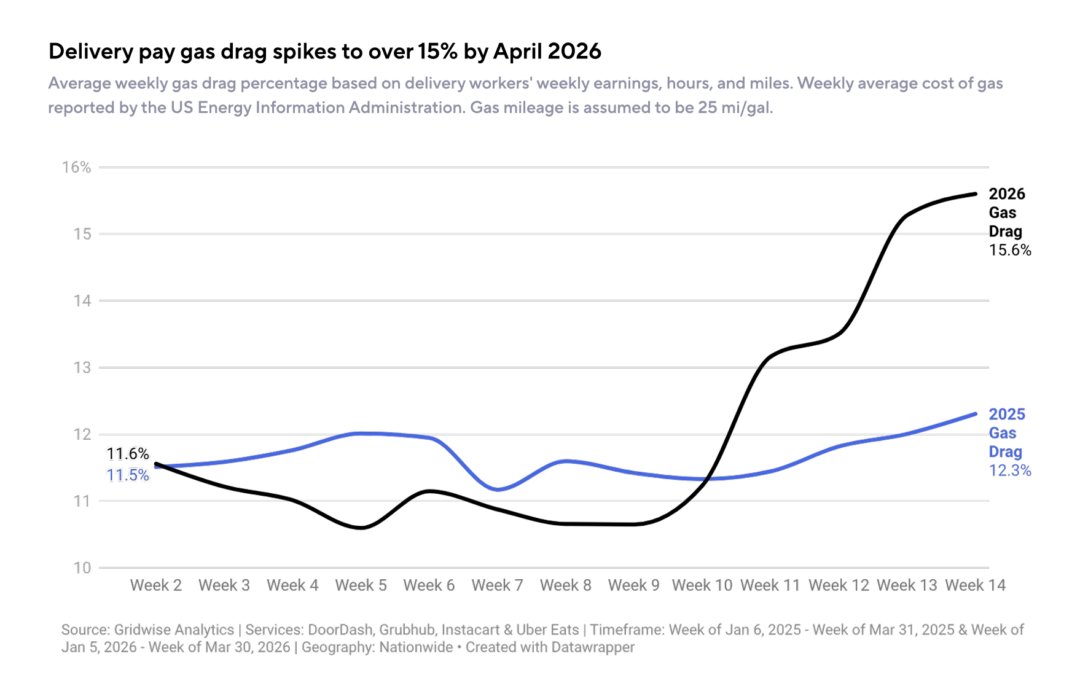
Rising gas prices are taking an increasingly significant toll on the take-home pay of food delivery drivers thus far in 2026, outpacing fuel relief and incentive programs from third-party delivery marketplaces like Uber Eats and DoorDash, resulting in lower net earnings for most couriers.
In March alone, the average price of regular gasoline in the U.S. rose from $3.02 to $3.99. For every dollar a gig economy delivery driver earned, the cost of fuel grew from 11.2 cents to 15.6 cents over the course of four weeks to close the year’s First Quarter, according to The 2026 Gas Report from Gridwise Analytics.
In March, after-gas hourly pay for delivery drivers fell 8.8 percent, from $14.29 to $13.04. The sharp increase in fuel costs throughout Q1 2026 prompted DoorDash and Uber Eats to launch emergency gas relief and weekly incentive programs on March 23 and March 25, respectively.
Since then, gas prices have continued to rise. As of May 18, according to the U.S. Energy Information Administration, regular gasoline nationwide costs an average of $4.49, up 12.53 percent since March 30.
Those weekly fuel relief payouts for drivers from DoorDash and Uber Eats — $5 after 125 miles, $10 after 200 miles and $15 following $250 miles — concluded
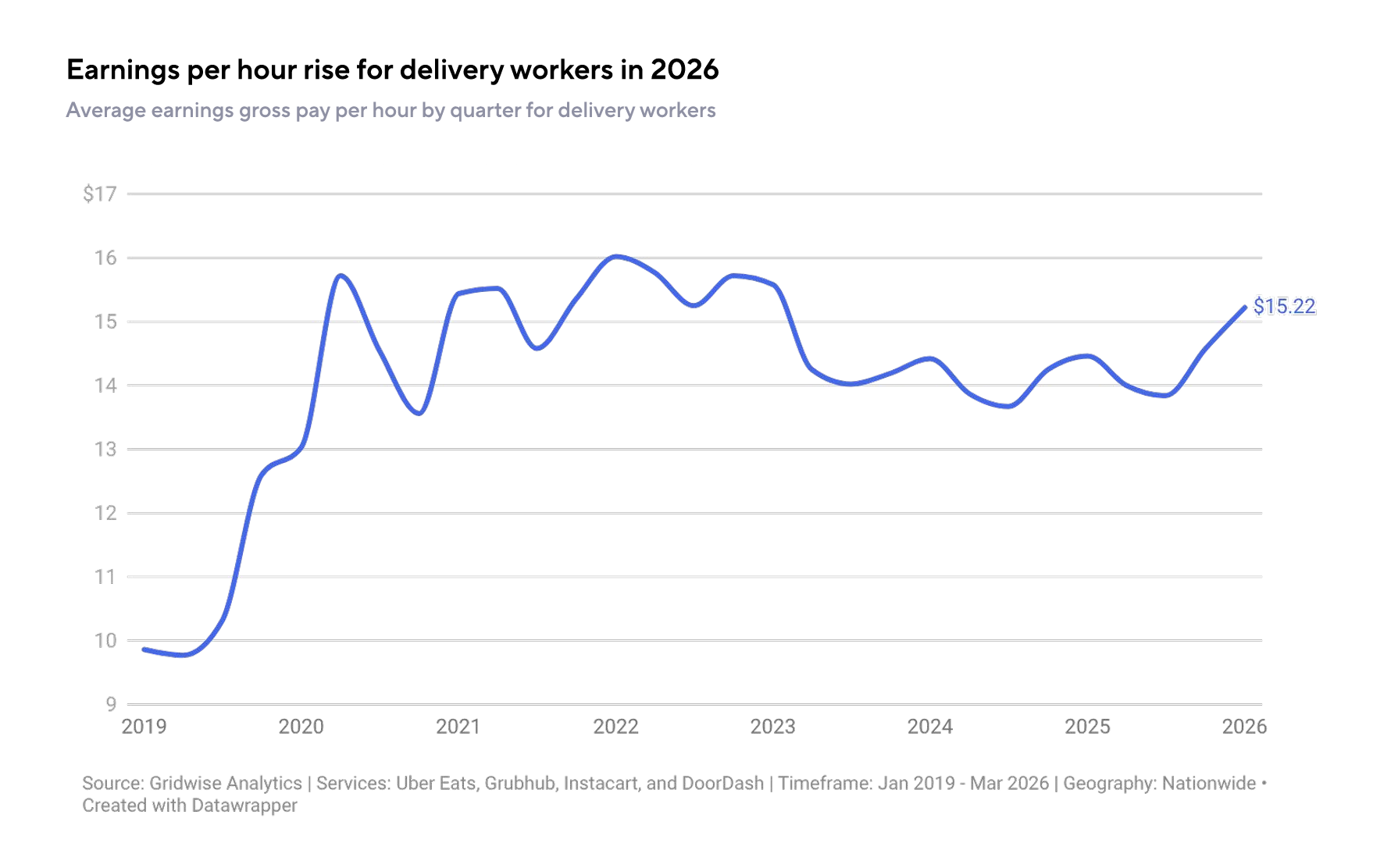
The 2026 Gas Report, from Gridewise Analytics, found delivery gross pay for gig economy drivers peaked around $16 in 2020 and 2022, reaching $15.22 in Q1 2026.
April 29 and May 3, respectively, according to press releases from the platforms. Expanded rebates and discounts through the Uber Pro Card continue until May 26, while the “Cash Back On Gas” offering through the DoorDash Crimson Visa Debit Card was extended to June 30 from an initial program end-date of April 26.
During the weekly gas relief period, Uber Eats’ payouts reached 17.4 percent of workers for the week of March 30, with 8.9 percent of drivers earning the maximum payment of $15. According to Gridwise Analytics, the relief program adoption proved more robust with DoorDash’s fleet, as 40.5 percent of workers collected a payout, with 18.1 percent earning the $15 tier after 250 miles.
Even after the now-discontinued relief programs, fuel costs were primarily absorbed through lower net earnings in the gig economy, especially for high-mileage drivers. The key factor to watch regarding long-term impacts on the 3PD industry, Gridwise’s report concluded, is whether elected fuel costs will start chipping away at driver supply.