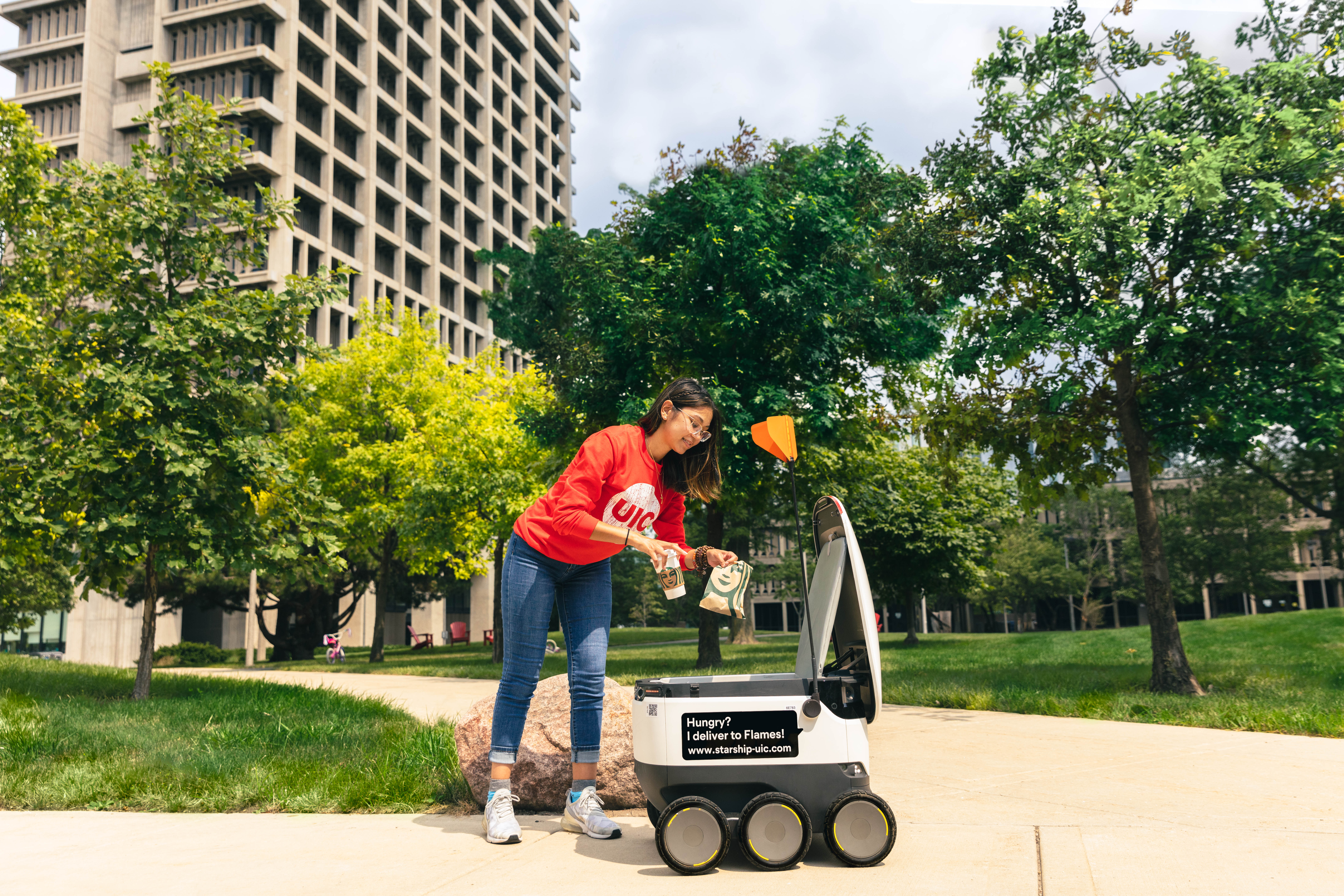
After expanding its delivery network to more than 60 universities across America since 2018, autonomous delivery firm Starship Technologies announced in early June that its fleet is ready to graduate beyond its U.S. university campus operations, pivoting to focus on grocery delivery.
While Starship’s campus partnerships proved fundamental to the company’s growth over the past eight years, co-founder and CEO Ahti Heinla said the opportunity to further scale in the grocery delivery space provided enough promise to wind down U.S. university services.
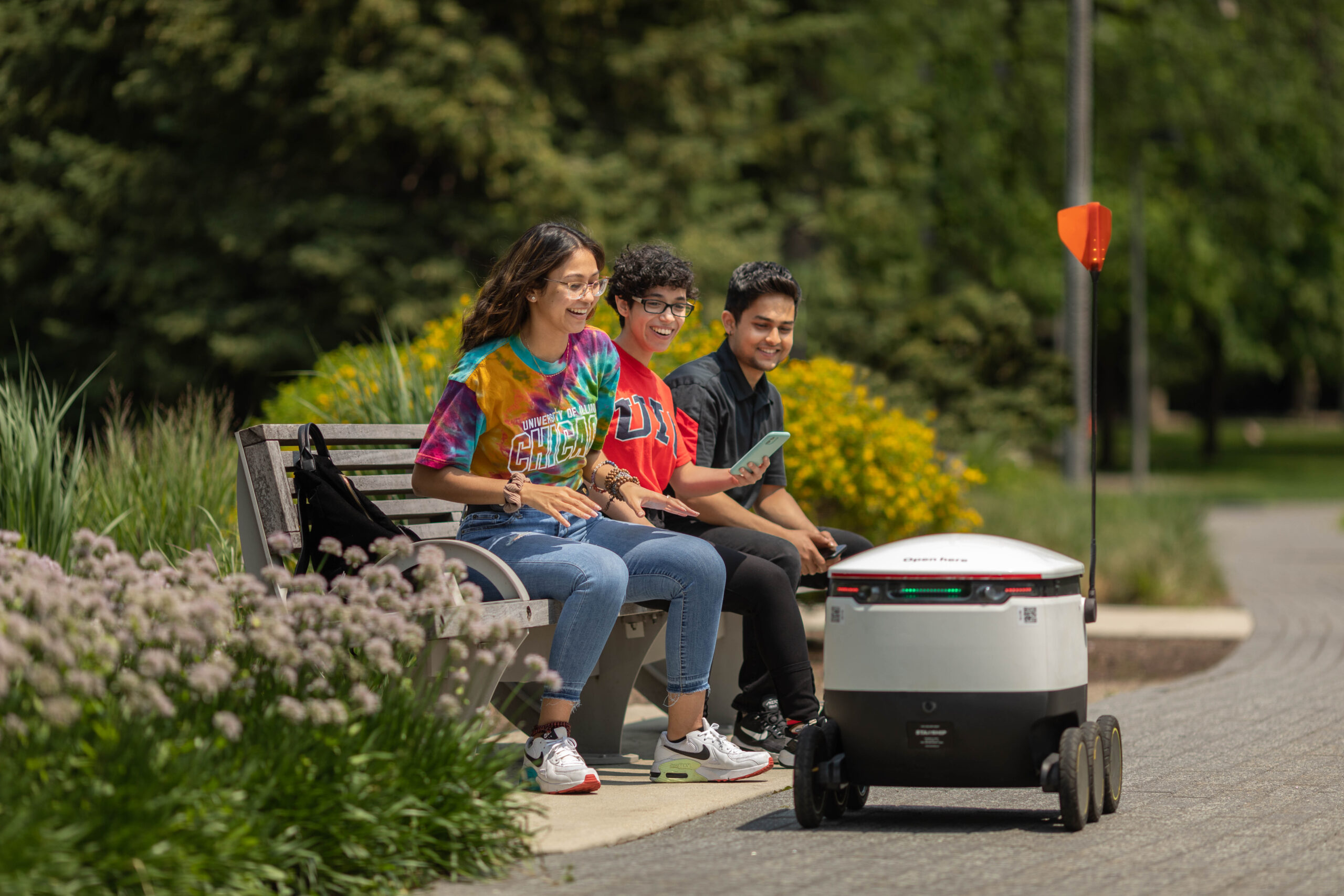
Starship announced plans to wind down its U.S. university campus operations in early June.
“Campus and grocery are fundamentally different operations: One is seasonal and contract-driven, the other is a 365-day urban business requiring different infrastructure, different retail partnerships and a different go-to-market approach,” Heinla said in a written statement to Food On Demand. “The robots transfer; the operational model does not. That’s why we’re focusing where the opportunity is greatest, and for us, that’s grocery.”
As Starship officially winds down campus operations over the coming summer months, the company plans to work closely with university campuses and industry partners for a smooth transition.
Multiple campus partners, including Oregon State University and North Carolina Agricultural and Technical State University, announced the final dates for Starship delivery services on campus as June 11 and June 12, respectively. Neither listed concrete plans to replace the outgoing Starship robots with those from a competitor, such as Coco Robotics or Avride Inc.
“We also know the added convenience of mobile pickup and delivery was a real advantage to our customers,” Stephen Jenkins, executive director of University Housing and Dining Services at Oregon State University, said in a release. “While robot delivery via Starship services will end at OSU this week, we are actively engaged in exploring options for a new solution as soon as reasonably possible.”
In the June 5 strategy shift announcement, Heinla described the company’s services on U.S. campuses as providing “the operational depth and real-world delivery data that no lab could provide,” opening the door to consistent and reliable operations at scale in urban environments.
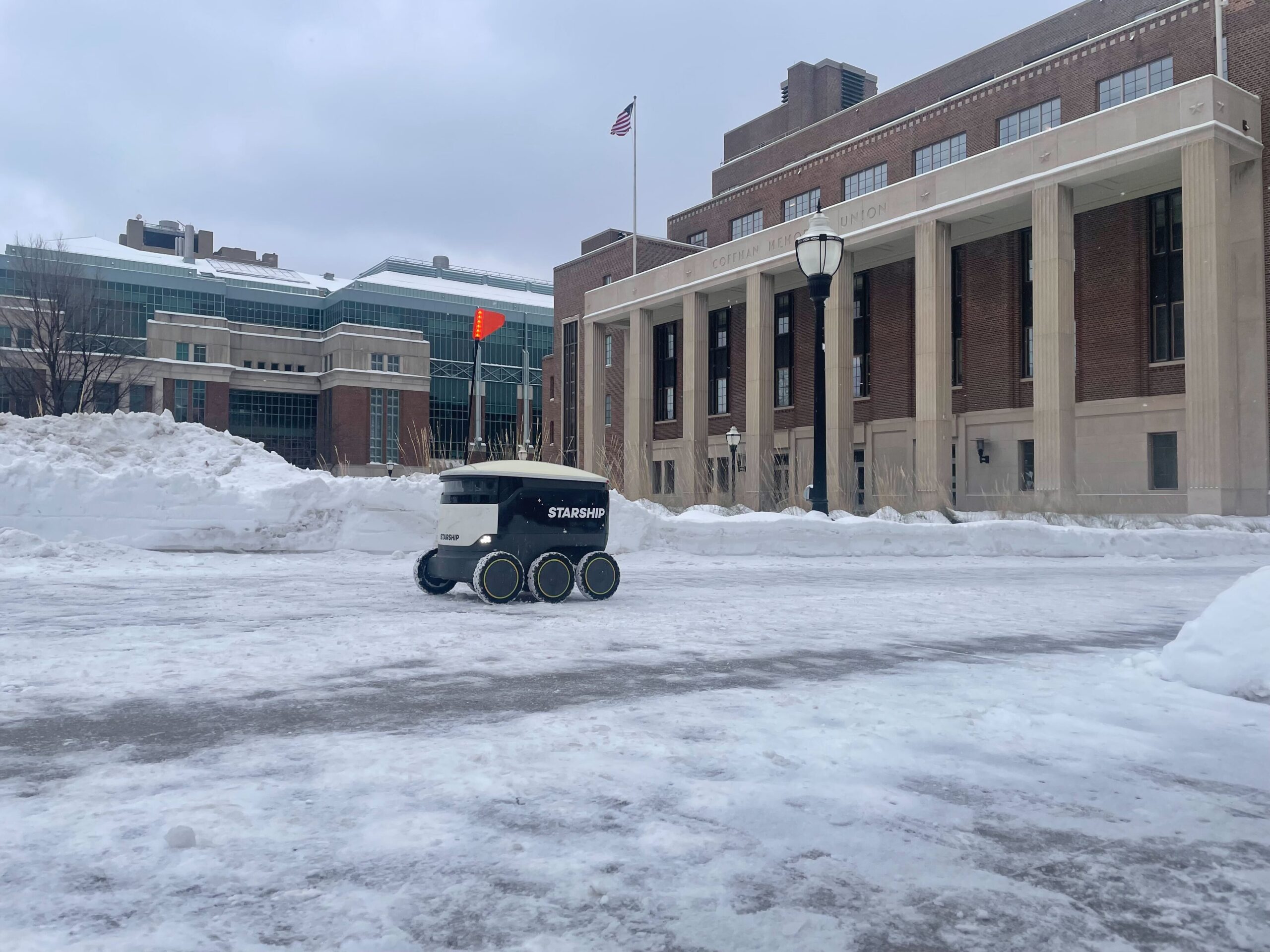
A Starship Technologies autonomous robot navigates the University of Minnesota Twin Cities campus during a delivery Dec. 12, 2025.
Heinla reported Starship is in the process of securing contracts with several major U.S. grocery chains, with announcements on those partnerships expected this summer. About 1,200 of the firm’s fleet (which totals more than 3,000 autonomous delivery robots) served U.S. campuses; some of those will be redeployed to serve those partner businesses, while others are slated for relocation to Europe.
“The unit economics are clear: Our robots deliver groceries at $3-4 less per delivery than traditional courier fulfillment costs,” Heinla said. “That’s the difference between last-mile delivery being a margin drain and it becoming a margin driver, and a competitive advantage.”
The company cited its success with grocery delivery in Finland as inspiration for the U.S. strategy shift. There, more than 800 Starship delivery robots reportedly execute 20 percent of grocery delivery orders.
“The U.S. is one of the largest grocery delivery markets in the world,” Heinla said, adding that growing demand from European and American retailers is fueling a 10x growth trajectory over the next two years. “With several major contracts in progress and announcements coming soon, we intend to be a significant player in it.”
While Starship views grocery delivery as a path to continued growth and market capture, several competitors in the space have expressed similar ambitions. Coco Robotics, for instance, partnered with DoorDash with an emphasis on grocery-related services last November. Similarly, Avride partnered with H-E-B, a Texas-based grocer, last summer for a pilot delivery program.