Editor’s Note: This article is part of our Summer Series, where Food On Demand explores a different topic each month. July’s focus is beverages.
There’s a $1.2 billion beverage-shaped gap quietly plaguing restaurant online ordering channels.
Beverage incidence, or the percentage of orders that include beverages, is about 14 percent lower for digital orders than offline. Josh Gurley, vice president of transformation and strategic growth at The Coca-Cola Company, said that gap represents a significant pain point for operators’ bottom lines.

Josh Gurley, Vice President of Transformation and Strategic Growth at The Coca-Cola Company
Because standard beverage offerings typically yield 80-90 percent profit margins, the trend spells an industry-wide conundrum, especially since digital ordering is only growing more popular with consumers. Gurley said nearly one in five North American restaurant orders last year came through digital channels — up roughly fivefold compared to pre-pandemic levels.
Particularly as food costs rise, wages increase and third-party delivery platform fees squeeze margins, capturing beverage sales has become crucial. Operators are feeling this pressure firsthand.
Gurley points to beverage sales as a major solution to that economic puzzle. “I believe that beverage profitability is one of the answers to the long-range (challenges facing) at least delivery, but definitely off-premise as well, restaurant P&L.”
Gurley noted that a major issue for digital beverage sales is that online ordering channels often duplicate the in-restaurant experience instead of leveraging unique digital capabilities.
“Digital order modes have a significant advantage over more static in-outlet order modes,” he said. “By making them more dynamic and customized, we can leverage the capabilities of technology to both reduce friction and enable relevant recommendations, whereas today’s digital path to purchase is still too similar to the in-outlet experience that assumes the guest knows what they want. These digital guests often spend more and are open to discovery… it’s up to us to make the most of that new behavior.”
While digital beverage incidence continues to lag relative to traditional orders, Gurley said the rate has seen a 10-point boost since 2020.
“We leverage a framework that we call Coke Digital Dine. There are three major components of it: insights, optimization and innovation,” Gurley said. “The majority of what has actually led to that growth has been the insights and optimization lever, especially optimization. Everything that we do starts with data (and) pilots. … Test small, scale as fast as possible.”
Although digital beverage ordering rates have risen since the start of the decade, significant room remains to further increase beverage incidence through digital channels.
The low-hanging fruit for securing more digital beverage orders, Gurley said, center around making beverages more visible on digital menus and more relevant throughout the ordering journey. Internal Coca-Cola research found more than half of guests report they would add a beverage if prompted, which could include bundling or upsell promotions.
“There are basic, foundational elements that work in all order modes that are so often missing in digital ordering,” said Gurley of reasons for lower beverage ordering rates digitally. “Simple images, descriptions and bundles lead to significantly higher beverage growth and don’t require costly promotions to drive profitable sales/AOV.”
Coca-Cola runs experiments with restaurant operators and other industry partners to find effective methods for encouraging beverage sales, and apply those findings across their expansive partners — a network Gurley said includes about 80 percent of the U.S. restaurant industry.
“We’ve run a bunch of those experiments, some of those in scalable ways, some of them one-off,” he said. “We work directly with Uber Eats and DoorDash, investing heavily in media and promotion. But in return for those investments, we are expecting them to optimize the path to purchase in line with those fundamentals to drive that beverage incidence growth, so it’s sustainable.”
One key strategy Coca-Cola uses to garner interest from consumers, particularly Gen Z and Gen Alpha, is leaning into customization.
“That’s what gets really interesting for our restaurant partners,” Gurley said. “If you can start to think about how customization and flavor can really play a role in having somebody come into that incremental mid-afternoon stop for a beverage-led occasion versus a whole meal occasion. … Consumers have looked for customization in all things. Beverage has really stepped up as a new avenue, and we’ve had so much success lately.”
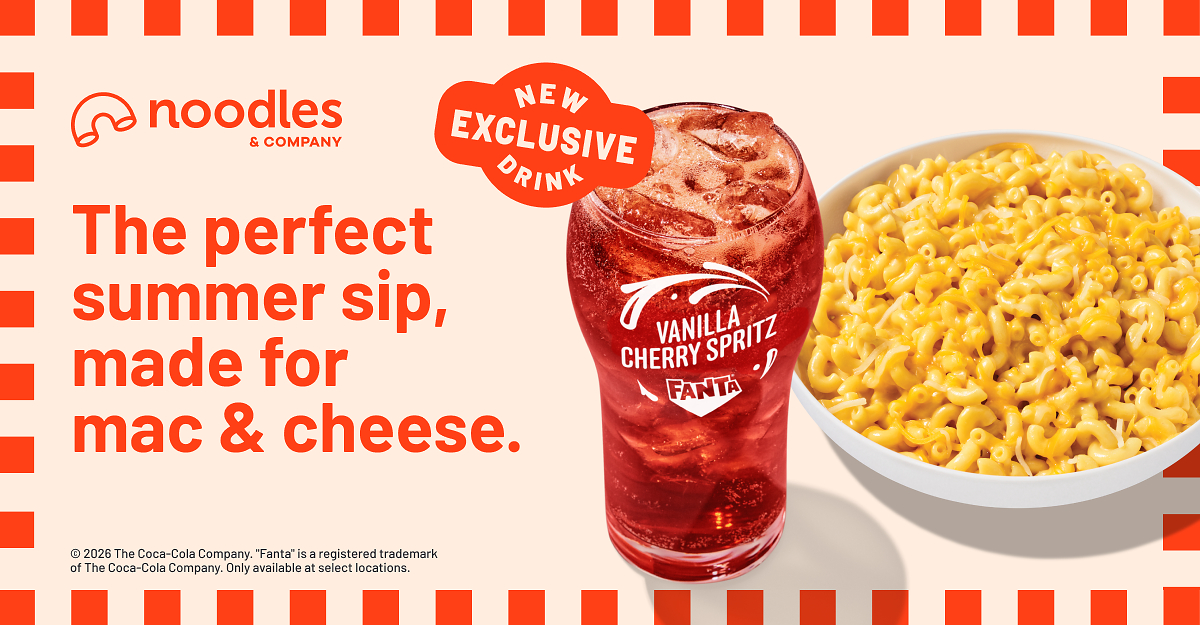
Noodles & Company announced Fanta Vanilla Cherry Spritz as a new menu offering June 24, unveiling an exclusive beverage offering create by The Coca-Cola Company to match the rich and creamy flavors of popular menu items.
Coca-Cola’s freestyle machines, touch screen devices that dispense more than 100 beverage options and flavor combinations, generate consumer data from more than 11 million daily pours. Gurley said that flood of data provides flavorful insight into consumer preferences and helps share special beverage offerings customized specifically for partner brands, including Burger King, Chick-fil-A, Noodles & Company, Wingstop and White Castle.
“You can leverage some of the data to understand the industry,” Gurley said of the Freestyle data. “We then apply those learnings where they make sense across our customer base and bring those insights into every conversation. When you have the breadth of restaurant partnerships that we do, that’s the special sauce. We can connect innovation with equipment, digital capabilities, insights and the best brands in the world.”
That type of strategic approach focused specifically on encouraging beverage orders appears necessary to quench the mounting economic pressure facing operators and refill margins as consumers’ reliance on digital ordering continues to grow.