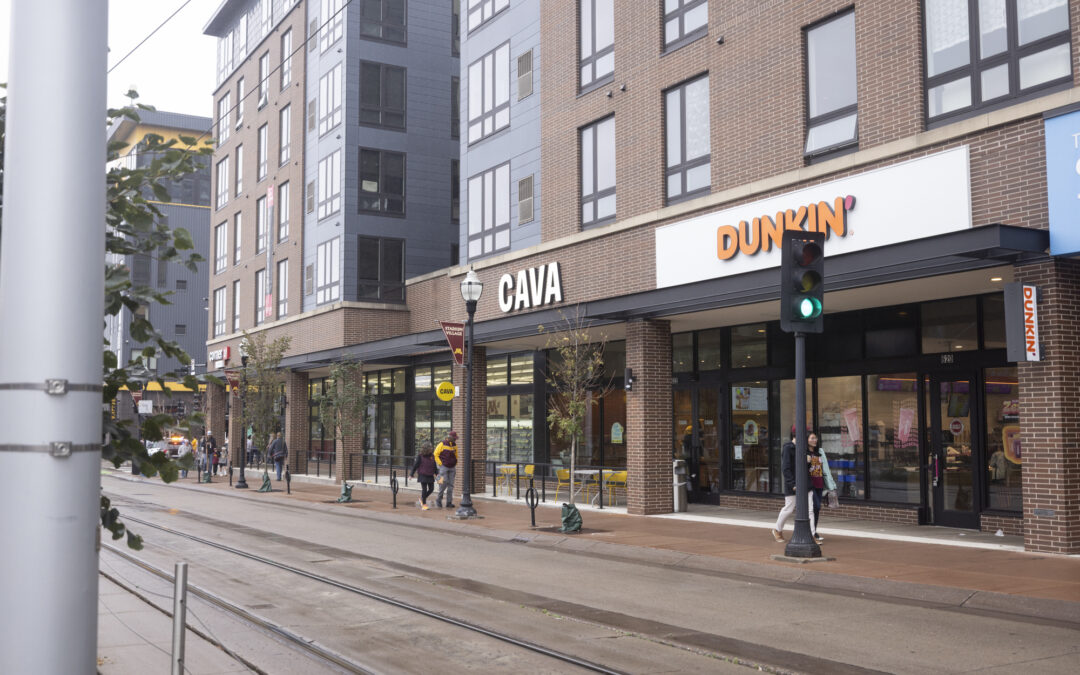
Sixteen years after a trio of childhood friends opened the first Cava location in the Washington, D.C., area, the same group of cofounders gathered for a ribbon-cutting ceremony marking the chain’s 500th restaurant on September 23 at the University of Minnesota Twin Cities campus.

Jeff Gaul is Cava’s chief development officer.
Despite noting the significance of the milestone, which marked a decade and a half of growth for the Greek- and Mediterranean-inspired fast-casual chain, Chief Development Officer Jeff Gaul said the brand already has its sights set on reaching 1,000 units by 2032.
“As we continue to scale and create a more sustainable business, we just get smarter and better. It’s all about our people,” Gaul said, noting that team member training and the brand’s general manager pipeline program represented a critical area of growth that allowed for the recent scaling. “That’s really what we’ve just gotten better at doing from 250 to now 500, and we’ll get better from 750 to 1,000, just making sure that when our team serves that very first bowl on the opening day, they feel super confident.”
As a brand that emphasizes house-made menu items without using freezers or microwaves, Cava treads a fine line with its tech stack. Gaul is confident that ordering kiosks will never see the inside of the brand’s restaurants because of its dedication to human connection; still, he said off-premises sales channels represent a popular ordering pathway for guests and a critical revenue source for the chain.

Ted Xenohristos is one of Cava’s cofounders and the brand’s chief concept officer.
“We always want to have that blend of technology, but with that human touch and human interaction,” Gaul said, noting that the brand offers online ordering via the Cava app, an accompanying rewards program, third-party delivery, and a white-glove delivery service.
The new location on Washington Avenue Southeast in Minneapolis marks Cava’s first location in Minnesota, continuing a push into the Midwest that gained momentum with Chicago-area openings in 2023. The 500th restaurant features a prominent order pick-up area located just inside the entrance—an increasingly common trend for the brand.
Ted Xenohristos, co-founder and chief concept officer, said the Minneapolis restaurant will be the first of several to land in the North Star State in the coming years. The bulk-open approach to entering new markets has been a staple for the chain since its first location in California struggled to gain momentum in 2015.
“We really struggled, and we struggled to find people, to keep people,” Xenohristos said, reflecting on the challenges that shaped the current expansion strategy. “We struggled with our food, our supply chain, and we realized that when we go somewhere, we have to open more than just one location. We have to open four or five so that we can hire a team here that will future train people, move them to new locations. We can promise people growth and a future in this area. We can create our supply chain here, which is amazing.”
Xenohristos echoed Gaul’s sentiment regarding the delicate balance between aggressive tech adoption and reliance on traditional hospitality.
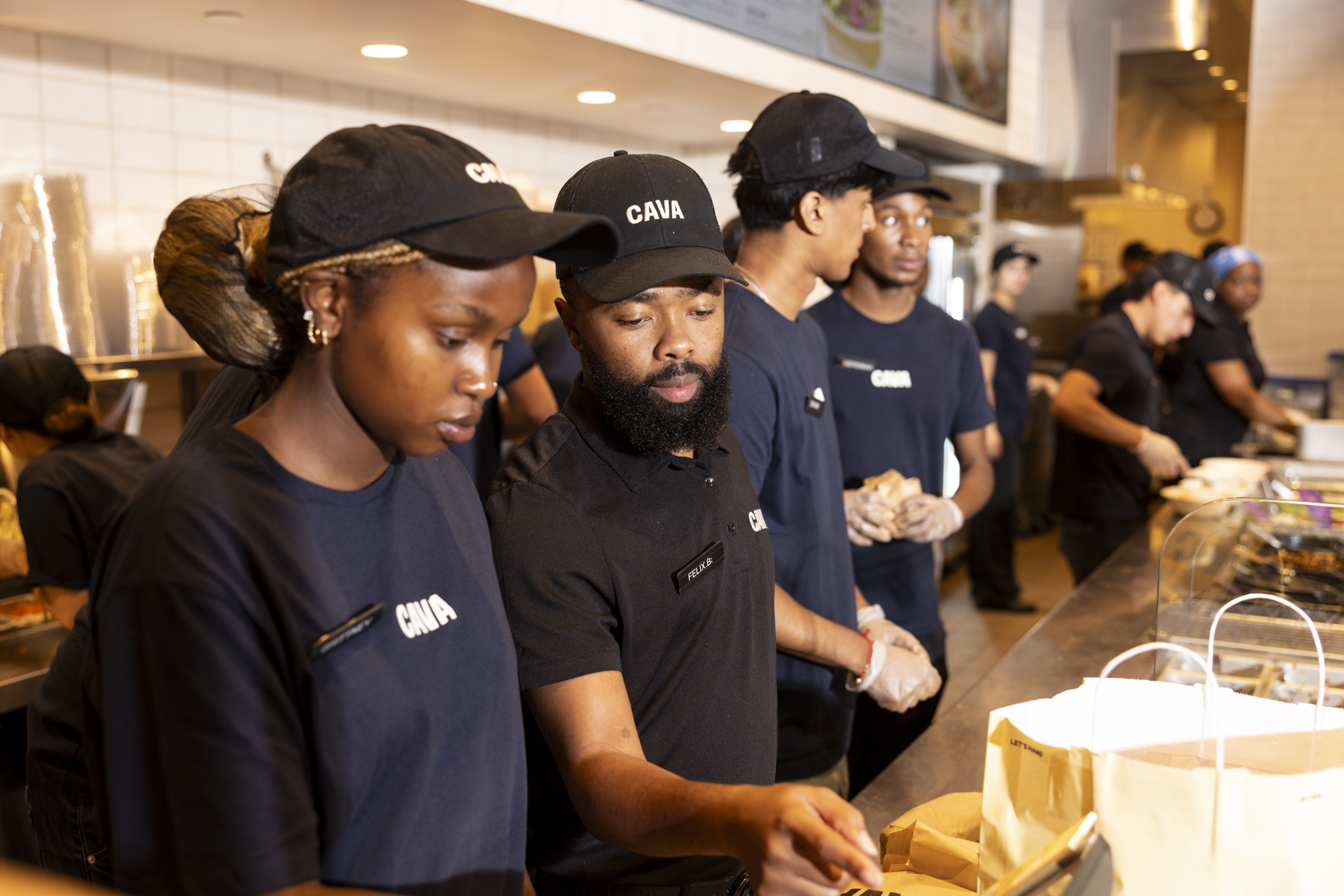
Cava’s latest location in Minneapolis represents the brand’s first unit in Minnesota, with more slated to follow.
“We’re building these beautiful restaurants; we want to welcome people in,” Xenohristos said. “We love that. We think that people still want that human interaction. Even if they order online, which is a big part of our business. People are in a hurry. How can they order online or use our website or the app and still come in and feel like they can experience a little bit of that Mediterranean hospitality we talk about? So, these are part of our new designs that we’re working on.”
Regarding the brand’s use of artificial-intelligence-powered tools, Gaul said the technology provides valuable insights to keep operations running smoothly, thanks to increasingly available data from digital channels and in-store systems.
“When our restaurant managers place their weekly order, they know exactly what’s going on,” Gaul said, listing the impact of AI tools in the restaurant. “It also factors in things like the weather or what they did last year, or community events that are going on so they can help make better, more informed decisions, and then also [factor in] personal preferences or taste. So if we have a new manager that just started at that location, they can look at that history through this data.”
Xenohristos said AI-powered inventory management tools represent an intriguing opportunity for Cava to ensure items are prepared with a focus on freshness and quality. Still, the brand requires thorough assurance that any technology or equipment will excel in practice and at scale before it rolls anything out systemwide.
“We’ve always just embraced what’s at the cutting edge, and then working through it and seeing what’s actually going to work for us,” Xenohristos said. “With our restaurants, they operate really well. We do a great job of executing today. So, I don’t want to just wake up tomorrow and say, let’s put cameras all over the place and let’s start telling the computers to tell us what to cook. [We’ll approach that] the same way we roll out food: We test, test, test.”