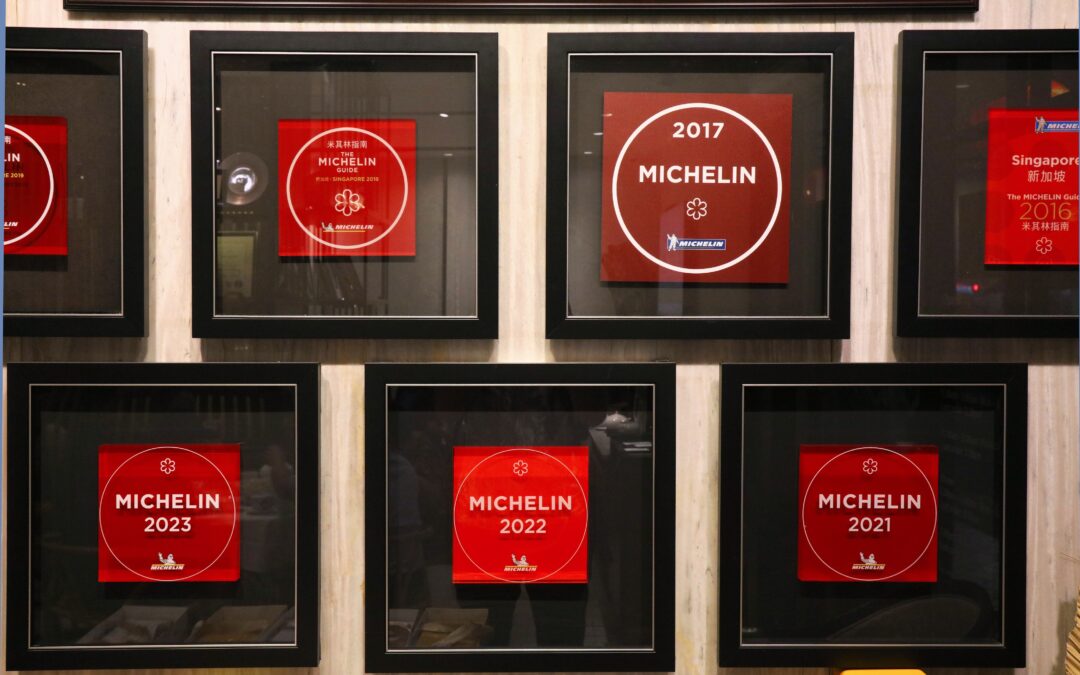
The Michelin Guide, a globally recognized restaurant rating system spanning more than 40,000 establishments and more than a century of culinary critiquing, announced its expansion into the American Great Lakes region in early April.
For restaurants in six participating Midwest cities — Cleveland, Detroit, Indianapolis, Milwaukee, Minneapolis and Pittsburgh — the move offers a chance at a potentially business-altering stamp of approval in the form of Michelin Stars or the Bib Gourmand distinction.
The Michelin Guide announced the expansion April 7. The program’s international director, Gwendal Poullennec, said anonymous inspectors are already in the soon-to-be Michelin-reviewed cities, making reservations and searching for the region’s culinary cream of the crop.
The inaugural restaurant selection will be unveiled in 2027 at the Michelin Guide American Great Lakes Ceremony, with the date yet to be announced.
Understanding the expansion model
For the six participating cities, access to the prestige that comes with Michelin Star restaurants relies on an essentially pay-to-play admissions model. Funding to secure a spot in the prestigious guide’s expanded region came at least in part from local tourism boards in each community.
The Michelin Guide has not released the contract terms with tourism boards for the Great Lakes region expansion. However, April 8 reporting from the Pittsburgh Post-Gazette stated that while restaurants do not pay to be reviewed, cities or regions typically finance the launch of a new market through three-year contracts.
An April 9 article from the Minnesota Star Tribune reported that Minneapolis agreed to pay $250,000 per year from 2027 to 2029, funded by the Minneapolis Tourism Improvement District. The MTID receives funding through a 2 percent service charge on all stays at Minneapolis hotels with more than 50 rooms; the annual Michelin price tag will total about 3.5 percent of the budget generated each year.
“This is a defining moment for Minneapolis. We have the talent, cultural diversity and quality to stand with any culinary destination in the world,” Melvin Tennant, Meet Minneapolis’ president and CEO, said in a Michelin Guide release. “With the incredible and enduring reputation of the Michelin Guide, this is a moment that moves us from being a ‘best-kept secret’ to being part of the global culinary conversation. And through a collaborative approach made possible through our new Minneapolis Tourism Improvement District, it will inspire more of the world’s food lovers to visit our city.”
Although funding information wasn’t published for all of the participating cities, April 8 reporting from Cleveland.com and BizTimes cited Destination Cleveland and Visit Milwaukee as saying those organizations will each pay $150,000 annually for three years as part of the entry contract to support the Michelin Guide expansion into their respective cities.
“Cleveland’s nationally recognized culinary scene is a hallmark of our visitor experience, and our chefs have earned the attention of the Michelin Guide,” David Gilbert, president & CEO of Destination Cleveland, said in a Michelin Guide release. “As Destination Cleveland continues its work to attract visitors and strengthen perceptions of our city around the U.S. and the world, association with the Michelin Guide offers an opportunity to attract new travelers and boost local restaurants’ sales.”
Michelin’s impact on restaurants
Michelin Guide ratings have been shown to drive significant value for restaurants.
According to rating details on the Michelin Guide’s website, restaurants may receive one, two or three Michelin Stars, with more Stars generally correlating to higher food quality. Anonymous reviewers award the Stars based on the following criteria: quality of the ingredients used, mastery of flavor and cooking techniques, the personality of the chef in the cuisine, harmony of flavors, and consistency between visits.
Additionally, the Michelin Guide offers a “Bib Gourmand” rating to “friendly establishments that serve good food at moderate prices.”
The Michelin Guide team selects restaurants to review in given regions, but restaurants can nominate themselves. The Minnesota Star Tribune reported that inspectors visit a restaurant “as many times as it takes — spanning seasons, times of day and days of the week — to gather enough information for a rating, but it’s a different inspector each time.”
Joël Robuchon, a French chef who ran more than 20 restaurants that garnered 31 total Michelin Stars, summarized the financial boost of the ratings in a 2017 article by Food & Wine.
“With one Michelin Star, you get about 20 percent more business,” he said. “Two Stars, you do about 40 percent more business, and with three Stars, you’ll do about 100 percent more business. So from a business point … you can see the influence of the Michelin Guide.
Supy, a data-driven restaurant inventory software company, reported in 2025 that Michelin Stars impact profitability by increasing revenue through premium pricing, attracting high-spending customers, building long-term brand value and streamlining operations to achieve higher profit margins. In Paris, for example, acquiring a Michelin Star results in a roughly 25 percent price premium, meaning more revenue per customer without adjusting seating capacity.
A 2025 article from the Michelin Guide quoted multiple restaurant leaders at Star-awarded establishments stating the operational benefits related to labor stemming from the distinction.
Since the Michelin Guide’s 2023 debut in Denver, Allison Anderson Holmes, director of experience at Beckon, said she saw labor challenges ease through “more resumes from all over the country and beyond, more experienced cooks, more professionalism and fresh talent.”
Similarly, Emmanuel Chavez, chef at Michelin-Starred Tatemó, was quoted as saying, “We’ve been at full capacity for a year straight — it’s allowed us to hire more staff and invest in better equipment.”
How Michelin became the gold standard in restaurant ranking
For a renowned restaurant ranking system, the Michelin Guide has perhaps an unlikely origin: a business promotion brainstormed by two brothers from a small town in France who founded a tire company, Barbier-Daubrée (now known as Michelin), in the late 19th century.
According to a history of the now-famous culinary honor published on the Michelin Guide’s website, Andre and Edouard Michelin produced the first Michelin Guide, a complimentary travel booklet complete with maps, information on how to change a tire and spots to refuel.
In 1920, the company improved the guide and started charging customers for the booklet. Six years later, the guide began awarding Stars to fine dining establishments, and the now-signature one-, two-, and three-Star ratings were introduced in 1936. Over the following decades, the guide gained significant momentum and a respected reputation. The first North American Guide launched in 2005 for New York; then came San Francisco in 2007, followed by Chicago in 2011, Washington D.C. in 2018 and, ultimately, several other prominent cities and regions across the U.S. and Canada, according to reporting from BizTimes.