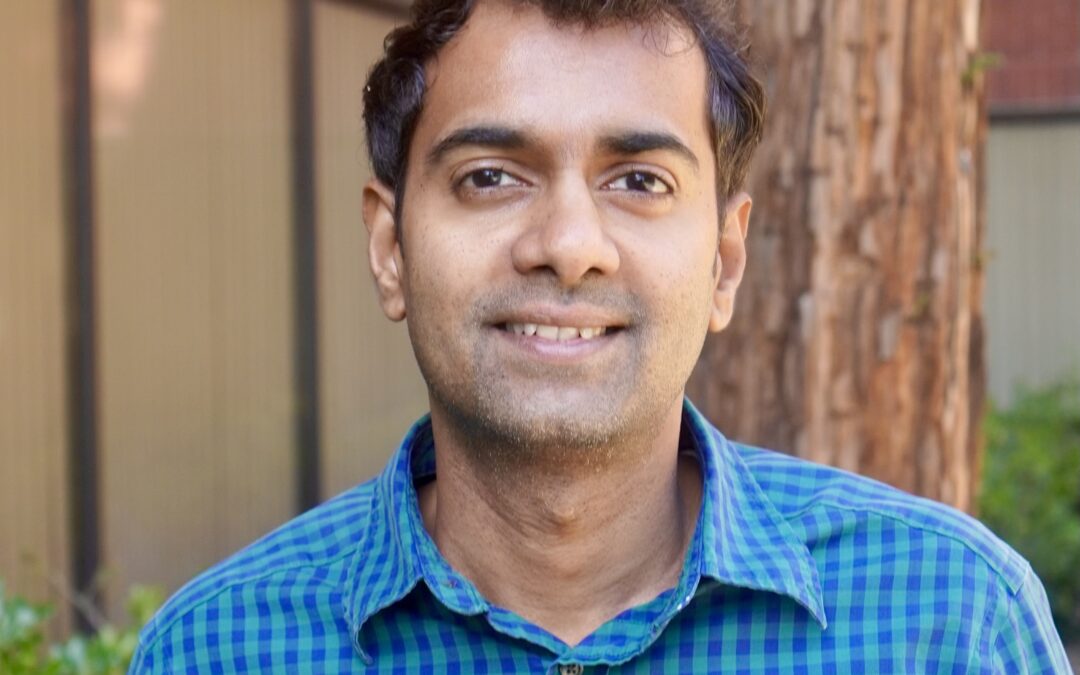
Bala Subramaniam, CEO and founder of San Francisco-based food-ordering startup Bites, considers today’s third-party delivery model “broken” — a system he says prioritizes middleman marketplaces that charge high commissions while maintaining control of customer data.
Artificial intelligence platforms, Subramaniam said, will inevitably change how consumers order food online and correct an imbalance that has plagued the sales channel for more than a decade, ultimately returning economic leverage to restaurants.
“Consumers are moving from apps to agents, just like 25 years back they were moving from dining to phone orders, or phone orders to website orders or website orders to app orders,” Subramaniam said of the shift to agentic commerce. “You can’t force a consumer to do something. You have to wait for consumer trends. And the good news is, the vision that we have had is coming to fruition because of the trend shift that’s happening from apps to agents.”
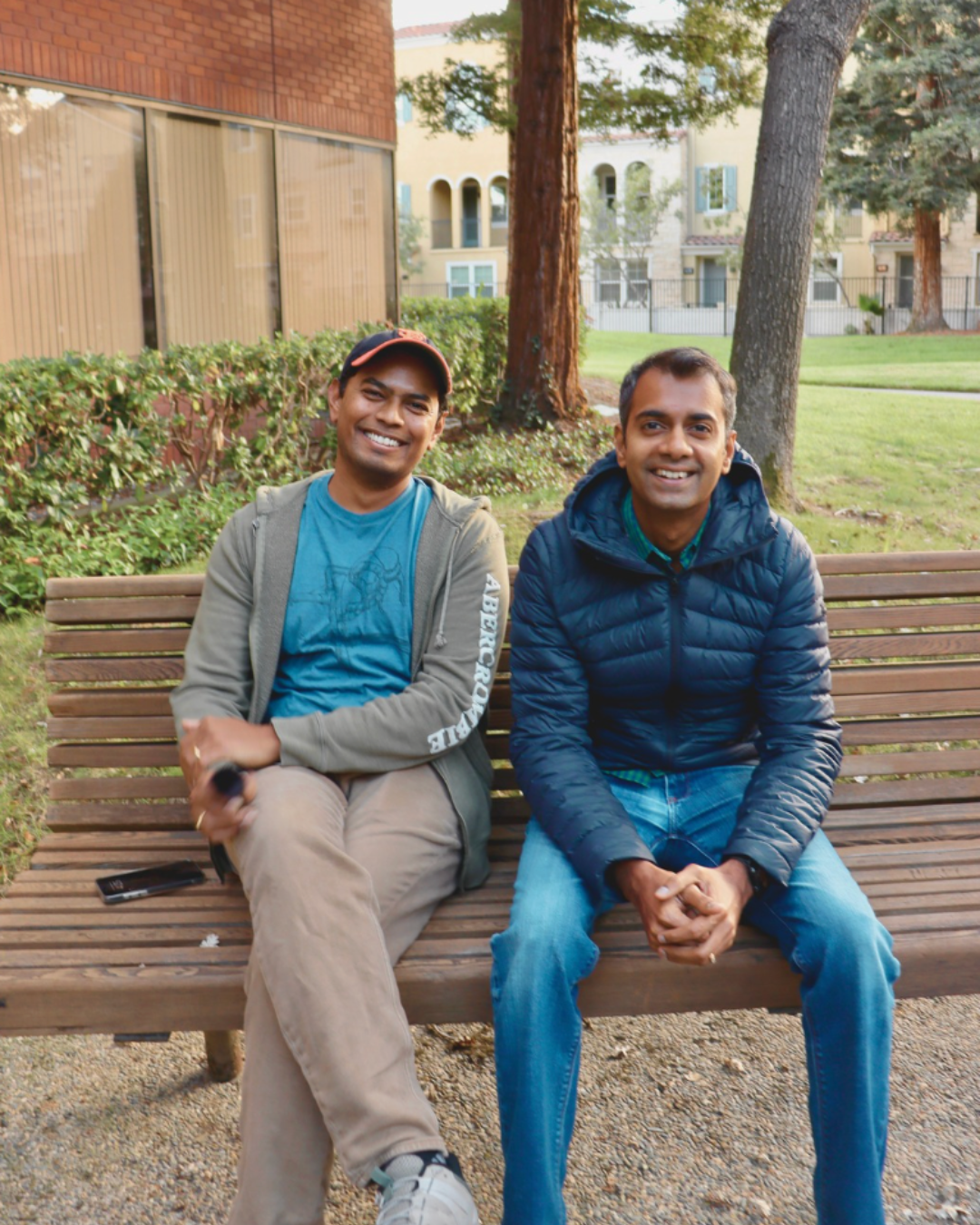
Deepak Tirumalasetty (left) and Bala Subramaniam are cofounders of Bites, a San Francisco-based food-ordering startup.
Subramaniam and cofounder Deepak Tirumalasetty launched Bites in 2024 on the principles of no commission fees (instead opting for a $1 flat fee per order), 100 percent of delivery fees going to drivers, and granting operators full ownership of guest and loyalty data.
Today, the platform’s network spans more than 1,000 restaurant locations, most in Greater San Francisco, with more than 1 million orders completed. Subramaniam viewed that expansion as infrastructure building — work that, he said, blossomed in mid-April when Bites launched its ordering experience on ChatGPT.
“It (AI chatbot technology) is at the right moment where it’s going to be converted to commerce, and we want to be there for the restaurant industry when the conversion actually happens,” Subramaniam said, referring to the push towards AI assistants as a sales channel bet.
ChatGPT has shown the fastest, most dominant consumer adoption in the AI chatbot category, reportedly surpassing 100 million weekly active users within months of its November 2022 release and reaching 700 million by early 2026. Subramaniam said Claude by Anthropic, Google Gemini and other similar platforms were next for Bites.
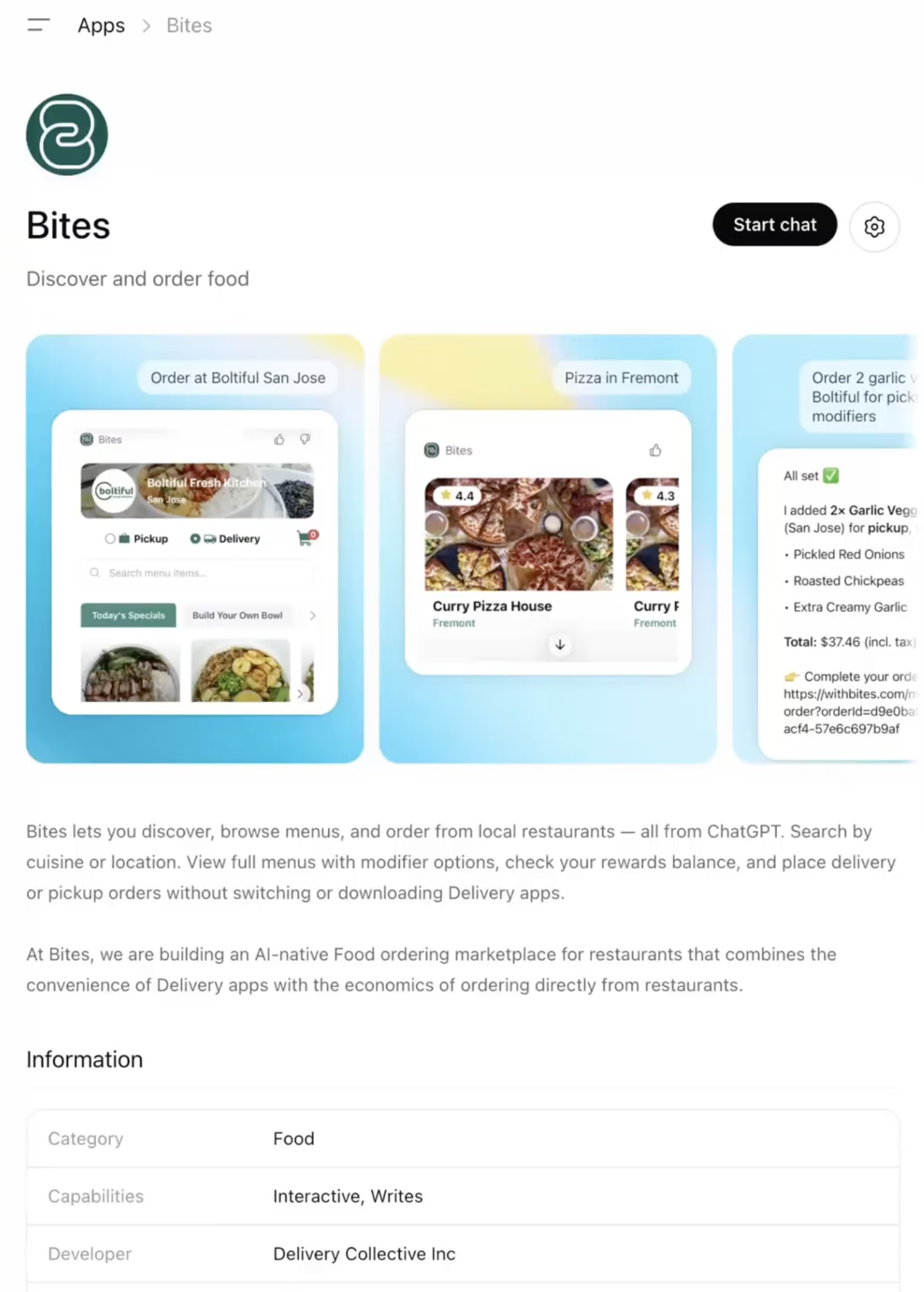
Bites announced the launch of its ordering experience on ChatGPT April 15.
Major 3PD players like DoorDash and Uber Eats have not ignored agentic ordering as a future sales channel; both integrated menu browsing with ChatGPT in late 2025.
Subramaniam identified a robust selection of restaurants as key to raising consumer awareness. To build that selection, Bites focuses on partnerships with point-of-sale system providers, which help onboard a diverse mix of operators.
“Once you have selection, the Bites experience will start showing up in more search queries, and that, of course, gets translated into commerce,” Subramaniam said. “I’m sure it will take some time, but when the consumer knows that they can actually get their $13 burgers for $13 on ChatGPT, why would they not order? Why would they download another app to pay $18 (with) hidden fees and all that stuff?”
Operators are also exploring agentic sales channels. Starbucks and Little Caesars, for example, integrated with ChatGPT in April. Subramaniam predicted the same struggles that first-party channels face today will likely carry over to agentic ordering.
“The issue of why separate apps don’t work on the App Store is the same reason why separate apps would actually not work on the LLM (AI chatbot) store,” Subramaniam said. “The difference in the LLM case is you don’t have to have 30-percent-commissions third-party business economics working there.”
Bites’ approach to agentic commerce shares many similarities with Olo’s second-party channel vision laid out through the Olo App and Olo Network, such as the lack of commission fees and a decision not to withhold guest data, but the initiatives also diverge in several notable ways. Olo, for example, aims to share guest data across the network, whereas Bites does not.
Ultimately, Subramaniam maintained that restaurant selection, affordability and the release of guest data to operators will be critical to Bites’ success going forward.
“I think the make-or-break (variable) for us is going to be how the point-of-sale companies are going to come to the party to add value to their customers, which are the restaurants,” Subramaniam said. “Because everybody is hungry for a change.”