Ordering food has long started with opening an app and scrolling through menus. That starting point is beginning to change.
Starbucks and Little Caesars are among the latest restaurant brands testing ordering through ChatGPT, part of a broader move toward AI-driven discovery and what some describe as agentic commerce.
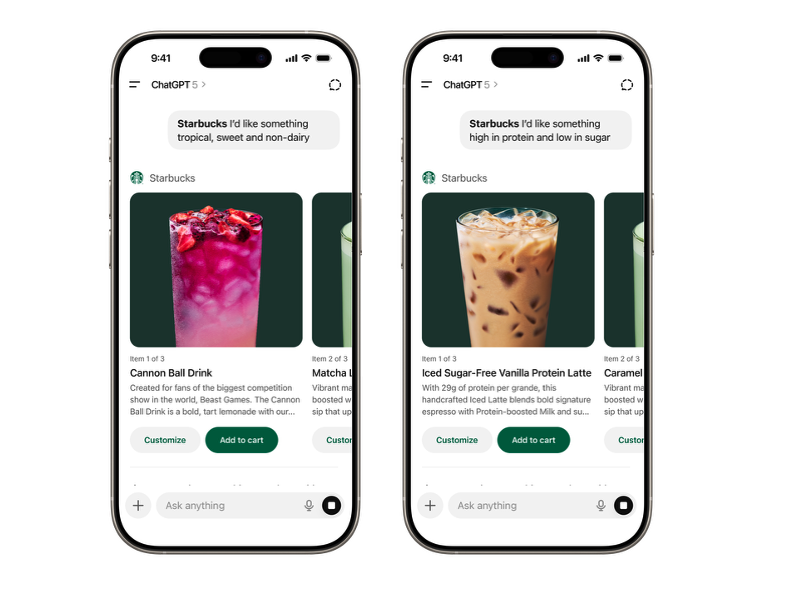
Starbucks rolled out a beta app in ChatGPT on April 15 that allows customers to describe what they want in natural language or upload a photo to receive drink recommendations. Users can tag @Starbucks, get suggestions then complete checkout through the Starbucks app.
“Customers aren’t always starting with a menu,” wrote Paul Riedel, Starbucks senior vice president of digital and loyalty, in a company announcement. “They’re starting with a feeling.”
The discovery happens in ChatGPT. The purchase stays inside Starbucks.
Little Caesars is taking a similar approach. Its integration allows customers to plan meals, customize orders and place them through ChatGPT, with checkout routed through its own app. The feature is rolling out nationally in the U.S. and in select international markets.
“Today’s consumers are turning to GenAI as part of how they search for everything, including where to get their next meal,” said Greg Hamilton, chief marketing officer at Little Caesars in a statement. “We recognize this shift and want to meet our customers where they already are and be the go-to for their pizza occasions. The process is as natural and intuitive as having a conversation.”
On the backend, the system connects ChatGPT to Little Caesars’ existing infrastructure, pulling in menu, pricing and location data in real time while routing orders through its digital channels.
“From a technical standpoint, this app in ChatGPT demonstrates the power of connecting enterprise restaurant systems with large language models,” said Anita Klopfenstein, global chief information and digital officer at Little Caesars in a statement. “This is just the beginning of how AI will transform the restaurant industry.”
In late 2025, OpenAI added apps like Uber Eats, DoorDash and Instacart to ChatGPT, allowing users to order food or shop without leaving the conversation. A prompt like “tacos nearby” can surface delivery options directly within the interface.
Related: How ChatGPT is Changing Restaurant Discovery
Meanwhile, startups are pushing further into the space. Bites recently launched ordering in ChatGPT, positioning AI as a way to rethink third-party delivery economics, including lower fees and greater control over guest data.
For restaurants and marketplaces, it introduces another discovery channel as AI-assisted search continues to evolve.