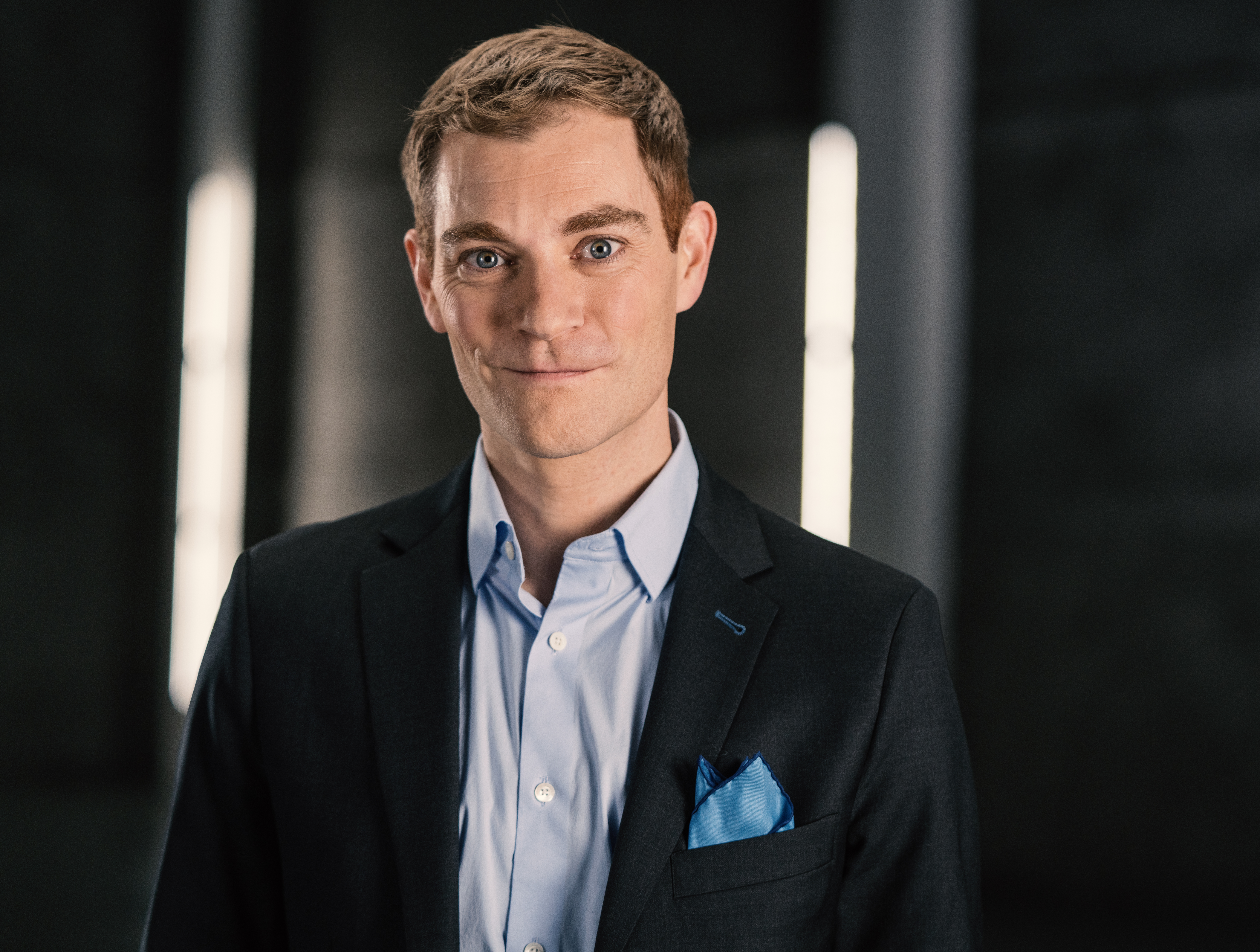
Olo CEO Noah Glass predicts a “second-party” transformation is imminent for restaurant ordering—one he says could solve many of the headaches consumers and operators face with today’s first- and third-party channels.
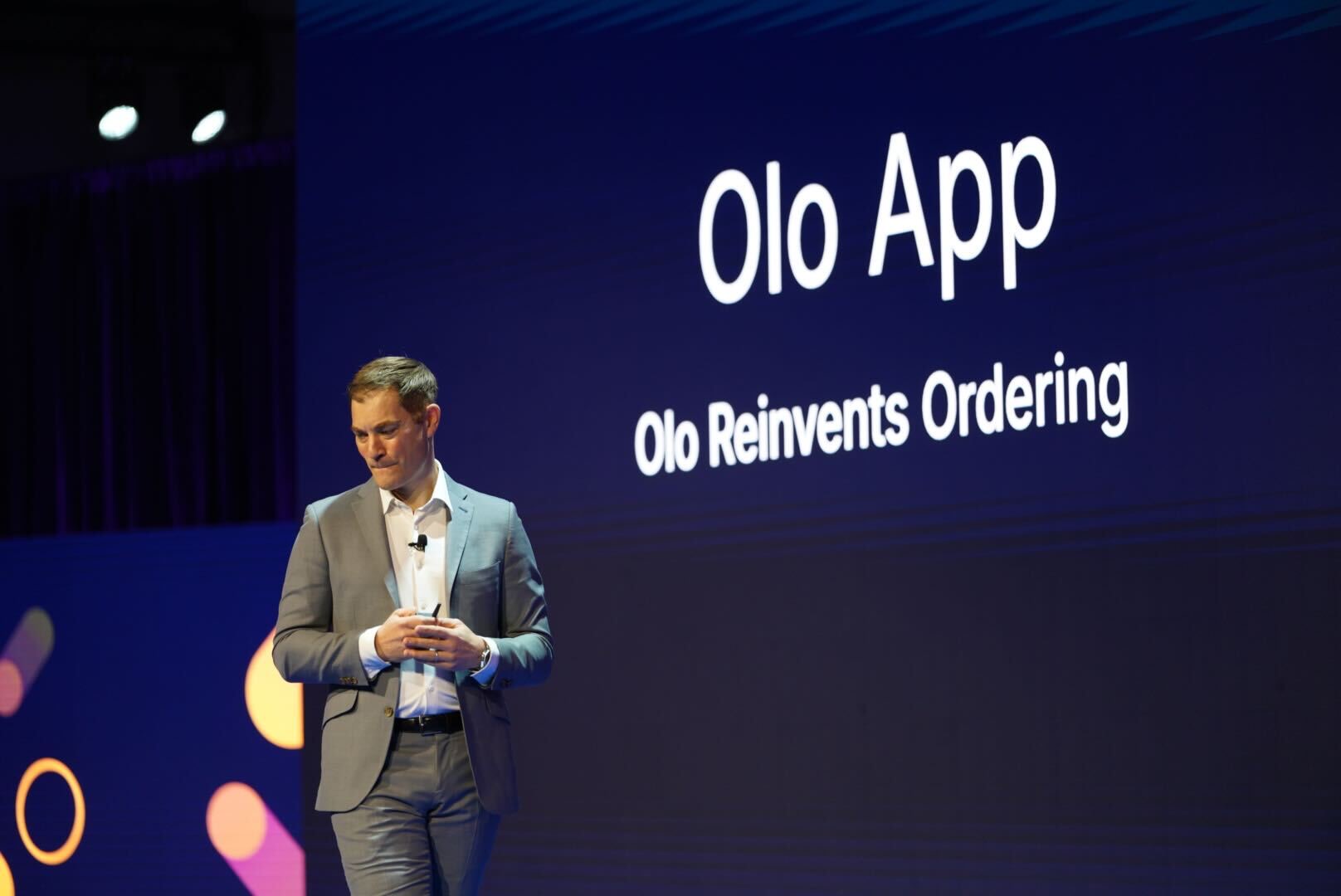
Noah Glass announced the Olo Network and Olo App March 3 at the Olo’s annual Beyond4 event in Phoenix.
Glass unveiled his vision in early March at the restaurant software company’s annual Beyond4 event in Phoenix, using his keynote address to introduce a second-party model powered by the Olo App and the Olo Network.
Just over a month later, Glass sat down with Food On Demand to clarify key concepts and further outline how he expects second-party ordering to reshape the foodservice industry.
“Some people don’t understand or believe in the idea that this could be a zero-commission approach, because they’re so trained in thinking about marketplaces and the commissions that they charge,” Glass said. “The thing we have to keep reminding them is we’re a software platform where we win when our customers win.”
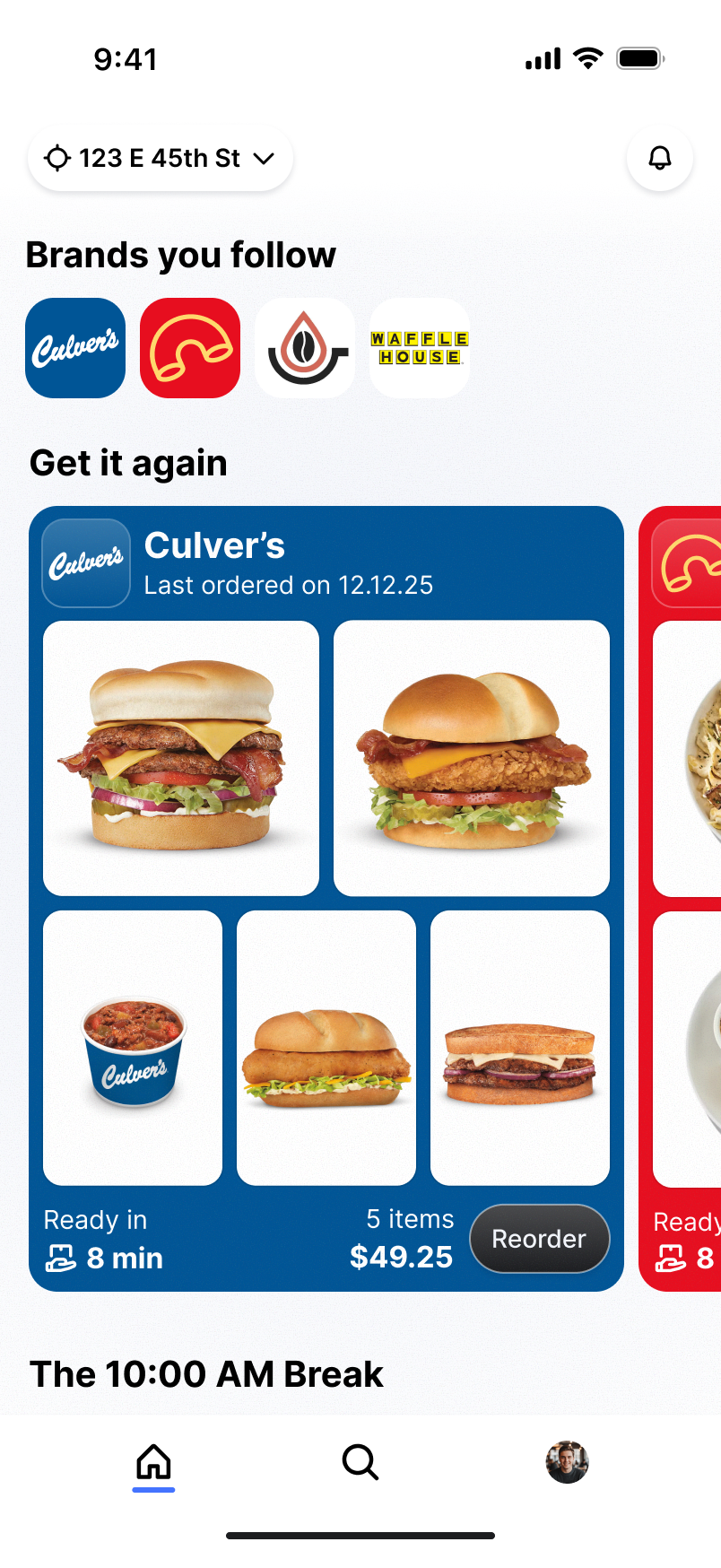
The Olo App is slated to launch later this year, with no commission fees.
The Olo App, slated to launch later this year, charges no commission fees and allows restaurants to retain ownership of guest data. The Olo Network, which Glass said benefits from a jump-start of 40 million unified guest account profiles through Olo Accounts, lets brands share customer data such as order history, payment details, delivery addresses and dietary preferences.
Operators have grown accustomed to platform fees and a lack of visibility into customer data through third-party channels, while guest acquisition on first-party channels often requires hefty promotional spend.
Glass said Olo’s second-party model fits neatly into an online ordering Goldilocks zone, rejecting the notion that the Olo App and Olo Network are simply a marketplace under another name.
“Being a marketplace, to me, means you’re not sharing guest data and you’re charging commissions on the orders,” Glass said. “If you’re sharing the guest data to enrich your brand’s first-party database and you’re not charging a commission, I don’t think of that as a marketplace. I think of that as a network.”
Many consumers gravitate to third-party marketplaces when placing orders, either because they’re hesitant to download another restaurant app or because they prefer browsing multiple brands on a single platform that already has their credentials saved. Glass said the Olo App aims to satisfy both preferences with a more customer-centric experience.
“We aren’t doing this in a vacuum,” Glass said of the second-party initiative. “We’re drawing a lot of inspiration from what Shopify has done with the Shop App. There, the same thing is true. You don’t have to download an app for every retailer where you want to use Shopify; you can just one-click follow that retailer in the Shop App, and then all the credentials that Shopify knows about you carry over into making that a really low-friction commerce experience.”
The prospect of first-party loyalty program integrations within the Olo App was among the details left out of the Beyond4 keynote address. Glass said that was intentional, to give operators a chance to provide input.
“The consensus that seems to be emerging is brands do want to have their own loyalty and rewards program as part of this experience,” Glass said. … “Again, the brand can audit and track this all because they’re getting that data about the guests. That’s a fundamental component of it. Then there’s also an interest in having a sort of open currency.”
Glass said both loyalty methods are likely features of the upcoming app: “I think we’ll make those options available, and brands can decide whether they want to participate in (incorporating) their loyalty program.”
He mentioned Shopify as inspiration for the potential open currency loyalty offering, citing their Shop Cash rewards as similar to the open-loop reward mechanism Olo is considering.
Olo Dispatch, a white-label restaurant delivery management software that provides commission-free restaurant delivery solutions with third-party delivery integrations, will execute deliveries.
When asked how third-party delivery platforms might respond to second-party ordering if it proves as successful as Glass envisions, he said he expects a similar reaction to when Olo Dispatch rolled out more than a decade ago. DoorDash, Uber Direct and Grubhub are now all integrated with Olo Dispatch.
“To be a good partner to restaurants, and to be a good partner to independent contractor delivery drivers, you want to fish where all the fish are biting, and that’s both third party and first party, and soon second party,” Glass said.
Initially, Olo customers will go live on the new ordering platform, but the company plans to open it to non-customers eventually. Since the March 3 announcement in Phoenix, Glass said brands that have not traditionally worked with Olo, both large chains and smaller operations, have expressed interest in participating.
“Beyond just brands, (we are) hearing from partners of the industry (and) big suppliers to the industry folks who are on the agentic commerce side (and) have been very eager to get involved with this and plug into the Olo network, because it is the best path to get from an agentic experience into a commerce experience with restaurants in what is really a distinct nuanced ordering experience,” Glass said.
With agentic ordering posing as an impending reality for restaurants, Glass said the Olo App and Olo Network are positioned as a broad, queryable database that serves as a jumping-off point for operators to capture orders from platforms like ChatGPT and Gemini.
“If we can really open up these new discovery surfaces or demand channels on behalf of our customers in a first-party sense, and really the industry, I think that’s a really good, healthy thing for the industry,” Glass said.