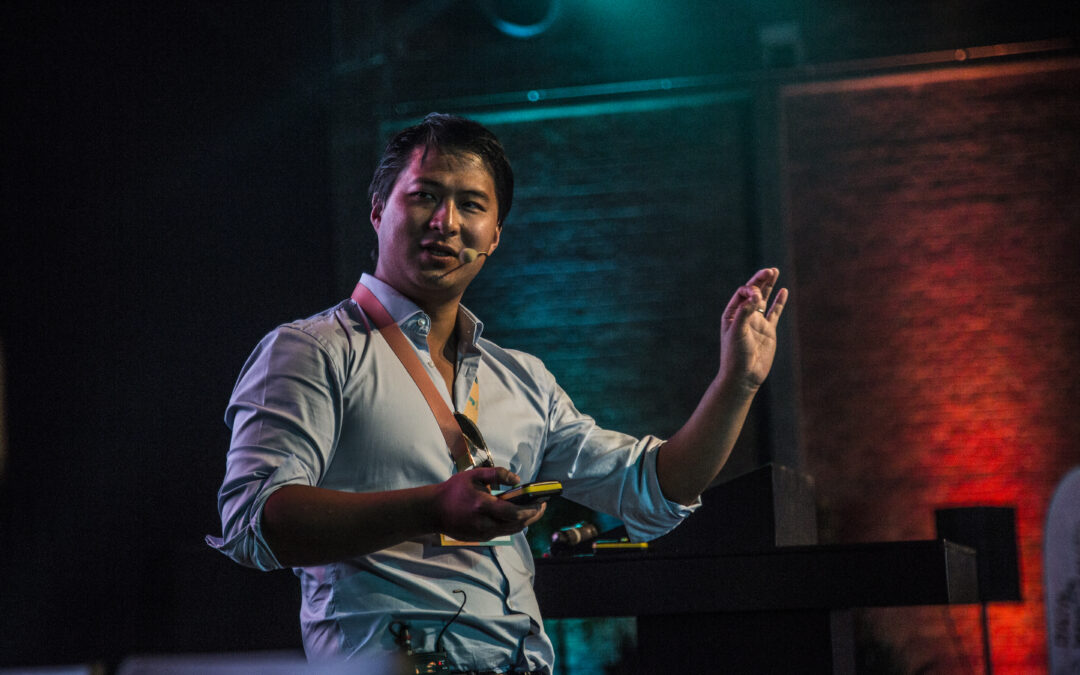
Artificial intelligence-powered agents that control menu prices in real time; software that proactively monitors digital ordering operations and resolves technical issues; Smart Assistants that strategize and implement complex promotions without manual input — according to Zhong Xu, cofounder and CEO of Deliverect, this is no futuristic vision for the restaurant industry. These capabilities are already a reality.
Deliverect, a restaurant technology company serving more than 95,000 locations in about 80 countries, launched a fleet of autonomous agents and smart assistants in early April. The digital workforce rollout is already available to U.K. operators, with North America, Australia, and New Zealand next in line.
Xu described the launch as a pivotal moment for the seven-year-old company, marking Deliverect’s evolution from passive automation to active intelligence.

Deliverect launched autonomous agents and smart assistants in the U.K. April 9, with North American and other markets to follow.
“Today, you can have a menu that is completely dynamic depending on the channel it lives on, the time (of day), as well as the customer,” Xu said, detailing the capabilities of Deliverect’s Autonomous Menu Agents. “Of course, it’s almost impossible to do that manually. Maybe I can do it for one store if I change the menu every hour. But how do I do that at hundreds of stores across a whole continent or nation? This is perfect (for) where AI comes in.”
Menu agents, Xu said, analyze live data at the location level and additional context, ranging from local weather to nearby events. Depending on the guardrails set by restaurants, agents then create menu deals, reconfigure menu layouts, change product descriptions, create combos and even adjust pricing to meet the operator’s objectives without manual input.
“Automatically changing the menu dynamically depending on the time of the day or your customer, allows you to be really, really high in conversion rate (and) sell more to your end customer,” Xu said.
Xu claimed restaurant customers have reported topline sales growth of up to 20 percent without price changes as a result of the agents. One example he gave was Pret A Manger, a London-based cafe chain that could automatically switch upsell options to push fruit in the early afternoon when customers may make more health-conscious ordering decisions.
Beyond menu adjustments, Deliverect’s Autonomous Support Agents actively monitor for technical issues, such as unsynced menus, broken integrations and undetected outages. The agents detect those problems, diagnose causes and act to resolve the challenges.
Additionally, the company’s Smart Assistants allow large brands to transform the display of their digital menus across all platforms within minutes, without ever changing food items. With prompting, whether for a regional festival or a significant sporting event, the technology generates themed background imagery, localized descriptions and promotional content across hundreds of locations simultaneously, in any language.
“For a lot of restaurants, it’s still the very early days where they need to first get these systems in order,” Xu said. “They need to have all the data in a centralized way where they can make these changes, but once they’re there, the adoption rates in general of AI is what excites (us) as well as these restaurant owners.”
Through a separate Deliverect agent, KFC Netherlands created an automated loyalty solution that generates promotion codes specific to each customer, rather than campaign-wide incentives. Xu said that effort was an example of agents tailoring promotions to customers without human involvement.
“That was very hard before, and now, of course, with agents and automation, you can create all of this stuff without the manual work behind it,” Xu said, adding that the agents bypass weeks of coordination across teams and extensive spending for such efforts.
Deliverect’s agents integrate with brand banks and brand books to cater messaging to the brand’s voice and tone.
Xu predicted the rise of AI agents will lead to increased reliance on automation in restaurants, particularly for digital, back-of-house and off-prem-focused aspects of operations. Still, he said, front-of-house staff are less likely to be negatively impacted, and they might even receive more emphasis, as the social aspect of eating out remains an important factor in consumers’ restaurant experience.
Ultimately, Xu described proper guardrails on AI agents as crucial to ensuring an operator’s goals are met without unanticipated complications. Operators can determine how cautious or eager they are in embracing the agents by exercising precise control over the technology’s access to capabilities.
“It (AI) is sometimes seen as a magical tool,” Xu said. “It’s not. What people don’t realize is (that) you can’t just put data in and then it will just do stuff. You still need to have a lot of systems built. You need to have all your data in one place. You need to have it uniform. AI is very good at giving an answer, but the answer is not always right.”