This article was originally posted in Franchise Times, sister publication to Food On Demand.
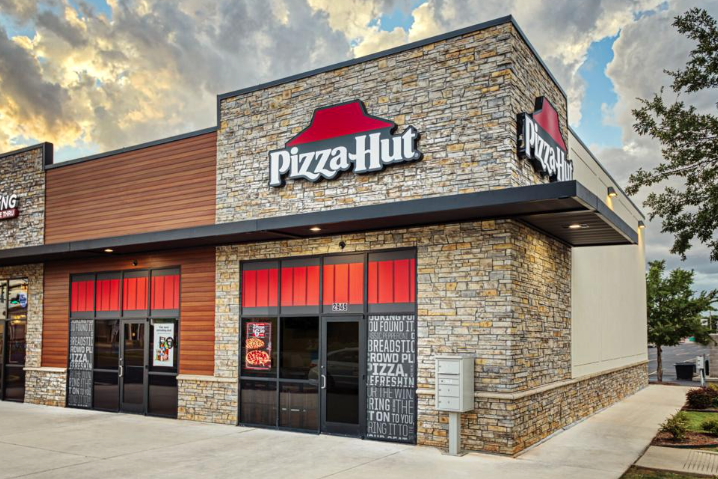
Pizza Hut and its China operations are being sold to separate entities, parent company Yum Brands announced Tuesday.
Yum China Holdings is buying Pizza Hut’s Mainland China business, while LongRange Capital, a Connecticut-based private equity firm, is set to buy the rest of Pizza Hut’s assets. The deals are valued at $2.7 billion.
PepsiCo and its subsidiaries have owned Pizza Hut since 1977. The company spun off its fast-food restaurant division, which included KFC and Taco Bell, in 1997 as Tricon Global Restaurants. Tricon rebranded to Yum Brands in 2002 when it merged with Yorkshire Global Restaurants, which was then the parent of A&W.
Yum Brands’ board of directors unanimously approved the transactions, which should close in the third quarter of this year.
“Under LongRange and Yum China, Pizza Hut will be well positioned for future growth with ownership that brings deep expertise in the restaurant industry,” Yum Brands CEO Chris Turner said in a statement. “Pizza Hut is one of the most iconic restaurant brands in the world, and we are proud of the important role it has played in Yum’s history. Pizza Hut was built by the passion and dedication of our team members, employees and franchisees, and we’re excited for the next chapter.”
Yum Brands did not immediately respond to a request for comment.
LongRange has investments in Batesville, a death care product provider; 24 Hour Fitness; a ski resort investment platform called Alpin Unlimited; and U.S. Synthetic, a diamond-based technology provider.
The firm entered into an agreement to buy Pizza Hut’s assets, minus China, for $1.5 billion, Yum announced. Yum could get another $75 million for the deal by 2030, if earnout conditions are met. (Earnouts are future payments to a seller if certain milestones, such as sales numbers, are met.)
Yum China agreed to pay $1.2 billion for Pizza Hut’s China business.
After taxes and other closing costs—and excluding the possible earnout payment—Yum expects $2.3 billion in net proceeds, according to the brand’s 8-K filing about the sale. The company anticipates spending $85 million this year to finalize the separation.
Yum Brands announced in November that it was exploring a sale of Pizza Hut.
“The Pizza Hut team has been working hard to address business and category challenges; however, Pizza Hut’s performance indicates the need to take additional action to help the brand realize its full value, which may be better executed outside of Yum Brands,” Turner said in a statement at the time. “To truly take advantage of the brand we’ve built and the opportunities ahead, we’ve made the decision to initiate a thorough review of strategic options.”
Pizza Hut franchisees have been collectively reverting 155 restaurants nationwide to its nostalgic red roofs and interior design. The company allowed certain stores in markets with fewer than 7,500 residents to make the conversion.
Tim Sparks, the president of 92-unit Pizza Hut operator Danland Corp., said the franchisee group has converted 38 of its units to the old-school prototype since 2018. When he initially switched to the brand’s modern design, customers generally didn’t like it, Sparks said.
“When we started to build buildings from the ground up that no longer even looked like a Pizza Hut, that’s when we started to hear a lot of dissension, like ‘I don’t like this at all, I’d rather you’d still be the old Pizza Hut,’” Spark said. “As a franchisee, I can’t just do whatever I want. You have to do what the franchisor says. We didn’t have a choice.”
Related: How National Franchise Sales Navigated Tough Pizza Hut Sale After Operator’s Bankruptcy
Pizza Hut’s average unit volume for dine-in restaurants was $1.04 million last year, down slightly from 2024, according to its franchise disclosure document. The cost to open a Pizza Hut franchise ranges from $670,000 to $2.13 million, depending on the type of restaurant.
System sales were $12.8 billion last year, down two points from 2024’s $13.1 billion, according to Yum Brands’ fourth-quarter earnings report.
Off-premises pizza sales have been down in recent years, with many franchisors struggling to increase system revenue. Franchise Times Top 400 data showed that Domino’s and Marco’s Pizza were the only two companies on the ranking of the largest franchise brands by systemwide sales to increase sales in 2024.
Unlike Pizza Hut, Domino’s increased its unit count last year, from 7.043 U.S. restaurants to 7,210. Last year, the company reported $20.1 billion for the year worldwide, up \ $1 billion year over year, according to Domino’s Q4 earnings report.
Papa Johns posted $4.92 billion worldwide in 2025, up 1 percent from 2024, and opened 279 new restaurants, according to its Q4 earnings call.
Yum Brands’ next earnings call is scheduled for July 30. The report will include updated projections and the financial impact of the Pizza Hut sale, according to the company.