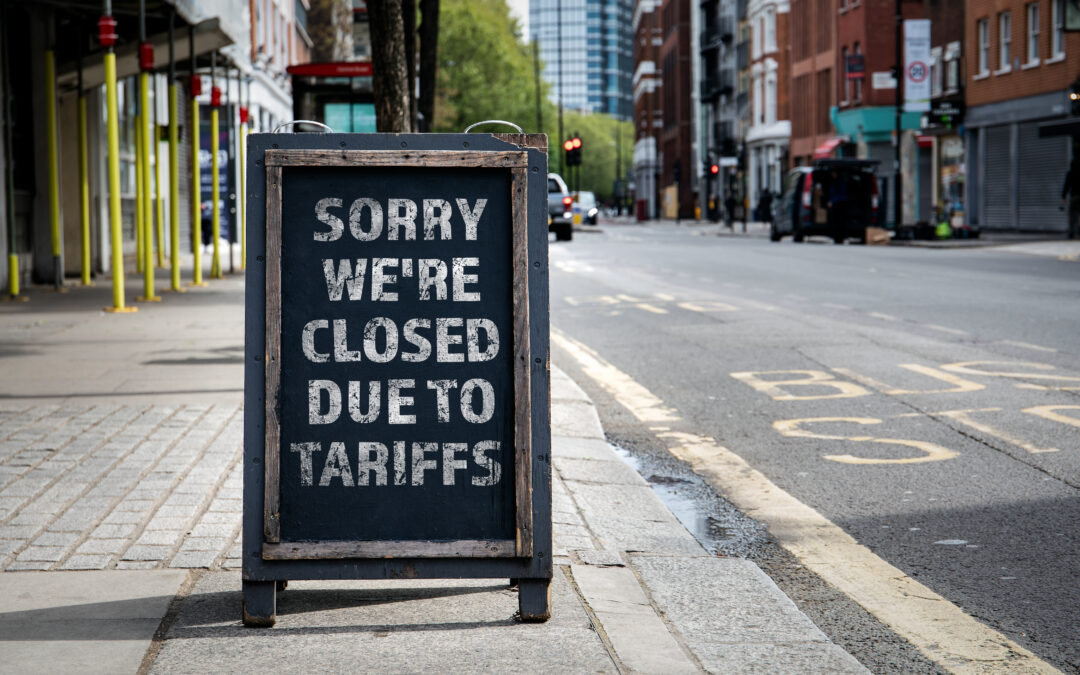
Tariffs are sort of like hubcaps. They can be put on, they can be taken off. But unlike a hubcap, which is mostly ornamental, a tariff has consequences. And even if it’s removed, its effects may stay.

Sid Malladi, CEO and co-founder of Nuvo
“Historically, what I’ve seen is that if tariffs go from 10 percent to 100 percent, costs double. But when they go from 100 percent back down to 10 percent, the costs don’t return to the former baseline. There’s a new market entry point for those commodities,” said Sid Malladi, CEO and co-founder of Nuvo, a business-to-business technology platform that serves the food and beverage industry, in an interview. “The impacts become permanent, even if we exit the tariffs.”
Yikes.
It’s not as if most brands operate with much of a cushion.
“We see 3 percent to 5 percent net operating margins on average for U.S. restaurants,” he said.
At the moment it’s the QSRs that have been feeling disproportionate pressure.
“The fast-food chains that are known for low-cost offerings have been impacted the most because their costs of ingredients have suddenly skyrocketed,” he said.
This new world is presenting operators a bit of a Sophie’s choice: take the hit themselves or pass the hit on to consumers. Right now, many operators are taking one for the team.
“If you have a loyal customer base and you’re asking them to suddenly pay 15 percent markups on favorite items, that’s a risk,” he said. “A lot of brands are eating the costs, which I think is unsustainable.”
And Malladi doesn’t think the new reality has fully set in for many operators.
“Restaurants rely on wholesalers, aggregators, specialty vendors,” he said. “The ripple effects of tariffs take time to materialize. What ends up happening is that you see a compounding effect, where the importer is seeing a higher cost and they upcharge more. It will perpetuate across every stage of the supply chain.”
Commodity prices are one thing. But a less visible pain point is in kitchen equipment costs.
“These are high-ticket sized transactions,” he said. “They’re often manufactured in other countries and costs tens of thousands of dollars.”
Delivery and pick-up pricing is in play and not just for food reasons.
“Many brands source their take-out containers from China or Southeast Asia,” he said. “We’re seeing a margin compression from take-out orders.”
Malladi expects more brands to bite the bullet and raise prices. “The tariffs are increasing costs as a percentage that exceeds the net profit margins,” he said. “It’s just not an option to not change pricing.”
This is not only impacting current operators but the enthusiasm of prospective operators.
“You have to think about not just the cost of an operation, but the barrier to entry for a new restaurant operator,” he said. “The barrier to entry has gone up, which many folks don’t fully appreciate.”