Contributing editor, Peter Backman, is a long-term foodservice sector guru and founder of theDelivery.World, a platform that connects the delivery sector and makes sense of the myriad changes and challenges that affect the sector across the globe.
On October 20, Olo will launch its own consumer app. As of late September, around 220 brands have signed up, including Dave’s Hot Chicken, El Pollo Loco and Waffle House. Olo has long been part of the technology that powers digital ordering and delivery work for more than 800 U.S. restaurant brands by underpinning the connections between customers, restaurants and couriers.
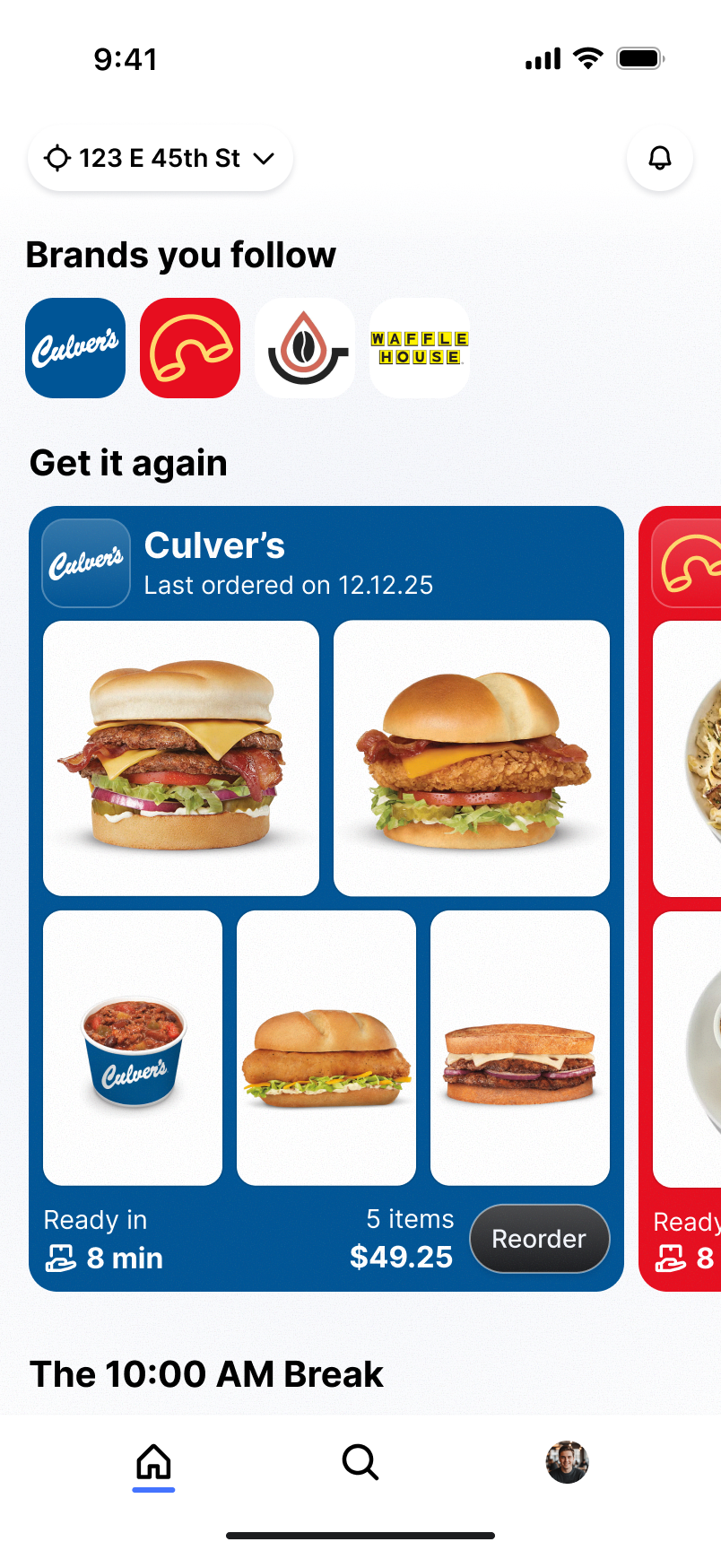
The Olo App is slated to launch Oct. 20 with a “second-party” model.
Starting as a text-messaging order service, Olo had a customer-facing presence until 2010 when it became a B2B software company. Its newest move, the Olo App, restores it, at least in part, to a customer-facing business.
Restaurants pay no commission on orders placed through the app. They also get access to customer data from across Olo’s network, while actual delivery is handled by third-party couriers. CEO Noah Glass has referred to this as “second-party” ordering—a middle ground between a marketplace and a brand’s own app.
Is the model new? Versions of it have been running for several years in Asia, Europe and Australasia, and among independent restaurants in the U.S. Their experience shows what the approach can do for restaurants, and where the hard work lies: persuading diners to switch.
What Olo adds is scale, bringing the model to large chains, and it starts with advantages most earlier versions lacked, including its existing brand base and some 40 million diners signed up for its Olo Accounts.
In Malaysia, the point-of-sale system supplier StoreHub launched Beep Delivery within 48 hours of the country’s first Covid lockdown announcement in 2020. It charged restaurant clients an average fee of under 10 percent (against the 35 percent StoreHub claimed marketplaces charged) and later brought its clients together in a shared consumer app.
In 2022, an Indian government-backed network, the Open Network for Digital Commerce, began letting restaurants sell through consumer apps such as Paytm and Magicpin, which typically charge them far lower commissions than the market leaders, Swiggy and Zomato. By its own 2024 count, ONDC handled food orders equal to about 3 percent of the two leaders’ volume.
Foodhub, which is now headquartered in Dublin, lists software clients at no charge on its consumer marketplace and works with more than 30,000 restaurants across Ireland, the UK, the US, Australia and New Zealand. Meanwhile, in the U.S., Toast already runs Toast Local, its commission-free marketplace for restaurants using its system.
None of these has yet displaced a market leader. Thailand and South Korea show what happens when a bank or a government spends heavily to try.
In October 2020, Thai lender Siam Commercial Bank launched Robinhood Food Delivery, a delivery app charging restaurants no commission. Within a year it had 2.3 million registered users. But it ran its own couriers with little revenue to pay for them, and its current chief executive puts losses at 9 billion baht (about $275 million) by the time operations were suspended in 2024. The bank sold the business that year, and in September the relaunched Robinhood set a commission of 10.5 percent. Olo, which does not employ couriers, avoids that cost.
In South Korea, the spending has come from the government. The country has 12 public delivery apps, run or supported by local governments, which charge restaurants up to 2 percent. One of the best known, Ddangyeoyo, reached 2.14 million weekly users a year ago, helped by government-funded discount coupons. It has since fallen to around 1.1 million while over the same period, Korea’s two largest delivery apps, Baemin and Coupang Eats, increased their combined share of delivery-app users to 88.3 percent, their highest yet.
Elsewhere, in Europe, the commission-free tools, such as FoodAmigos in Germany, Jamezz in the Netherlands and Ireland’s Flipdish, help each restaurant sell through its own website and app. Many of these tools also route marketplace orders into the restaurants’ POS systems, working alongside the marketplaces rather than competing with them.
What can US operators learn from all this? Second-party apps are probably best treated as an extra channel rather than a marketplace replacement. Where they have won large numbers of diners, as in Thailand and Korea, it has been on the back of heavy spending, and gains have proved hard to sustain once the money stopped.
For restaurants, the test is whether such an app brings in customers they would otherwise not reach. If it mainly attracts existing customers who would have ordered through the brand’s own app or website, it moves orders from one channel to another without adding sales and could erode margin if those orders carry extra fees or if regular customers start trying rival brands they see listed alongside the restaurant’s own.
However, artificial intelligence could significantly shift the dynamics. Since July, Square has allowed users of ChatGPT and Claude to find its restaurants and place orders without leaving the conversation, with no marketplace commission. A start-up, Bites, is building a similar commission-free network on ChatGPT through partnerships with POS providers.
If diners regularly ask their AI assistant what to eat, the hardest problem second-party apps have faced—winning diners and keeping them—may matter far less. What would count instead is who holds accurate, live menus that an AI can order from. Olo, with hundreds of brands already on its platform, is well placed to be that network. Its launch on October 20 will be a major test of the second-party model among US chains, and its results will be worth setting against the experience of Thailand, Korea and India.