Note: A version of this story was originally published on Franchise Times, a sibling publication of Food On Demand.
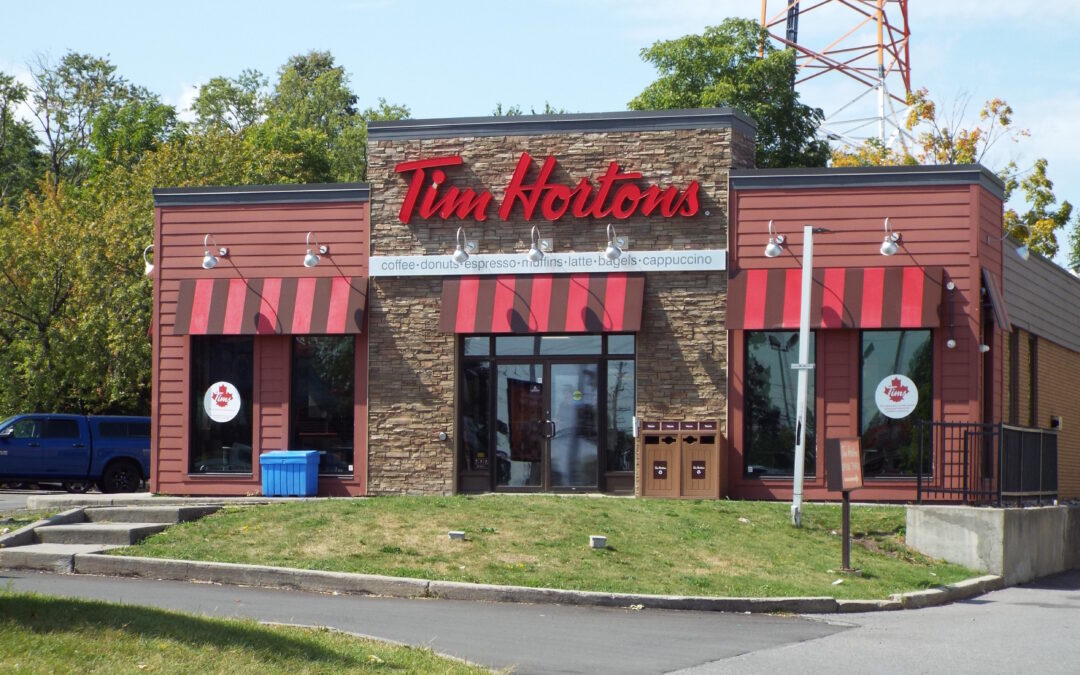
Tim Hortons has been trying to establish a foothold in the United States for decades.
After years of effort, U.S. leadership for the Canada-based concept said the push is starting to pay off.
“Over the last three years, we started building growth momentum across several other facets that have been driving some really good results in the U.S.,” said Katerina Glyptis, president of Tim Hortons in America. “Our openings have grown significantly, back in the day with Tims, it was kind of flat. We would open some and close some, and we kind of hovered, but we’ve steadily increased.”
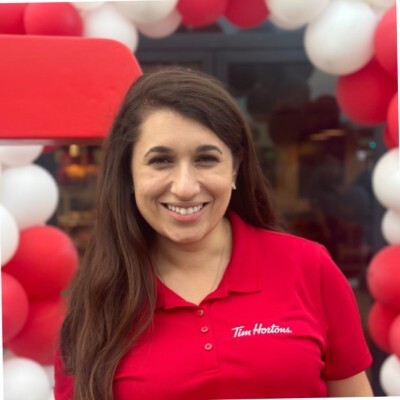
Katerina Glyptis, president of the U.S. operations for Tim Hortons, says the brand is making important gains in American markets.
While the brand—which is No. 17 on the Franchise Times Top 400, an annual ranking of franchise brands based on systemwide sales—fell a spot on the list, sales grew by nearly 2 percent and it increased its location count by 3.1 percent.
Tim Hortons is competing in a diverse snacks category, which reported nearly $28 billion in sales in 2025, up nearly 3.9 percent from 2024. The segment was headlined by Dunkin’ with $14.4 billion in sales, earning the company the No. 11 spot. Tim Hortons, part of Restaurant Brands International, had the next-highest sales total with $8.2 billion.
The coffee and donut chain, which finished 2025 with 6,232 locations, has grown its presence in the U.S. to nearly 700 units, adding stores in new markets such as Florida, Georgia, Tennessee, Texas and Virginia.
Alongside new unit growth, Tim Hortons expanded its menu to draw in new customers.
“In terms of growing traffic at our existing stores, we’ve had a relentless focus on growing that breakfast angle,” Glyptis said. “We’re seeing that pay off quite well. Our team is really grounded, resourceful and scrappy. We’re moving quickly and responsibly.”
Percentage-wise, the strongest-growing brand in the category was No. 199 Wetzel’s Pretzels, with sales jumping 10.7 percent to $310 million. That’s followed by bubble tea concept Gong Cha, which increased its sales by nearly 9 percent to $629 million, and Shipley Donuts’ nearly 8 percent boost to $345 million.
Shipley Chief Development Officer Todd Brin said the brand’s success was partially thanks to an upgraded tech stack. Particularly, Brin cited a new artificial intelligence-powered ordering system.
“It basically cut the catering order build-time from 10 minutes to 10 seconds,” Brin said. “There’s a lot of automation with that. We also revamped our website to incorporate tools on the ordering platform, making it easier for customers to order a mixed box.”
The number of new openings was solid for Shipley, increasing 7.4 percent, from 366 to 393. That level of growth was 46 percent higher than expansion in 2024, Brin said, with the brand entering new markets in Alabama, Florida, Georgia and its home state of Texas.

Todd Brin, chief development officer at Shipley Donuts, says tech enhancements are yielding positive results.
The business is keeping that pace.
“The rest of this year has been focused on unit growth,” Brin said. “We’re continuing franchise sales and utilizing data analytics to help us find the right markets, instead of just opening units to open up units. We’re also hyper-focused on the right franchise candidate.”
At Gong Cha, meanwhile, Global CEO Paul Reynish said the international market has been integral to the brand’s sales growth. Like Shipley, Reynish attributed Gong Cha’s performance to technological upgrades.
“Japan is kind of our star player across the board,” Reynish said. “They excel at every metric. That all has to do with the technology we’ve put in place. We have a digital kitchen concept. It’s not robotics, but an AI-based dispensing machine that helps make the drinks faster.”
While it was largely a positive year for the category, smoothie brand Jamba struggled, with sales declining 4.4 percent, from $505 million to $483 million. The number of locations also fell from 788 to 772.
Mike Freeman, president of brands at parent company GoTo Foods, called 2025 a “transformational” year for Jamba, citing changing customer patterns and some regions having more success than others. To meet the challenge, the business rolled out a new unit format and is focusing on menu innovation.

Mike Freeman is president of brands at GoTo Food, the parent company to Jamba, which saw declines in systemwide sales and units in 2025.
“We had to make some adjustments on our development strategies,” Freeman said. “We had to make decisions about what we wanted to explore with off-premises and in-store sales. Those decisions were made as we had changes with our general consumer. We ended up spending a lot of time to develop a new prototype, which is a much fresher, cleaner version of Jamba.”
Beyond its new prototype, Freeman said Jamba is testing sandwiches for menu expansion and is also exploring catering options to improve unit economics for the franchisees.