Scaling a catering program is no simple task for an operation; it requires consistency across channels, accountability built into the store and brand levels, simple yet thorough standard operating procedures, and an appropriately dense tech stack designed to adapt.
While that list only scratches the surface of a catering program manager’s responsibilities, the return on investment is well worth the effort for brands
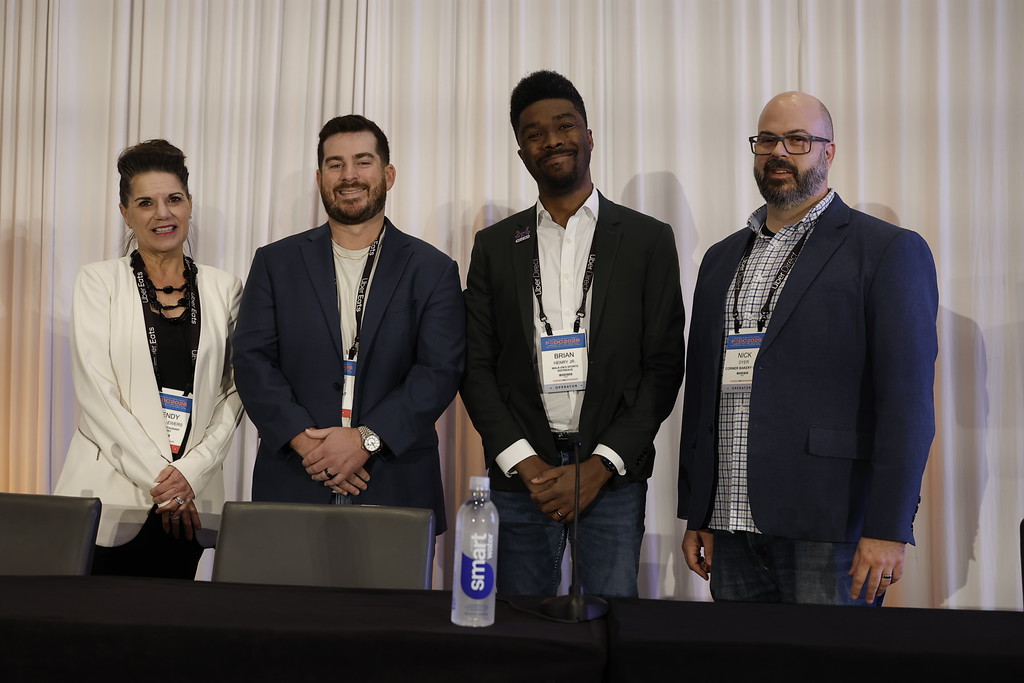
Wendy Ruebel-Ewers of Ruebel Restaurant Advisory (from left), Aaron Hoffman of DeliverThat, Brian Henry Jr. of Walk-On’s Sports Bistreaux and Nick Dyer of Corner Bakery Cafe huddle before a session titled “Building Catering, A Holistic, Whole-Picture Approach” at the 2026 Food On Demand Conference May 7 in Dallas.
that can successfully tap into catering.
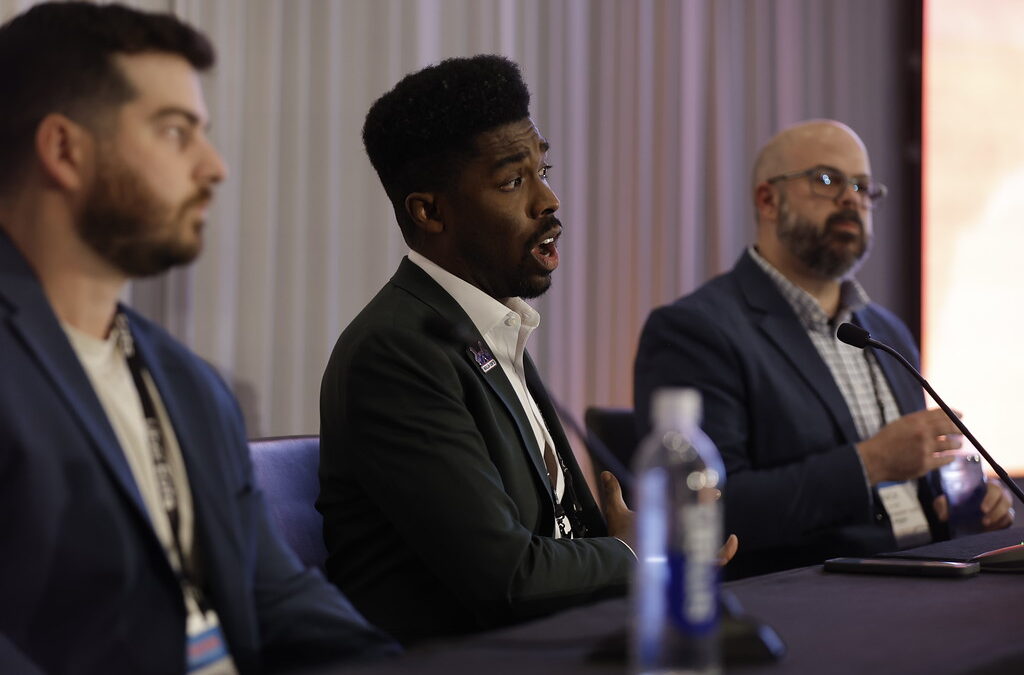
Wendy Ruebel-Ewers, a restaurant industry consultant whose resume is lined with roles leading catering and off-premises operations for enterprise brands, dove into the intricacies of successfully establishing and growing a catering program during a May 7 session at the Food On Demand Conference in Dallas. Joining her was Nick Dyer, director of catering for 86-location Corner Bakery Cafe; Brian Henry Jr., director of operations services at 78-location Walk-On’s Sports Bistreaux; and Aaron Hoffman, CEO of end-to-end delivery infrastructure platform DeliverThat.
Treating catering as a business within a business
Ruebel-Ewers started the session with sentiment that the panelists agreed on and echoed throughout the discussion: “Catering is not a side hustle anymore. It is one of the fastest-growing channels, and I believe the best way to grow catering is to treat it like a business within a business.”
Hoffman said brands that execute catering well do just that, while operations that are simply dabbling in the space make the mistake of treating it like a large-order takeout channel.
“Start with a strategy behind why you want to cater food, whether it’s a marketing play, it’s a quality play, or it’s a profitability play,” Hoffman said. “That is going to help dictate who you align with in partnerships. It’s critical that, if you want to execute at scale, you have the right partners.”
Walk-On’s launched systemwide catering in 2025, according to Henry Jr., which brought a flood of challenges in executing the channel consistently across locations nationwide. Many of the restaurants already had nonstandard catering menus, so the brand had to navigate allowing for exceptions to the official catering menu without permitting too many.
For small and mid-size restaurants, Henry Jr. said the biggest opportunity to scale catering effectively lies in spreading awareness of programs and securing guest adoption, which can be done by making the channel easily accessible to guests online and by marketing it well within the store.
“On the mature brand side, I think it’s really about incrementality,” Henry Jr. said, adding that scaling for enterprise restaurants starts with an effective menu and strong digital infrastructure. “How do you get a guest that comes to you four times a year for catering to come to you a fifth time? How do you get them to add items to their order when they do come to you on those four times a year that they wouldn’t necessarily typically add?”
Beyond simply having the ambition to grow a catering program, Hoffman said restaurants must prepare for that success.
“Everyone wants more orders until they actually start flowing in. You’ve got to make sure that food is prepared,” Hoffman said. … “If you want to do catering, again, you have to treat it like a different business, and food prep is critical.”
Strengthening a catering program’s foundation: SOPs and operational processes
Dyer emphasized internal accountability within a restaurant’s four walls as key to building and growing a catering program. A lack of internal ownership, he said, is a significant shortfall of many brands looking to establish a catering channel.
“You can’t automate accountability,” Dyer said. “There has to be somebody who owns the outcomes, and that goes from top to bottom. If somebody is leading your catering program from the top, but they have no one to hold accountable operationally, it’s broken. The same is true (vice versa).”
Dyer said catering orders are too valuable to mess up, so strong internal infrastructure and detailed processes are required to produce a scalable, consistent and efficient program.
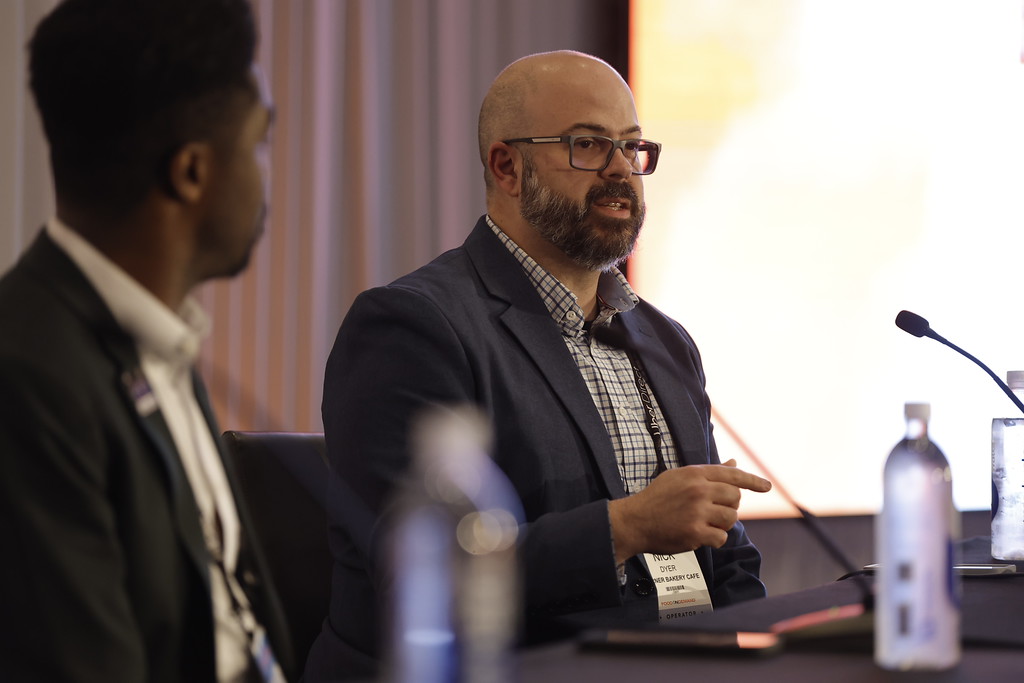
Nick Dyer, director of catering for 86-location Corner Bakery Cafe, speaks about the value of accountability during a session about scaling catering programs during the 2026 Food On Demand Conference May 7 in Dallas.
“An operator will execute with an SOP or without,” Dyer said. “They’ll figure it out, and if there’s no guide there, they might not figure it out the way you want them to figure it out. From sales tactics to operational execution, having well-defined processes is the most important, and it has to be stupid simple.”
Henry Jr. added that consistency represents the foundation of a catering program, and that should be taken seriously if scalability is desired.
“The guest craves consistency throughout their experience, regardless of whatever the channel is that they execute,” Henry Jr. said. “We have to make sure we protect the foundation of what we are trying to do because nothing will kill the speed of scalability like ambiguity. We can’t be ambiguous; we have to have those systems and processes in place.”
Ruebel-Ewers further emphasized the need for an ironclad SOP, noting that it should apply to all relevant staff.
“When you are designing these SOP — I’ve said keep it stupid simple — but you also need to get all the way down in the organization to the hourly people that are actually executing (catering),” she said. “You can create really pretty tools, but if nobody is using them, then what is the case?”
3PD marketplaces’ space in catering
All three panelists said approaches to third-party delivery marketplaces shouldn’t be taken lightly when it comes to catering programs. Dyer said operators should handle such decisions tactically at the location level based on long-term goals.
“If you are going into a new market, somewhere that you have never reached before, activating a marketplace makes a whole lot of sense because you are introducing a ton of guests to your brand,” Dyer said. “But, if that’s your only avenue, you are just renting your customers. You are not going to convert everyone (to first-party channels); not everyone wants to convert.”
Once converted, though, Dyer said brands maintain more ownership of the valuable catering customer relationship through first-party channels.
As agentic ordering takes off, Hoffman said brands should put more emphasis on establishing first-party channels than ever before.
“It’s never been more critical than right now to build your first-party channels and own them, because what’s coming is agentic commerce — no question,” Hoffman said. “The interface, the place people will make those decisions, will not be on marketplaces; they will be in ChatGPT and other AI chatbots.”
The 2026 Food On Demand Conference wrapped up Wednesday, May 7, at the Renaissance Dallas Addison Hotel.