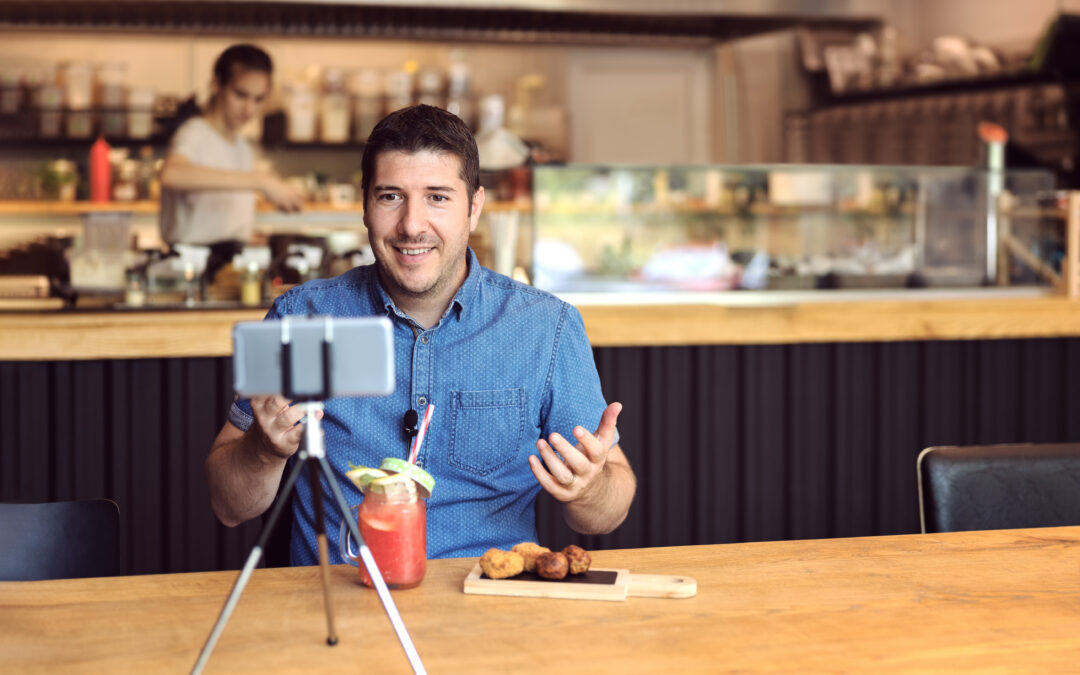
By the time some diners walked into Mamma Lucia, they already recognized a face from the restaurant’s social media videos. “Hey, you’re Mr. TikTok,” they’d say, according to Nicholas Marks, chief creative of Plush Marketing Agency, which worked with the Maryland-based Italian restaurant on its social media.

Nicholas Marks is the chief creative of Maryland-based Plush Marketing Agency.
The greeting showed that the videos stuck with diners. For restaurant operators, the harder element to evaluate is how many orders a campaign actually helped generate. In an interview with Food On Demand, Marks suggested focusing social content around real food and familiar faces to draw people in, then giving them an offer they can act on, such as a holiday bundle with an influencer’s promo code.
“When you get those restaurants that are really willing to put themselves out there, and they have somebody who can show up and be part of that content all the time… That’s the content where we don’t have to put a lot of money behind it to push it, because it picks up and grows on its own,” Marks said.
Perceptions of authenticity and familiarity are increasingly valuable for restaurants looking to bring in guests and stay relevant, Marks said, especially in an era where relatively low-effort artificial intelligence is abundant and quickly losing its charm.
Marketing was the top area operators reported AI impacting their brands, according to the National Restaurant Association’s 2026 State of the Restaurant Industry report, with 19 percent of full-service operators and 15 percent of limited-service operators saying they use AI-powered technology for marketing initiatives.
“Creating content that is not your food, not your atmosphere, not your brand, is going to backfire very quickly,” Marks said. The human touch, meanwhile, “will be the premium coming in the future because there’s so much AI content that’s being generated.”
While restaurants across the nation are folding marketing into their growing list of AI use cases, 41.9 percent of operators cited customer acceptance as a top concern for using AI-powered tools and services in general, according to November 5 reporting from the NRA.
Social media marketing has grown in prominence and relevance among restaurant operators for years. In 2024, restaurants reported a 9.9 percent average increase in business-to-consumer revenue as a direct result of social media efforts, according to data from Deloitte Digital. The 2025 State of Social report noted 90 percent of restaurants found social media very or extremely important to their digital marketing approach, especially social-first brands, which saw revenue grow 14.1 percent.
For a holiday influencer campaign, Marks said gift cards, holiday bundles, and limited-time menu items incentivize guests to visit, while campaign-specific promo codes let restaurants evaluate the effectiveness of the content.
“You’ll see an ad here, or you’ll engage with a brand over here,” Marks said of the consumers’ experience with social media advertising. “You might save this, and you’ll come back to it, and then … a transaction might take place later.”
To help determine the effectiveness of social media marketing, Marks suggested brands use social platforms to build awareness around new products and consider local Google Ads if guests can order online and the restaurant can trace orders through its point-of-sale system. While walk-in purchases are harder to trace to a specific campaign, limiting overlapping promotions clarifies direct impact.
Additionally, different social media platforms bring different strengths to restaurant marketing. When working with brands, Marks said he has observed TikTok and Instagram as effective for generating engagement, while Facebook often draws more interaction from relatively older customers.
Because social media offers a prime opportunity to reach new and existing guests, Marks said he often encourages clients to use advertising dollars to boost exposure on platforms crowded with marketing.
“We like the three forms: where you’re organically reaching people, you’re spending money to advertise to reach people and then you have the third-party influencer also amplifying the restaurant brands,” Marks said.