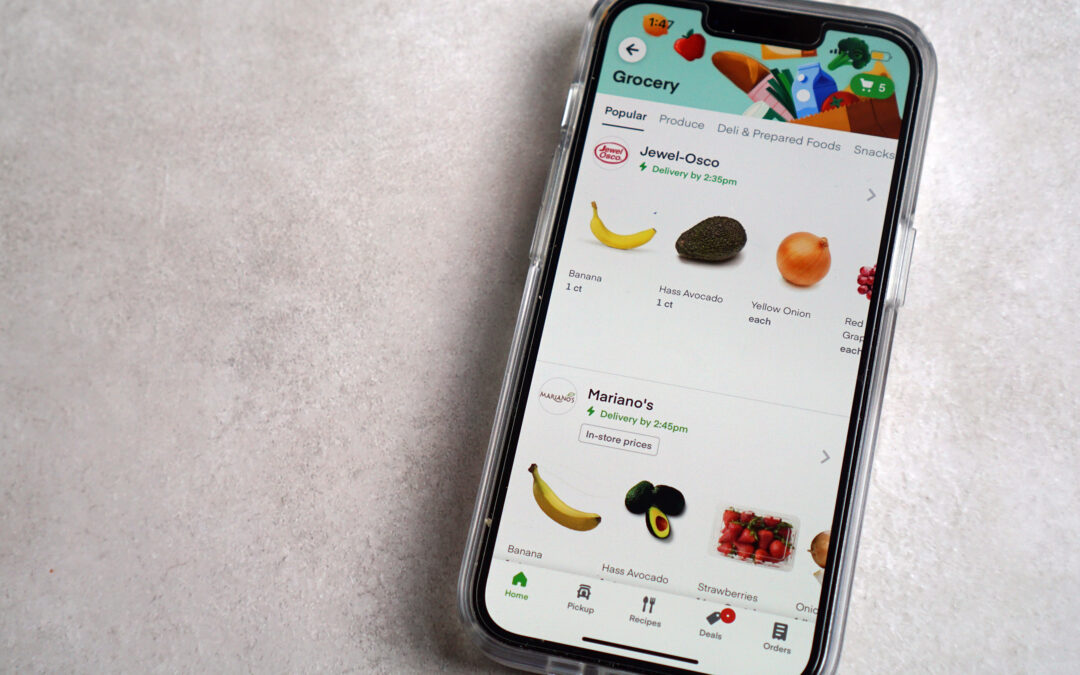
DoorDash’s proposed $17 billion acquisition of Instacart, announced October 29, would deepen its push into grocery delivery and expand its role in how grocers sell online.
Beyond representing an aggressive push into the grocery market for DoorDash, the acquisition is positioned to impact off-premises ordering channels for thousands of retailers at a time when many such brands report competition in the space is ramping up.
Inside DoorDash’s acquisition of Instacart
DoorDash, Uber Eats and Grubhub all shifted more of their delivery mix toward grocery and retail in 2025, according to Gridwise Analytics’ 2026 Annual Gig Mobility Report, with DoorDash leading the way.
Grocery and retail rose from 16 percent of DoorDash’s deliveries in 2024 to 22 percent in 2025, with grocery specifically up 33 percent over that period
The deal would bring a grocery delivery platform that saw about 25 million annual customers into the 3PD giant’s expanding portfolio, according to figures from 2023 and 2024.
While DoorDash saw roughly four times the number of overall users and seven times the number of orders as Instacart, the platforms draw distinctly different customer bases, according to November 10 research from YipitData. Based on 12 months of data ending in September, Instacart’s average order was $99.30, almost triple DoorDash’s.
Across DoorDash, Instacart and Uber Eats, DoorDash and Instacart together accounted for about 69 percent of observed users and 74 percent of observed orders in YipitData’s panel in the 12 months through September.
U.S. online grocery sales grew just over 16 percent year over year in September, when 64 percent of U.S. households bought groceries online, Brick Meets Click reported.
Grocery leaders react to DoorDash-Instacart deal
In an October 29 press release, Instacart noted that, if the acquisition goes through, its users could shop at more than 50,000 additional stores, on top of the nearly 100,000 stores on the Instacart platform today.
This week, Reuters reported the U.S. Department of Justice will review the proposed deal. If antitrust problems prevent the transaction from closing, DoorDash will owe Instacart a $1.25 billion cash fee.
Misty Deskins, senior director of marketing for Food City, said the regional grocer has spent several years growing its online business with both platforms and sees the deal as a way to keep up with changing customer expectations. Bruce Nustad, president of the Minnesota Retailers Association, said retailers have told the association that both services help them reach customers and meet demand for delivery. Both comments appeared in a November 13 statement DoorDash published through its Shop Local Together campaign.
“We’ve been focused on growing our e-commerce business with DoorDash and Instacart for several years and continue to see customer expectations for the digital experience evolve,” Deskins said in a release from Shop Local Together. “As we continue to invest in those platforms, we’re excited about DoorDash’s acquisition of Instacart. Together, these valued partners will enable us to keep innovating to exceed customer needs and improve their shopping experience.”
Nustad in the same release echoed that sentiment and noted the growing expectation of convenience on the part of customers.
“Today’s customer expects last-mile delivery to be part of the shopping experience, whether they’re buying from a neighborhood store or a national retailer,” he said. “DoorDash’s acquisition of Instacart would seem to build on those strengths and should enable even better service for retailers and their customers. We support opportunities like this to improve delivery, help retailers grow and make it easier for consumers to shop the stores they value.”