Holiday parties represent an annual opportunity for restaurants with catering programs to secure some of their largest orders of the year while gaining valuable exposure.
Holiday party planners expect budgets for these events to rise an average of 13 percent this season, with 96 percent expecting to spend the same as or more than last year, according to ezCater’s 2026 Workplace Holiday Party Report.
Surveyed party planners averaged a budget of $49 per person for food and beverages this year, with 76 percent of polled employees reporting food is what they look forward to most concerning the events—the most selected answer by a wide margin.
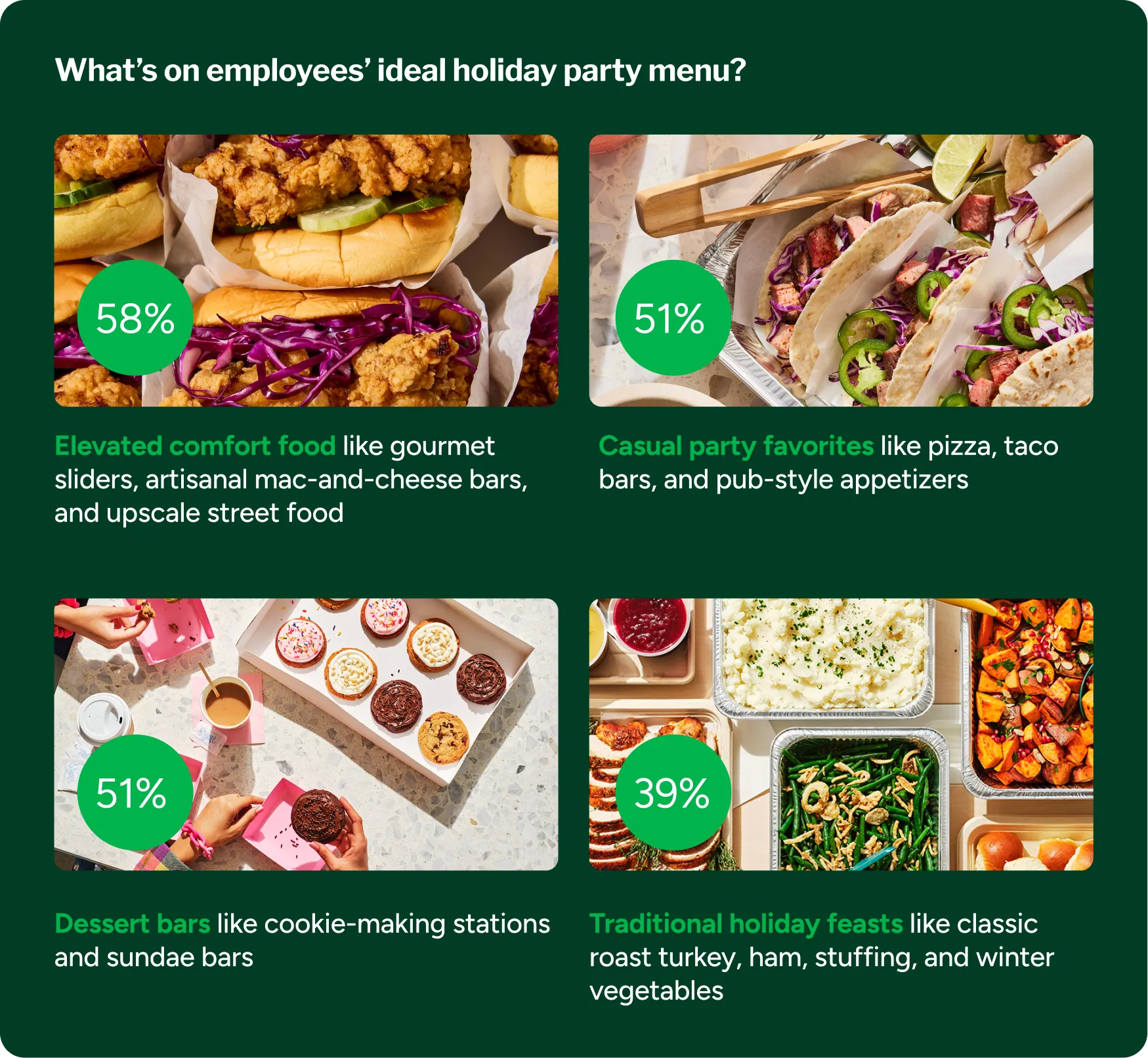
Holiday party planners expect budgets for such events to rise this year, according to ezCater’s 2026 Workplace Holiday Party Report.
Holiday party catering not only provides large tickets and the chance to secure a long-term spot as part of the annual festivities, but it also offers a nearly unmatched opportunity to engage new customers and boost brand visibility.
According to catering customer survey data published November 11 from Toast, 65 percent of surveyed catering customers say they consider themselves regulars at a restaurant after first trying it through catering. Food quality was the top factor in selecting a caterer, compared to 14 percent who prioritize price.
Toast’s survey found holiday parties tied with work meetings/office events as the second most common catering occasion, ranking behind birthday/family celebrations and ahead of game days/casual get-togethers.
While party catering offers a promising off-prem opportunity during the holiday season, other channels have seen dips during those festive times.
While Mother’s Day and Valentine’s Day saw delivery volumes about 15 percent above average for leading third-party delivery platforms, Gridwise Analytics’ third annual Gig Mobility Report found Thanksgiving and Christmas orders were 56 and 59 percent below average, respectively.
Among respondents who planned to celebrate Thanksgiving, 3 percent said their group would order delivery or takeout, according to YouGov survey data published earlier this month. That share was 7 percent among respondents ages 18 to 29, the highest of the age groups surveyed.