This article was originally published in Franchise Times—sister publication to Food On Demand. Nicholas Upton has reported on retail and restaurant technology for more than a decade. His Tech Stack column aims to distill complex ideas into actionable insights.
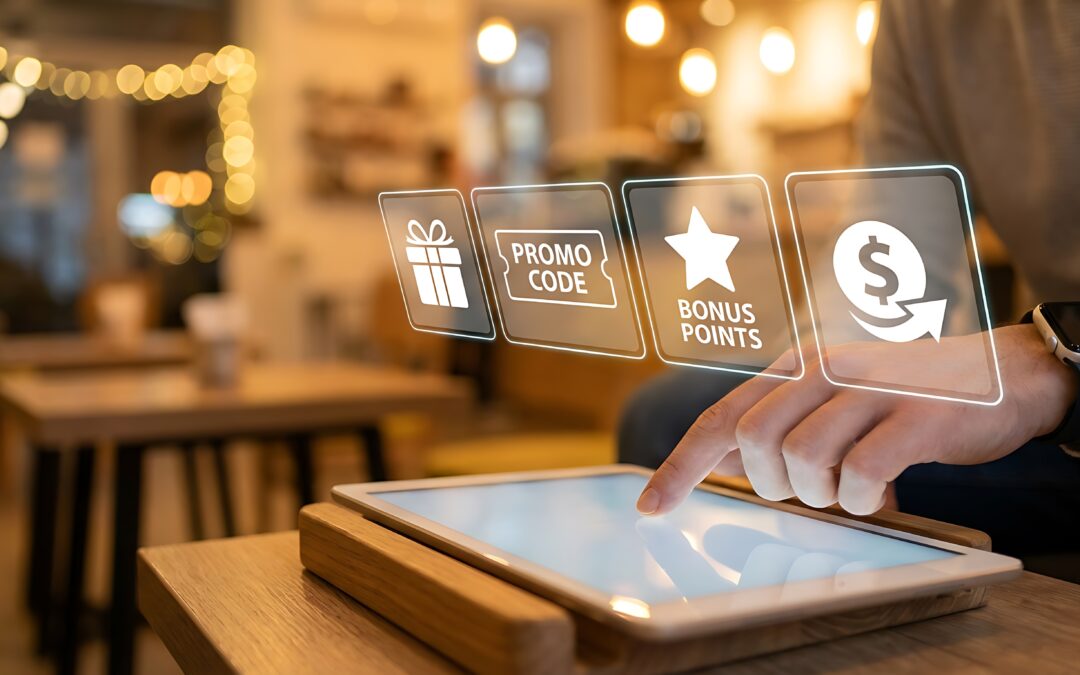
I just cleaned out the office junk drawer and found more than seven punch cards for everything from pizza to coffee. Clearly, they didn’t keep me all that loyal. All the apps I tried just to get a free treat? They are also sitting in a junk folder on my phone, collecting digital dust.

Nicholas Upton
Illustration by Jonathan Hankin
I know my concept of loyalty is archaic (everyone at my neighborhood taco spot knows my name), but it’s interesting to see what is working among people who leave a six block-radius.
A December 2025 PAR/Punchh survey of 1,000 U.S. consumers captures why the loyalty arms race continues.
In a price-conscious macro environment, nearly 70 percent of consumers said loyalty programs help them manage costs. One-third said they’re using restaurant loyalty programs more often because of economic pressure.
That same data highlights the competitive mechanics of loyalty: 25 percent would switch to a less-preferred restaurant for better loyalty perks, and half compare offers before deciding where to eat.
That said, people only have the capacity to be “loyal” to a handful of brands. More than half of respondents said they prefer managing no more than five loyalty accounts. And therein is the arms race. Brands fighting to get visits with loyalty aren’t just competing against their typical set, but across categories and qualities.
The last note from the loyalty firm said Gen Z beat out millennials for the most active loyalty members across the industry, which requires more evolution to meet the attention spans of the anxious generation.
As much as it changes, loyalty is working
McDonald’s reported that across 70 loyalty markets, systemwide sales to loyalty members rose 20 percent to nearly $37 billion for full-year 2025, and 90-day active loyalty users grew 19 percent to nearly 210 million. On its fourth quarter 2025 call, execs emphasized why that matters: the average U.S. customer visited 10.5 times per year prior to joining the loyalty program and 26 times in the 12 months after joining.
At Taco Bell, active loyalty members climbed 31 percent year over year, led by Gen Z. Those are the customers, CEO Chris Turner said, “where we can have a direct relationship.”
How Taco Bell uses that direct relationship is the other trick. Executives called out generationally relevant campaigns and loyalty- or app-exclusive items or merchandise. But the brand, like many others, has shortened the time to earn perks, so there is always something immediate no more than a visit or two away.
You can see this condensed time to perk all across the loyalty space. When Subway relaunched its Sub Club late last year, it promised every fourth footlong free. The company walked back that plan and instead is offering time-limited discounts on subs throughout the year.
Tiers take over
Tiered programs might be one of the strongest tools in the 2026 loyalty playbook.
Zach Goldstein, CEO and co-founder of loyalty juggernaut Thanx (and who I generally ask what is up with loyalty), told me that tiers have become one of the best ways to increase frequency profitably.
“Tiers work because they tap into something more powerful than discounts: aspiration. When customers can see where they stand and what’s next, they have a reason to consolidate their spending with you instead of spreading it across competitors,” Goldstein said.
He said on average, clients grew their engaged customer base by five to seven times, but at least 180 percent when moving to a tiered program.
“Brands adopting modern tiered programs are reducing discount rates by roughly 80 percent—from about 10 percent to 2 percent—while still increasing engagement. That’s the unlock,” Goldstein said.
That’s not just incremental orders; something he said gets missed in superficial examinations of tiered programming. Each tier offers multiple levers for each cohort of loyalty members, from the new to the ride-or-die.
That shows up in profitability by allowing for different rewards at each category designed to trigger both orders and aspiration to reach the next tier. It shows up in better personalization. A lapsed but formerly loyal member can get a ping for a fun new item, while a lapsed new member can get a push for a discounted but high-margin brand favorite. And assuming it’s integrated into ordering online and at the counter, it’s a “Cheers”-level hospitality enabler where staff can see and cater to the most loyal guest.
How to look at loyalty in 2026
Goldstein suggested operators and brands look at reach, impact and affordability as they explore that next loyalty upgrade.
Reach: What percentage of your revenue comes from a loyalty program? “If you’re sitting at five to 10 percent of your base, your program isn’t reaching enough of your customers to move the needle, and you should be asking hard questions about your enrollment experience,” Goldstein said.
Impact: Are members are actually changing behavior? “Are they visiting more? Is frequency going up? Metrics like email opens or app downloads don’t drive revenue. You should be tracking engaged customers, visit frequency trends, and, ideally, running A/B tests so you can isolate what your program is driving versus what would have happened anyway,” he said.
Affordability: What’s an effective discount rate? If your program is “working” but you’re giving away 10 percent in discounts, the math doesn’t hold. Discounts of 1 to 2 percent are a better target, he said.
The biggest thing to do: Stop looking at member counts as anything of value. It’s a vanity metric that doesn’t really matter.
“Start looking at revenue per engaged member and the program discount rate together. That tells you whether you’re driving profitable growth or just buying visits,” Goldstein said.
But if you spent all your loyalty investment last year, the smallest thing you can do is turn on abandoned cart automations. If someone put a meal in a cart and wandered away, they quite often just need a nudge, and you probably just need to hit a few buttons.
“It’s the kind of thing that’s just sitting there waiting for operators to flip the switch, and most haven’t,” said Goldstein.