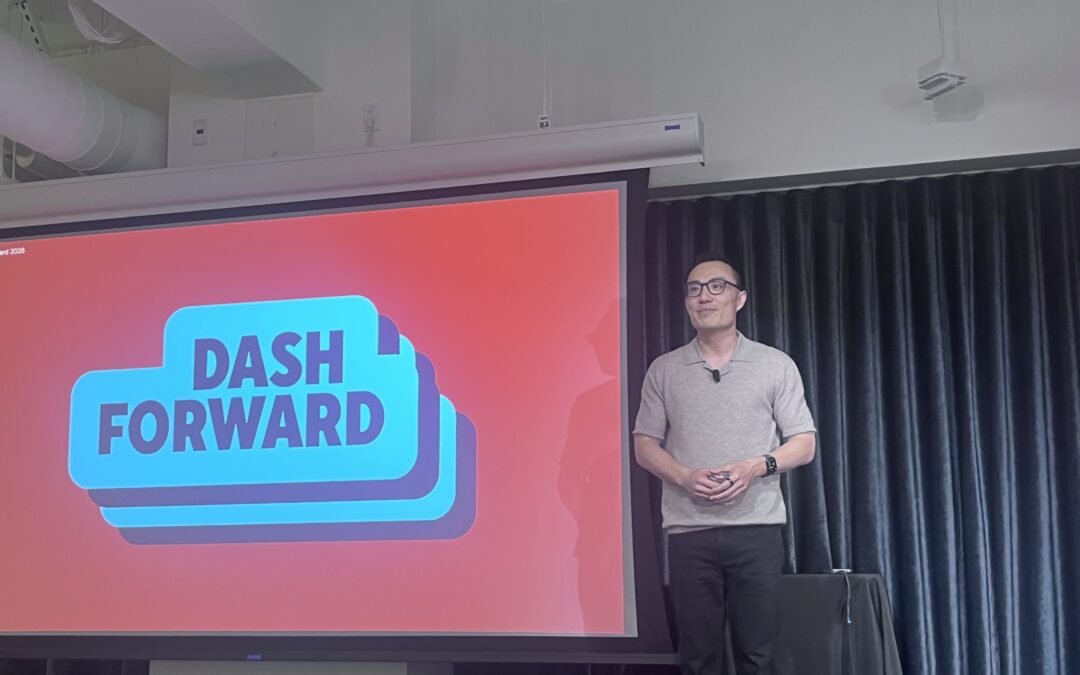
At the Dash Forward event at DoorDash’s headquarters in San Francisco, CEO and Co-founder Tony Xu pulled back the curtain on a new wave of tech, from robots to a redesigned app aimed at making delivery smarter, faster, and more personalized.
“Our approach in each of these areas is to look at the technology and create products that solve real customer problems, whether that pertains to applying the latest techniques in AI or how we build autonomous technologies,” said Xu, kicking off the event.
Food on Demand attended the event in-person. The flashiest part of the day was when DOT came rolling in with a food delivery. That’s DoorDash’s new autonomous delivery robot, built to travel on roads, bike lanes, and sidewalks.
Developed in-house at DoorDash Labs, DOT is about one-tenth the size of a car. It can reach speeds up to 20 mph and carry up to 30 pounds.
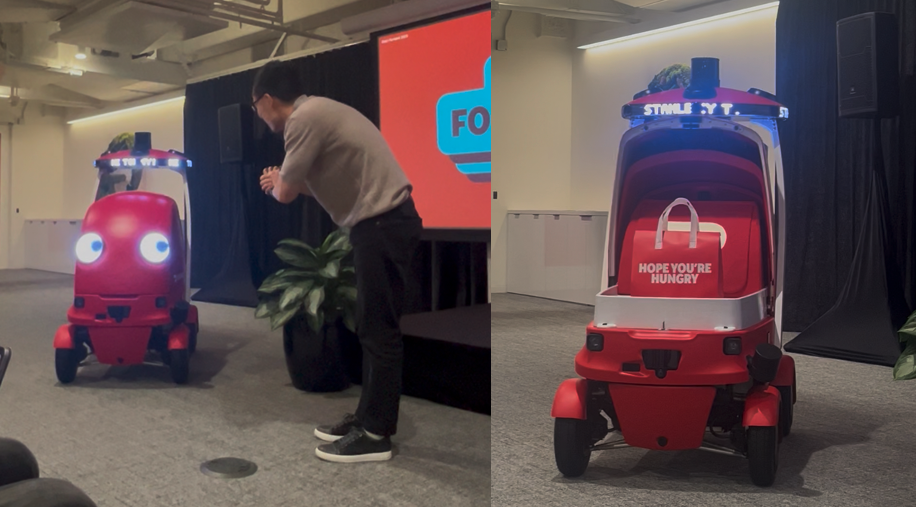
DoorDash CEO and Co-founder Tony Xu introduced DOT, the new autonomous delivery robot.
“It is small enough to navigate doorways and driveways, fast enough to maintain food quality, and smart enough to optimize the best routes for delivery,” said Stanley Tan, co-founder and head of DoorDash Labs.
DOT is live in Tempe and Mesa, Arizona, with plans to expand to new markets.
The delivery giant also introduced its new Autonomous Delivery Platform, an AI dispatcher that matches every order with the best delivery method. Whether it’s a Dasher, a drone, or DOT, it considers cost, speed, and distance.
Tackling missing delivery items
Tired of grabbing your delivery only to find a missing side? That’s where SmartScale comes in.
Developed by DoorDash Labs, SmartScale uses weighing tech and predictive AI to flag incomplete orders before they leave the restaurant. We got to test it out ourselves and it caught when I forgot to pack a soup, just based on the weight.
“When you think about the experiences that cause the most frustration with customers, it’s always the one thing you built your order around that’s missing,” said Parisa Sadrzadeh, VP of strategy and operations at DoorDash in an interview.
Panera Bread is the first national restaurant to use SmartScale and has seen a 42 percent reduction in guest-reported missing items.
“Like all technology, the more it’s used, the more we learn and improve the experience. It’s important that the experience be simple for hospitality staff, especially during peak times — orders coming in, phones ringing, customers and Dashers picking up. It’s stressful. This is meant to make that process really easy, like having a fact checker on your side. You gather everything, stick the bag on the SmartScale, and get a green or red light. Green means hand it off. Red means check what’s missing, then hand it off.” Sadrzadeh explained.
SmartScale is now live in 10,000 stores. It also aids autonomous deliveries, weighing items before they head off in a DOT robot or drone.
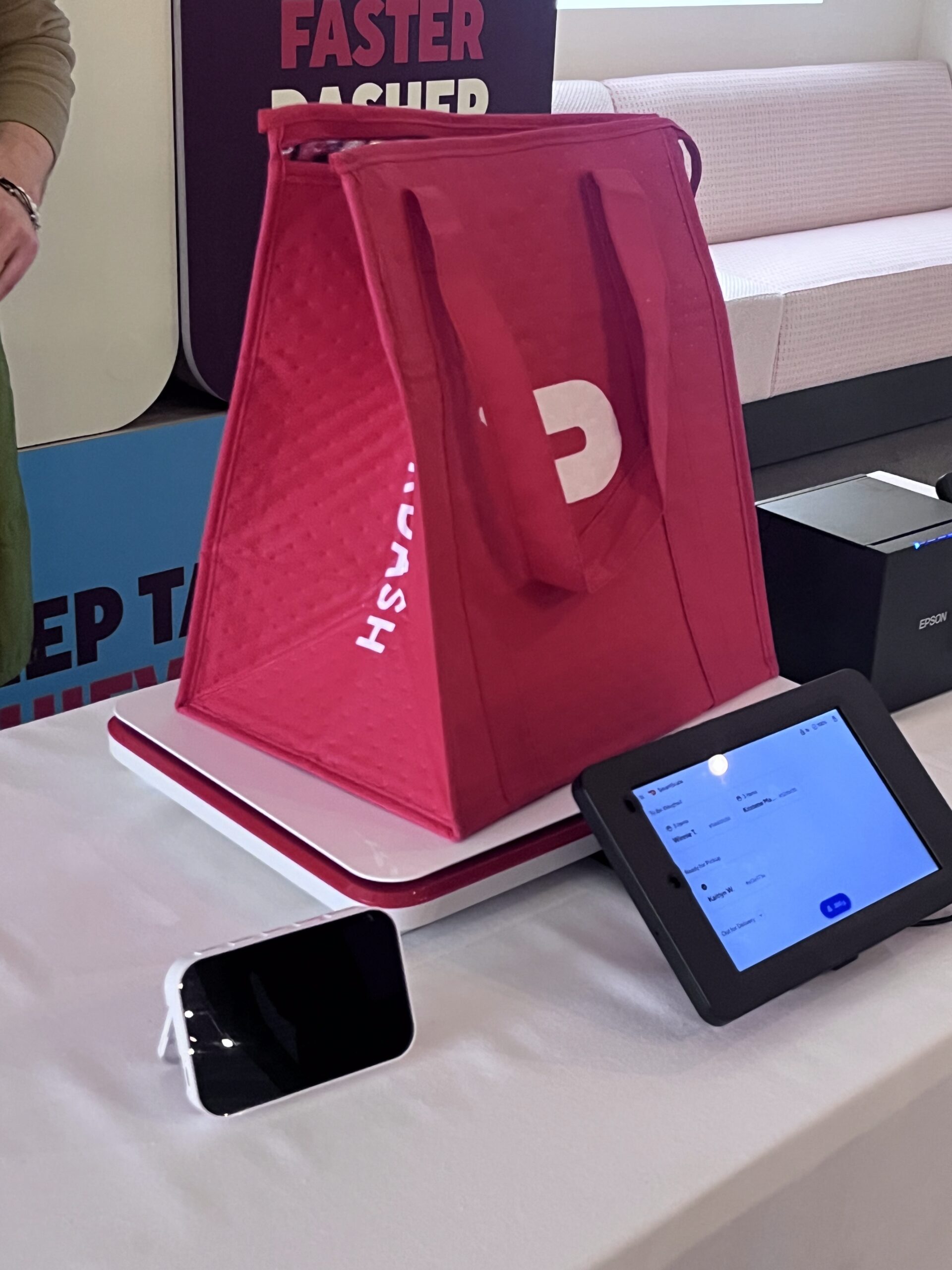
SmartScale is now live in 10,000 stores.
App updates for Dashers and consumers
Even with robots in the mix, Dashers remain at the core of DoorDash’s delivery network. Also unveiled was a new dasher map and app experience.
“This is an example of an effort over years in which we fine-tuned parameters such as apartment entries and exits, gate codes, parking spaces, among many other variables to master the final 100 feet of delivery. We’re excited to package all of this inside a new app,” said Xu.
Dashers will see a simpler screen that makes it easier to know when it’s the best time to dash.
Video emerges
In the age of TikTok, DoorDash is also evolving from images to video on its app.
“Customers have grown accustomed to video in many places. It gives more information about food, how it’s prepared, portion size, and more,” said Sadrzadeh.
This short-form video content from local creators is live in Atlanta, Austin, Miami, and San Francisco, with more cities rolling out through the year.
New discovery and personalization tools
DoorDash also launched an AI-powered recommendation engine that offers personalized picks based on past orders, searches and dietary needs. And it teamed up with Yelp, so that consumers browsing its website can order DoorDash right on the site.
Plus its rolling out a new feature called Going Out, which brings restaurant reservations and in-store rewards into the app. For the first time, diners will be able to book a reservation directly in the DoorDash app via the integration with SevenRooms. It’s launching first in Miami and NYC, with more locations planned.
This flurry of announcements comes as competitors also ramp up automation and AI. Uber Eats has partnered with Serve Robotics and Coco Robotics in select cities for sidewalk robot delivery. Other companies are too creating technology to aid in mishap orders. Across the industry, AI assistants, recommendation engines, and other innovations are increasingly shaping the future of food delivery.