Restaurants across the industry use loyalty programs as a tool to engage guests and drive revenue, but the success of those programs in reaching key benchmarks varies vastly depending on the type of cuisine sold by an operation.
Indian cuisine, for instance, was the leading category activating loyalty members, while coffee proved the most successful operation type for retaining program users and generating high-frequency engagement. These were among the findings from Incentivio’s 2026 cuisine-level loyalty benchmark report.
Incentivio’s report gauged loyalty performance across more than 4,000 restaurant locations, spanning 12 months and 19 cuisine categories, measuring activation, high-frequency engagement, revenue impact and retention.
The findings were clear: Customer value of loyalty programs looks different across cuisine types, with some categories using such platforms as revenue engines and others turning to them more as engagement tools.
Activation
Acquiring members is merely the first step of the loyalty journey for guests, but a crucial aspect for operators nonetheless, as the effectiveness of a platform is ultimately capped by its reach.
Incentivio’s analysis found that the three cuisine categories leading the way in median activation rates did so with a fairly hefty margin over the rest of the pack.
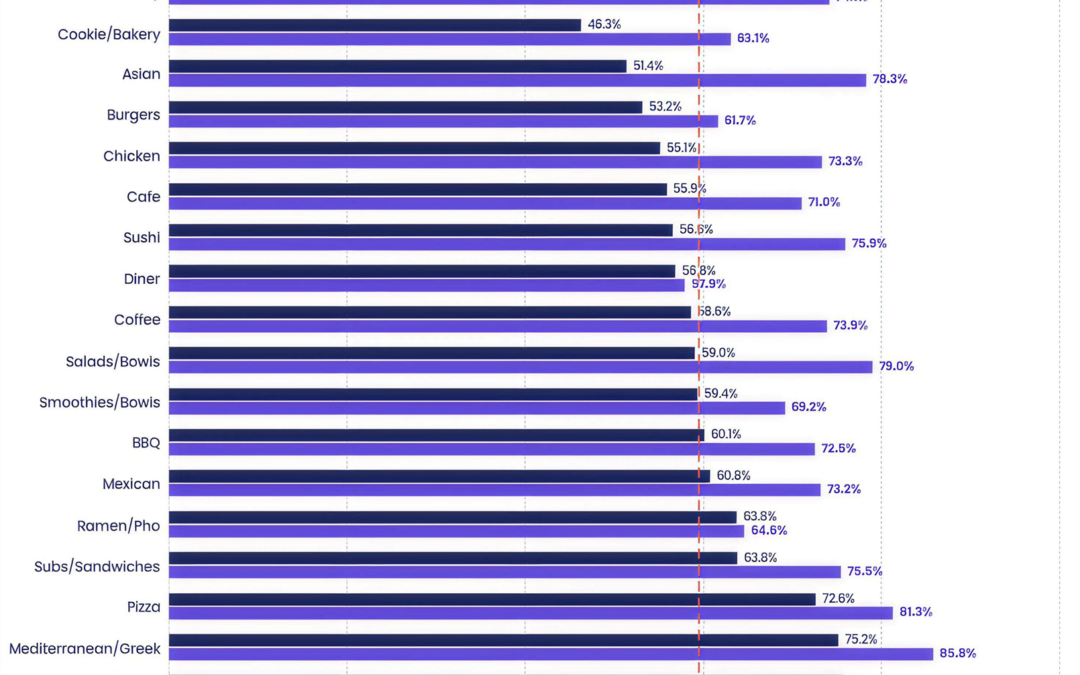
The operation types most successful at securing a first purchase from loyalty members were Indian (75.7 percent), Mediterranean/Greek (75.2 percent) and Pizza (72.6 percent); all other categories had median activation rates below 64 percent. Italian (33.6 percent), Brewery (42.6 percent) and Cookie/Bakery (46.3 percent) were the lowest performers for this benchmark.
Restaurants with high activation rates encouraged new loyalty members to make their first purchase sooner by sending personalized offers based on customer behavior and engagement. Top-performing restaurants did not shy away from adjusting conversion strategies and aligning promotions across online and in-store channels.
According to cost-conscious guest research from the 2026 Quick-Service Restaurant Study by Alchemer, 82 percent of consumers reported discounts as an effective incentive to sign up for a loyalty program, followed by free items (77 percent), exclusive items (41 percent) and convenience (41 percent).
High-frequency engagement
Incentivio defined high-frequency guests as those with six or more purchases annually, the ideal result of loyalty solutions.
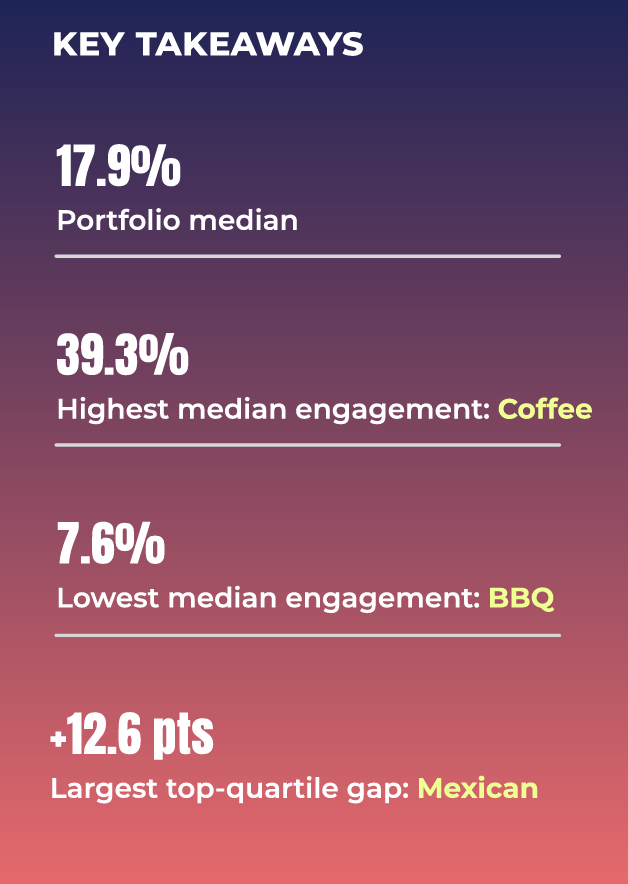
Incentivio’s 2026 The State of Restaurant Loyalty and Guest Engagement report identified coffee as the cuisine type that most effectively drove high-frequency engagement among loyalty members.
Cuisine categories with relatively low average order volumes were the top performers in driving high-frequency engagement. Perhaps unsurprisingly, because of the habitual nature of caffeine consumption, Coffee easily led the way, securing 39.3 percent of loyalty members for at least half a dozen checkouts over the span of a year, followed by Salads/Bowls (25.6 percent) and Smoothies/Bowls (24.9 percent).
Top performers monitored ordering patterns to identify and tailor promotional opportunities most likely to resonate with individual guests, consistently engaged customers between visits, and regularly refined campaigns based on performance and consumer feedback.
Supporting the idea that personalized promotions drive guest visits, Alchemy’s research found that 61 percent of consumers find AI-powered suggestions helpful, and 85 percent report being more likely to join programs that tailor rewards to their purchase history.
Revenue impact
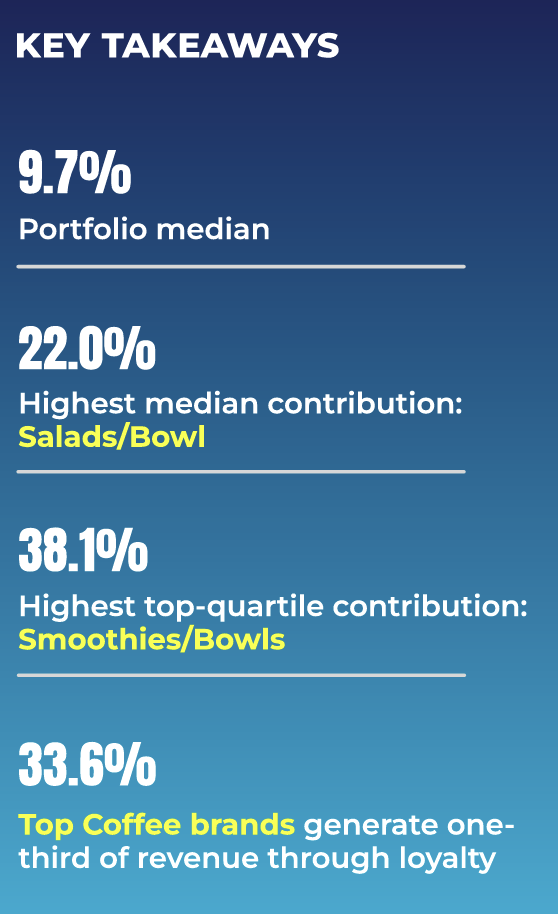
Incentivio’s 2026 The State of Restaurant Loyalty and Guest Engagement report found Salads/Bowls as the cuisine category with the highest median revenue contribution.
Ultimately, the effectiveness of a loyalty program often boils down to its ability to drive transactions and contribute to total revenue.
Incentivio measured the impact by gauging the percentage of overall sales driven through loyalty participation.
The top three cuisine types of revenue impact predictably reflected those that effectively secured high-frequency engagement. As a category, Salads/Bowls had the greatest success in generating loyalty-driven sales (22 percent of revenue), followed by Smoothies/Bowls (21.3 percent) and Coffee (18.5 percent). The opposite end of the spectrum consisted of Italian (3.4 percent), Asian (4 percent) and Brewery (4.3 percent) operators.
High-revenue-generating loyalty programs often created reasons for consumers to choose the brand, increased participation among valuable customers, successfully converted occasional visitors into repeat guests and consistently optimized offerings to improve performance.
Alchemer’s research echoed the value of staying top of mind for consumers, whether through consistent communication or other methods of standing out among the sea of loyalty platforms. The 2026 QSR study reported 44 percent of respondents claimed they don’t always use loyalty programs because they simply “don’t think about it.”
Retention
Retention is the benchmark that ties together the other four. While activation is a critical first ingredient in the loyalty pipeline, that rate is not as meaningful if the guests are not high-frequency customers. When they do return often, revenue follows.
The leading cuisine types for 12-month retention rates mirrored the high-frequency engagement benchmark. Coffee once again easily outperformed the field (24.7 percent), trailed by Salads/Bowls (13.8 percent and Smoothies/Bowls (13.7 percent). Meanwhile, categories with the lowest retention rates included BBQ (6.7 percent) Ramen/Pho (7.1 percent) and Cookie/Bakery (7.9 percent).
Brands that effectively retained members monitored early signals of declining engagement, maintained communication well beyond activation and promotions, tailored “retention-focused” offers based on a customer’s behavior and lifecycle stage, and prioritized outreach to customers at risk of churn.
Alchemer’s study identified reward points expiring too quickly as a top retention risk for QSR loyalty programs, with 35 percent of respondents stating their loyalty weakens when value feels unfair or unclear.
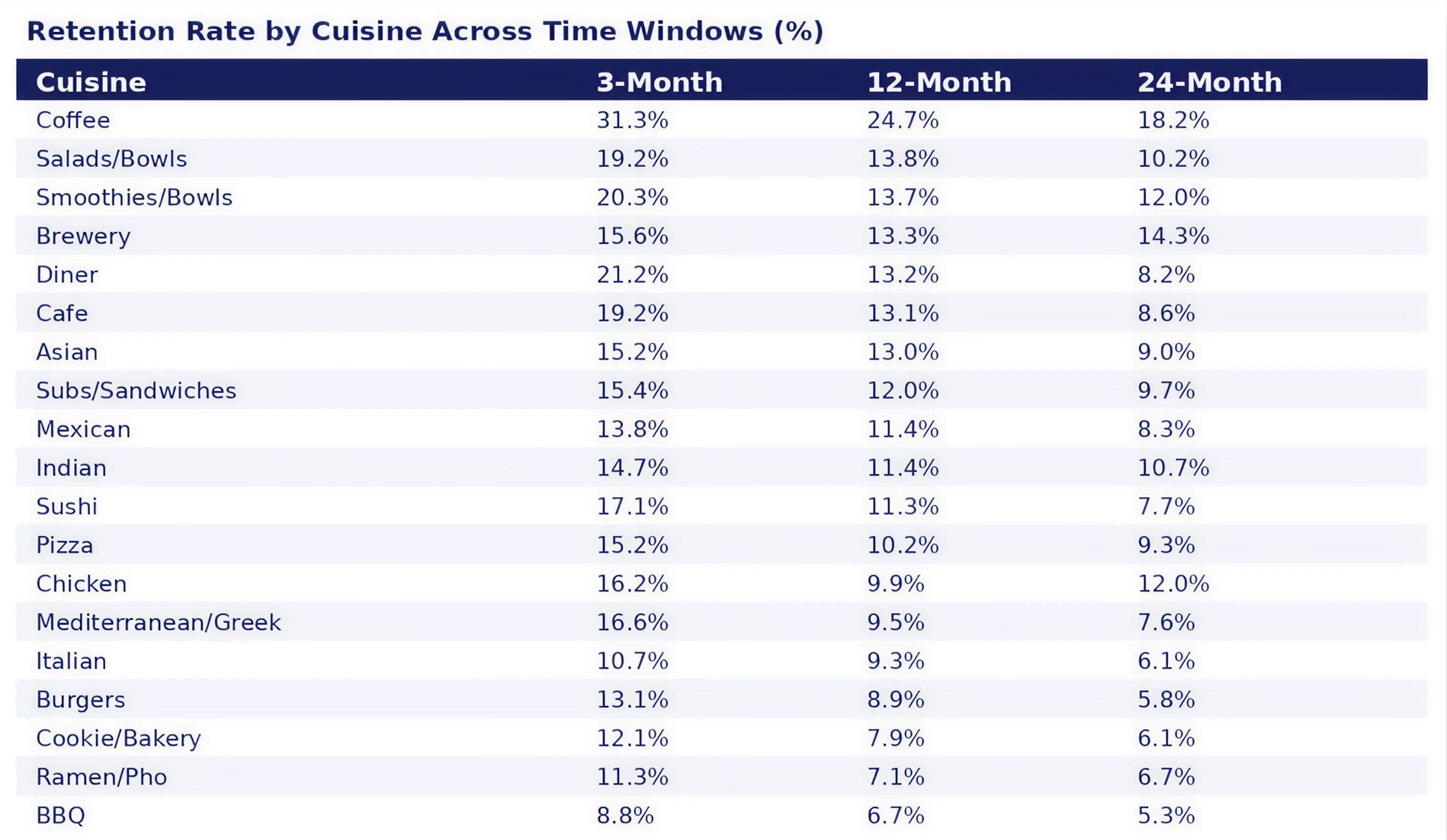
Incentivio’s 2026 The State of Restaurant Loyalty and Guest Engagement report showed Coffee as the most successful cuisine type for loyalty member retention rates.