While dinner and lunch handily earn the top two spots for American consumers’ most common restaurant purchase occasions, snacking dayparts offers significant opportunity, especially among Gen Z and single-parent consumers, outside traditionally busy mealtimes.
That’s according to recent data from Revenue Management Solutions. Research shows about half of guests buy lunch or dinner from restaurants weekly, while all other dining moments fall well below those dayparts.
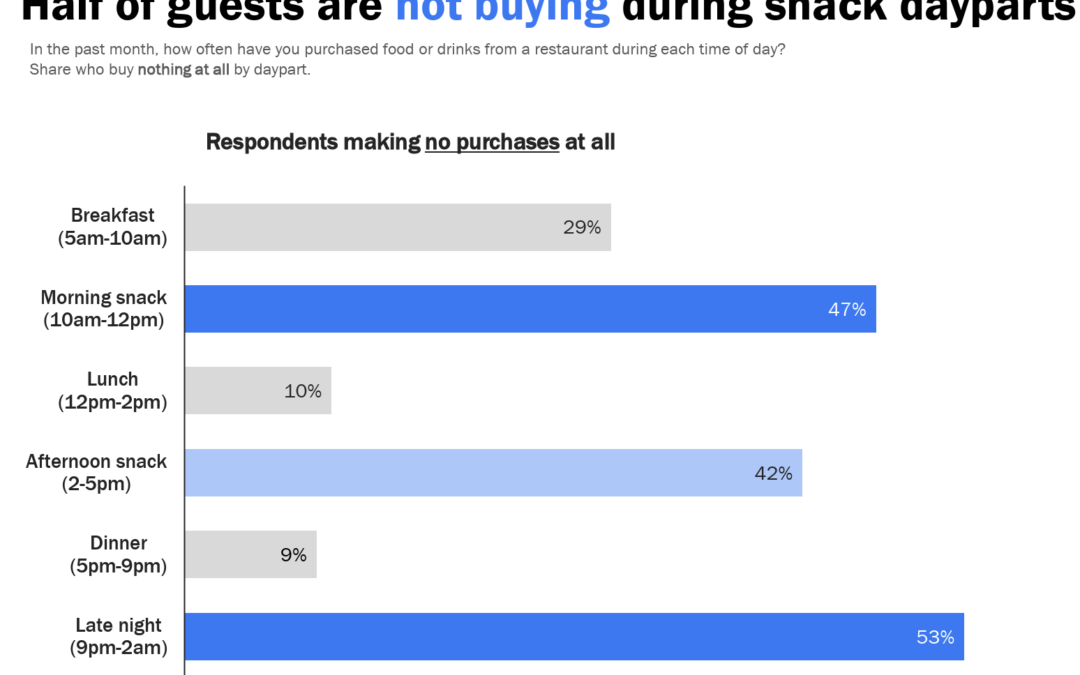
For the morning snack period between 10 a.m. and noon, 47 percent of respondents reported making no purchases at all in the previous month; that figure was 42 percent for afternoon snacks between 2 p.m. and 5 p.m. and 53 percent for late-night purchases between 9 p.m. and 2 a.m.
“That’s less a share-shifting problem than an acquisition problem, and it applies beyond snacking too. The next growth curve for a lot of brands isn’t lunch or dinner; it’s the hours in between,” Richard Delvallée, senior vice president of consulting services at RMS, said in an emailed statement to Food On Demand. “The offering needs to fit the occasion and give consumers a reason to choose the restaurant.”
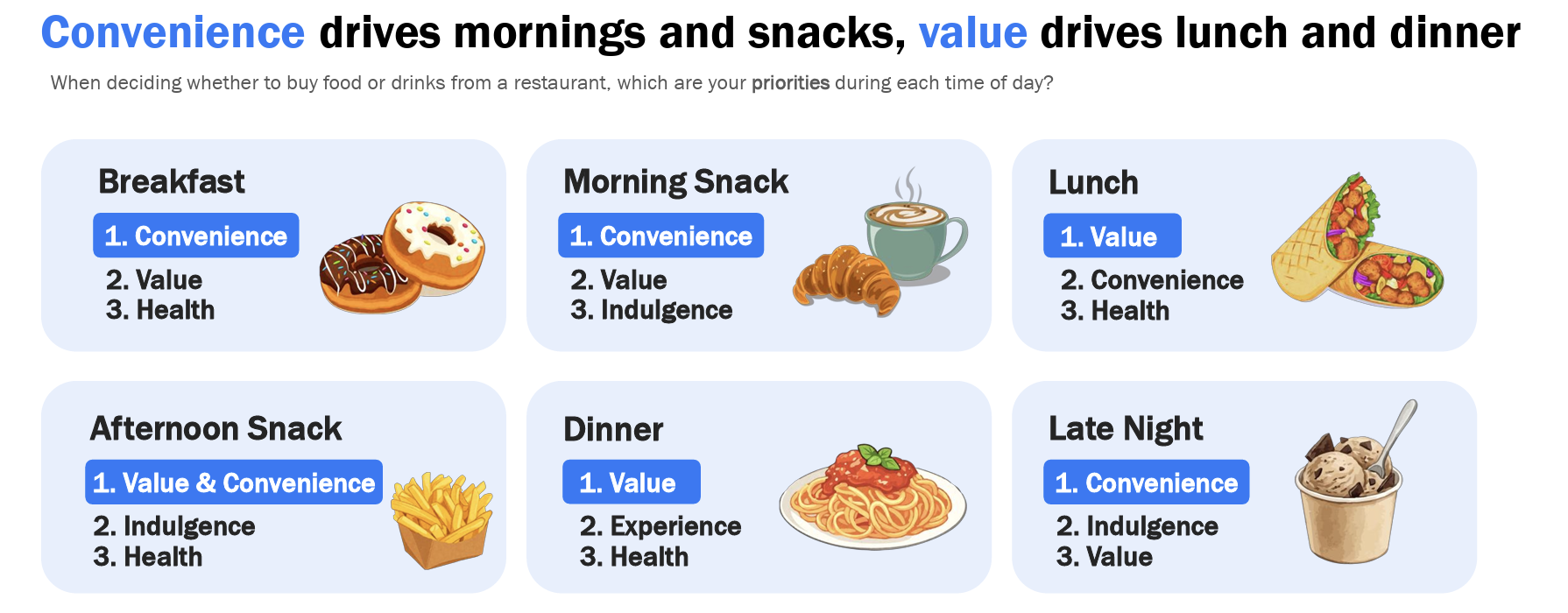
Convenience is the No. 1 driver for morning snacking, and it’s tied with value as the top driver for afternoon snacking, according to RMS’s Snacking Scenarios: Revenue Beyond Lunch & Dinner report.
Off-premises channels represent an important avenue for operators looking to draw in more orders during those light-traffic dayparts. Convenience must be built into the ordering experience to effectively draw in snack-seeking customers, Delvallée said, as it emerged as one of the top drivers in the mornings and afternoons.
“Delivery can help restaurants capture snack occasions because convenience is the No. 1 driver for morning snacking, and it’s tied with value as the top driver for afternoon snacking,” Delvallée said. “Third-party platforms can put restaurants in front of consumers who may not otherwise consider them for a snack, while first-party ordering gives brands more control over loyalty and personalized offers.”
Price is the most common reason (40 percent) respondents cited for skipping snack purchases—highest among households earning $50,000 or less (45 percent) and lowest among households earning at least $100,000 annually (27 percent).
“Mobile ordering and pickup may be especially well suited to these occasions,” Delvallée said. “They give consumers the speed and convenience they want without adding a delivery fee to a lower-priced purchase.”
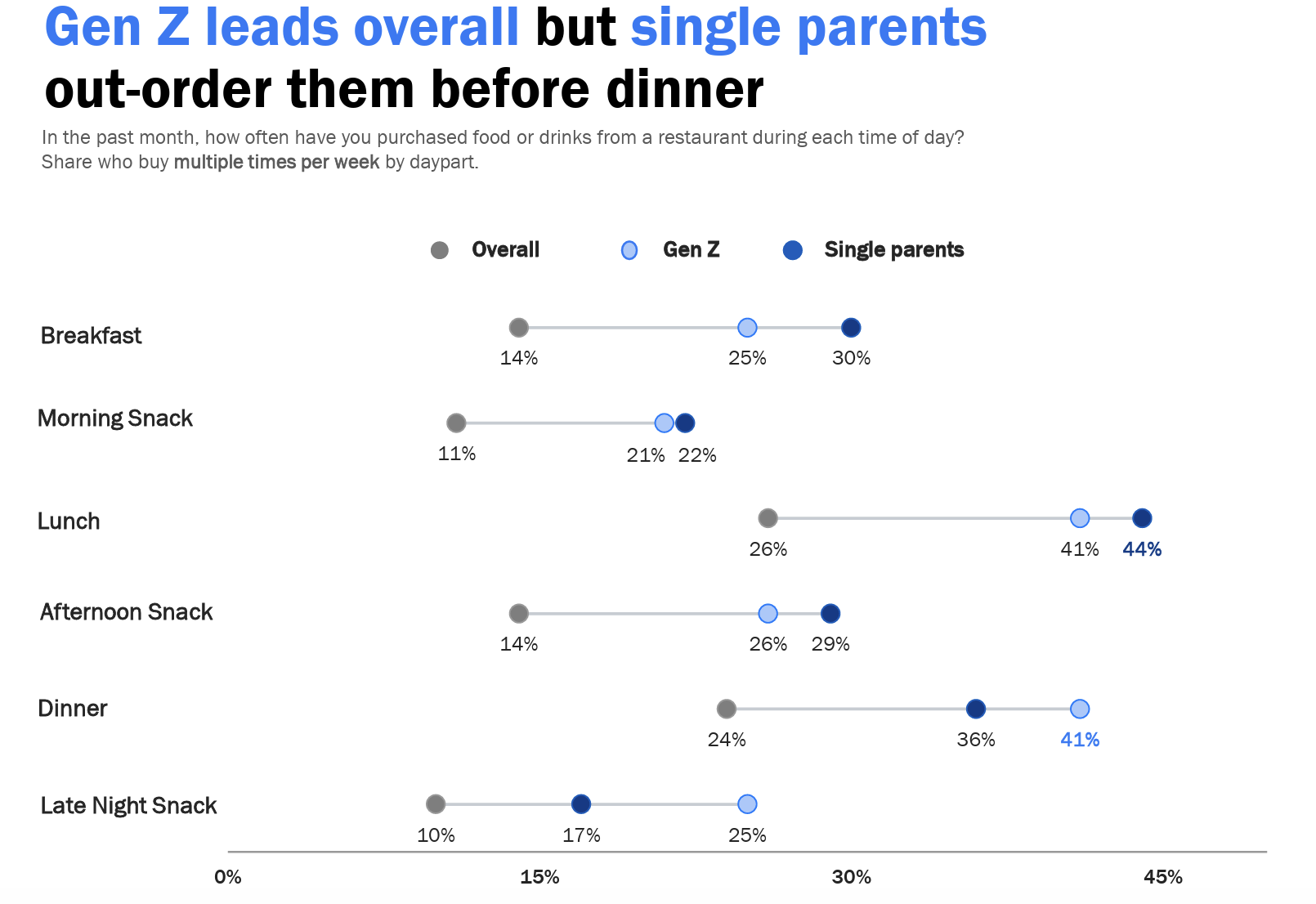
Gen Z and single parent consumers proved more likely than average to order from restaurants during all six dayparts, according to RMS’s Snacking Scenarios: Revenue Beyond Lunch & Dinner report.
RMS found that Gen Z and single parents out-order the average consumer across all six dayparts. Separately, PYMNTS reporting found that younger diners are the most likely demographic to engage with restaurant brands through digital channels.
To combat pricing-related purchase barriers for snacking dayparts, RMS suggested a tiered value platform, such as a snack bundle priced between $5 and $10 for budget-sensitive guests. Additionally, drink pairings to accompany salty snacks and other shareable items position menus to effectively upsell guests at the point of purchase without discounts.
“McDonald’s and Dunkin’ are two brands that stand out in the RMS consumer survey responses. Respondents associated McDonald’s with five of the six dayparts, including 44 percent of morning-snack occasions and 35 percent of afternoon-snack occasions,” Delvallée said. “Dunkin’ has an especially strong position in the Northeast, where consumers associate the brand with 54 percent of breakfast occasions and 48 percent of morning-snack occasions.”
To capture snacking traffic, Delvallée recommends deploying tech tools that help operators anticipate consumer behavior and adjust menus in real time.
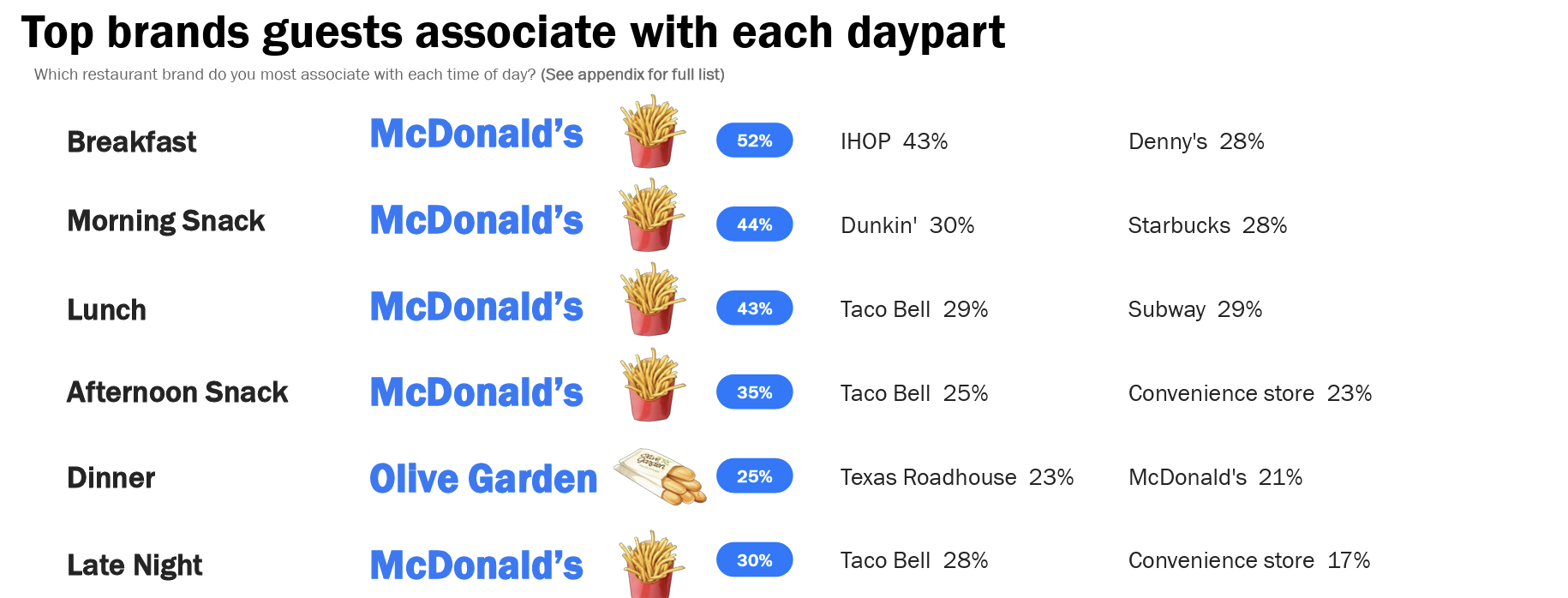
McDonald’s is the brand most associated with five of six dayparts, according to RMS’s Snacking Scenarios: Revenue Beyond Lunch & Dinner report.
RMS found 30 percent of consumers say faster restaurant service would increase their snack purchases, 27 percent say a loyalty reward would prompt them to buy more, and 23 percent point to a drive-thru or mobile-ordering option.
“On the analytics side, brands can use menu design and optimization tools to understand which items are resonating with customers and how they should be presented,” Delvallée said. “Pricing tools can use POS, loyalty, competitor and market data to help brands evaluate pricing and model different scenarios before making changes.”