From multi-billion-dollar deals to artificial intelligence advancements that reshaped the way restaurants around the globe operate, 2025 proved a transformative year for the foodservice and technology industries.
The past 12 months featured massive growth for the world’s largest autonomous delivery fleets and rapid adoption of tech innovations that many would have considered science-fiction-level predictions just a few years ago.
While the world of restaurant technology changed dramatically in too many ways to fit into one article, here is a breakdown of 2025’s most industry-altering developments.
Acquisitions, demergers and deals
Huge deals from industry leaders filled headlines and changed the landscape at the intersection of food and technology in 2025.
Wonder plowed ahead with its aggressive expansion efforts last year, finishing its $650 million acquisition of food delivery platform Grubhub from Just Eat Takeaway in January. In May, the New York City-based company announced a $600 million fundraising round, reportedly boosting its total valuation to $7 billion.
Last February, Dutch investment firm Prosus offered €4.1 billion for Just Eat Takeaway after agreeing to shrink its previously 28 percent stake in Germany’s Delivery Hero. In August, according to Reuters, Prosus received European Union antitrust approval for the acquisition, expanding the firm’s global food delivery portfolio.
Last July, American private equity firm Thoma Bravo announced plans to acquire Software Company Olo, which works with more than 750 restaurant brands and serves nearly 90,000 locations. The acquisition concluded in September. Since then, the digital ordering market leader continued operating as a private company.
Food delivery giant DoorDash announced in early October that it completed its $3.9 billion acquisition of British competitor Deliveroo. The move expanded the market leader’s reach across Europe, Asia and the Middle East.
Advancements in restaurant automation
When it’s all said and done. 2025 may be remembered as the year automated robots and AI began taking over traditionally human-operated roles in restaurants.
 Many brands, like Texas-based pizzeria Via 313, brought on an AI agent to take orders from callers, freeing up time for other staff. Such technology began greeting customers and taking orders at drive-thrus for many large QSR brands. The AI service is still in its infancy, with room for improvement, as reported by Taco Bell executives after the brand deployed it across hundreds of restaurants.
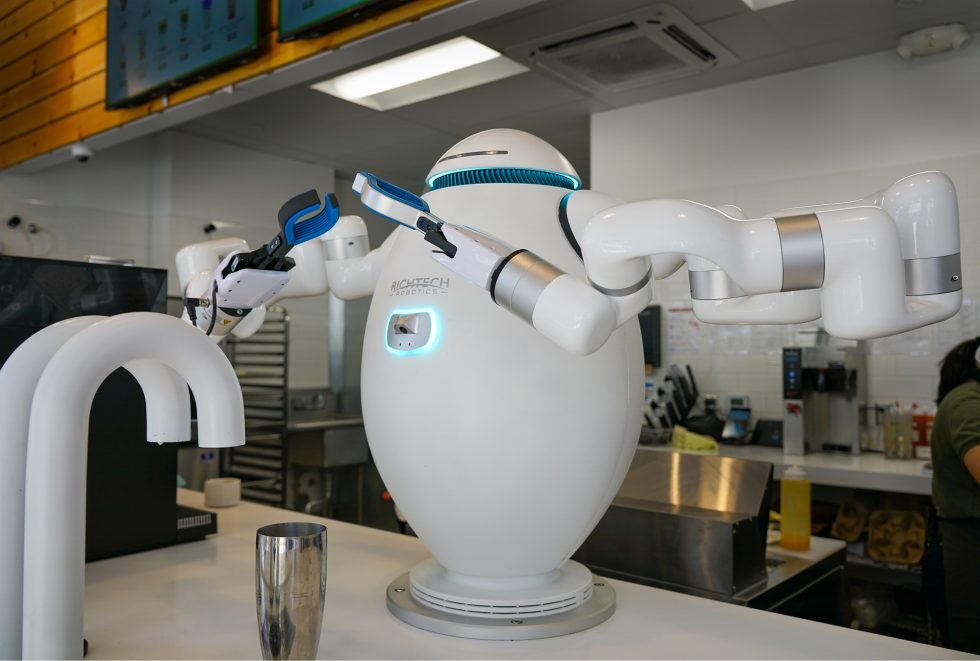
Last February, Richtech Robotics opened Clouffee & Tea in Las Vegas, a cafe offering boba tea, coffee and desserts. Inside, an AI-powered robot named ADAM took orders, prepared drinks and served customers. Richtech deployed hundreds of robot solutions across the country in restaurants, stores, healthcare facilities, and other businesses.
Robots that specialize in American dietary staples picked up shifts at the grill and fry station throughout last year, too. Among the QSR brands pioneering the adoption of automated kitchen staff was Freddy’s Frozen Custard & Steakburgers, which started bringing RoboFry systems into restaurants in September.
Delivery fleets appear and expand
Although autonomous delivery gained significant ground over the last several years, 2025 saw promising growth for robot couriers on their path to becoming commonplace. Partnerships between autonomous delivery brands like Coco Robotics and QSR brands helped drive expansion into dense urban areas.
In November, Uber Eats partnered with Starship Technologies, a San Francisco-based company with the world’s largest autonomous delivery fleet. The partnership positioned Starship to more than quadruple its fleet. The collaboration led to robots hitting the sidewalks in the U.K. before 2025 came to an end; expansion is aimed at European Markets in 2026 and the U.S. by 2027. 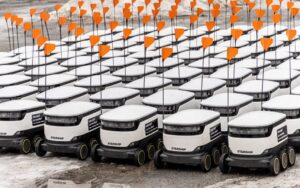
Many large platforms began dabbling in the robot-delivery space over the past year. In September, DoorDash unveiled Dot, a delivery robot capable of traveling up to 30 miles per hour with a carrying capacity of 30 pounds. Dot was developed in-house by DoorDash Labs and is designed for quick deliveries. The robot model started delivering in the Phoenix area.
Food delivery flourishes in emerging markets
Food delivery services demonstrated an ability to succeed in relatively untapped markets last year.
In Africa, Nigeria’s Chowdeck doubled daily deliveries to 40,000 following a $9 million funding round. The brand’s secrets to success included onboarding local “bukkas” serving traditional Nigerian food; paying riders 1.5–3x the minimum wage; and building custom mapping technology.
Similarly, Southeast Asia emerged as a promising area for food delivery services. Vietnam recorded a 27 percent increase in gross merchandise volume in 2024. Indonesia saw a competitive battle for market share, with GrabFood, GoTo’s Go Food and ShopeeFood holding the first, second and third place spots, respectively.
Drone delivery reaches new heights
New partnerships and proposed rules from the Federal Aviation Administration put wind in the sails of the autonomous drone delivery market throughout 2025, building critical momentum for what is expected to be even more transformative years ahead.
During the summer, the FAA released a proposed rule that would allow drones to fly beyond a pilot’s visual line of sight without requiring special waivers. The rule could become law as early as 2026, meaning manufacturers would simply need to follow industry standards to build and test drones instead of obtaining FAA certificates.
Food-carrying drones are filling the Dallas-area skies more frequently following a partnership between DoorDash and FlyTrex Drone Delivery, which the leading food delivery platform announced in late June. The service reported the ability to reach more than 30,000 households and upwards of 100,000 residents, and the collaboration marked Flytrex’s first integration with a third-party app.
Similarly, new business opportunities took flight throughout the past year California-based drone delivery company Zipline, which partners with brands like Buffalo Wild Wings and Wendy’s. In August, they partnered with Chipotle for the Mexican grill restaurant brand’s first foray into aerial delivery. 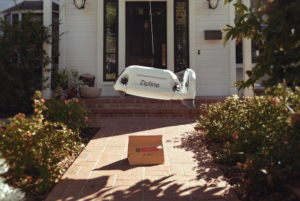
In November, Zipline CEO Keller Rinaudo Cliffton reported the company is adding new locations approximately every week in the Dallas area. They even paused advertising this summer yet kept growing 15 to 20 percent weekly, driven by TikTok virality, with some videos topping 10 million views.
Throughout the year, restaurant operators announced partnerships with autonomous drone delivery companies. Dave’s Hot Chicken, for example, launched a pilot program with Silicon Valley-based Matternet in Los Angeles.
With the FAA proposal positioned to open the drone delivery market, optimism spiked in 2025 for the future of skybound couriers. Nicole Schone, marketing and communications leader at Wing Drone Delivery,
“Our average delivery time in Dallas is three minutes and 47 seconds,” she said during a panel discussion. … “Our drones fly up to 65 miles per hour and our countdown is down to the second … We’d love to see drones in every major U.S. city in the next five years.”