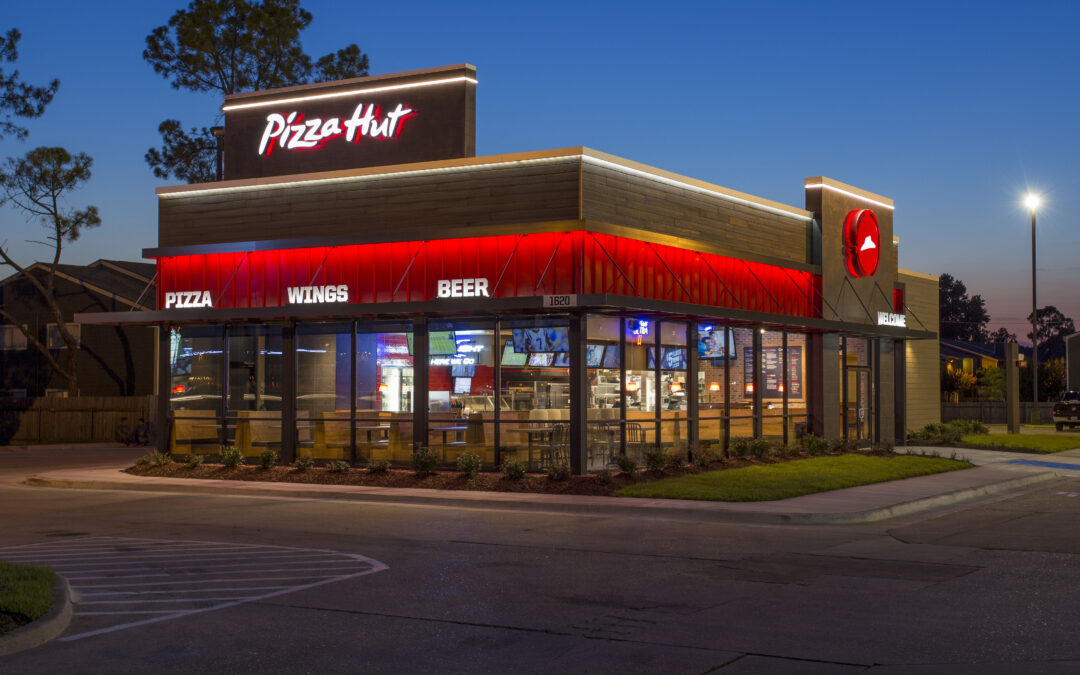
A top-performing Pizza Hut franchisee filed a $100-million lawsuit against the brand last month, alleging the brand’s mandated rollout of an artificial-intelligence-powered delivery system tanked off-premises sales and eroded customer relationships.
According to a May 6 petition filed in the Business Court of Texas, Chaac Pizza Northeast, a Texas-based franchisee operating 111 Pizza Hut restaurants, claimed the brand breached its franchise agreement and caused “predictable” destruction that “could have been avoided.”
Lawsuit details
Yum Brands owned Pizza Hut until the company announced a $2.7 billion sale of the franchisor last week. Yum Brands announced the acquisition of Dragontail Systems Limited in September 2021 for $93.5 million.
According to court filings, prior to the complete implementation of Dragontail, Chaac reported double-digit sales increases, outperforming “almost every” Pizza Hut franchisee from 2020 through early 2024. A significant drop in performance, below system averages, followed the mandated rollout of the delivery system.
Chaac’s units solely provided carry-out and delivery orders. Court filings stated the franchisee relied exclusively on DoorDash (the only brand-approved delivery vendor) for orders placed through the Pizza Hut website and application. Chaac’s 111 restaurants reportedly generated 15 percent of the brand’s total DoorDash deliveries from the website and application system-wide (approximately 6,500 locations).
In 2023 and 2024, Pizza Hut completed its rollout of Dragontail for its franchisees in New York, Maryland, Washington, D.C. and Pennsylvania (all areas where Chaac operated units), with the mandated technology integration affecting kitchen, POS and third-party aggregator dispatch, according to the plaintiff’s original petition.
According to court documents, despite Chaac’s objections, Pizza Hut required the franchisee to adopt and use Dragontail software without “reasonable accommodations” for impacted units’ third-party delivery models or the consultation promised by the franchisor.
The implementation of Dragontail across Pizza Hut units gave DoorDash visibility into pizza production status and workflow, letting drivers know when pizzas went into the oven and were ready for pickup. Chaac’s original petition stated that information resulted in Dashers waiting at the restaurant for multiple orders to be ready for delivery, sometimes up to 15 minutes, resulting in longer rack times (period between food being prepared and on route for delivery), slower overall delivery times, colder product (as a result of the delays) and reduced customer satisfaction.
Additionally, Chaac claimed that Dashers could use the software to see whether customers tipped and whether orders were paid in cash. Orders with little or no tip proved less likely to be delivered, and Dashers who saw that an order was to be paid in cash often declined the delivery altogether.
In court documents, Chaac alleged the Dragontail issues were worsened because Pizza Hut negotiated a master contract with DoorDash instead of individual contracts with franchisees, and, according to the May 6 petition, the brand failed to hold the third-party delivery platform accountable for disruptions.
Following the Dragontail rollout, Chaac’s rack time increased from under five minutes to as much as 20 minutes, and delivery time jumped from 30 minutes to more than 45 (well beyond Pizza Hut’s Minimum Speed Standards). According to court filings, only about half of orders post-Dragontail were delivered within 30 minutes.
Pizza Hut broadly denied the claims and allegations of the lawsuit, according to court documents filed June 8.
Lawsuit Implications
The case touches on the long-standing tension concerning franchisee autonomy and franchisors’ power to impose system-wide changes, in which they maintain fairly broad authority. Previous lawsuits reflecting that friction include Burger King franchisees suing the brand over mandated $1 double cheeseburgers in 2009, as well as other cases over required restaurant renovations.
Ryan Palmer, a partner specializing in franchise and business law at Minneapolis-based Lathrop GPM, said the Chaac-Pizza Hut case is yet another example of that decades-long tension between franchisors and franchisees regarding system changes and implementation.
“This tension with system-wide changes isn’t new. I think we’re seeing a new issue here, but it’s the same tension that has existed forever in franchising … if you look through history, you’ll find lots of examples,” Palmer said. “What stands out is that this is the same idea with new technology as the kind of issue du jour.”
Because franchisors maintain general authority to impose system-wide changes, Palmer said, any precedent to come out of the recent Pizza Hut lawsuit will likely clarify the implementation process: training transition timelines, operator accommodations, etc. — not whether the franchisor can impose technological standards on the system.
“Disputes like this usually reflect implementation, timing or gaps in communications, not really flawed strategic judgments, and I think that seems to be what’s playing out here,” Palmer said. “You’ve got the system processing a disagreement about the implementation of something new. This isn’t like a structural breakdown of franchising or Pizza Hut. In some ways, it’s showing that the whole legal framework works, because we’ve got contracts that anticipate change and they’re robust enough to handle a dispute like that, and now we’ve got a court system that will work out the dispute.”