McAlister’s Deli is expanding the online catering platform it began back in April. By the end of 2018, the Atlanta-based fast-casual sandwich and soup concept will fully integrate its catering program into all of its 400+ locations. With convenience a top priority, McAlister’s added on-the-go ordering through the company app and curbside pickup, in-restaurant pick-up stations and additional pick-up windows to handle the added volume. So far, those additions are driving increased app sales, with 21 of 40 restaurants adding the feature now appearing in the top 25 percent of […]
School District Bans Food Deliveries; European Online Ordering In what seems to be the first ban of its kind, a Florida school district will likely ban food deliveries to students. According to Spectrum News, a local Florida TV news station, the district would add a provision that would ban all food deliveries. One principal in the district said it’s a safety issue. “The delivery people would just drive up, park right in front of the front door and you would see either the bag of food or the pizza,” Mitchell […]

I’m a city fanatic, but live in a first-ring suburb. My humble ’burb for the last two years is technically classified as an urban area, but just outside the grid-style neighborhoods of Minneapolis. Our delivery options have been lackluster, and has been the hardest adjustment moving 10 minutes away from our long-term, big-city neighborhood—but things are looking up.
During a very rosy earnings call, Grubhub announced it would acquire LevelUp for $390 million. The loyalty, marketing and mobile payment company provides Grubhub with a lot of loyalty, CRM and marketing benefits. But at the core of the acquisition was LevelUp’s point of sale integration. “LevelUp is not a demand generator, but they have exceptional guest-facing technology,” said Grubhub CFO Adam DeWitt during the earnings call. “We are very excited to leverage the seamless point-of-sale integration LevelUp has built.” That’s a big shift away from other point of sale […]
Following the release of Domino’s Q2 financial results, an analyst at GlobalData said even amid 98 consecutive quarters of same-store sales growth, Domino’s Pizza is at risk from the continued growth of third-party delivery services like Grubhub and Just Eat.
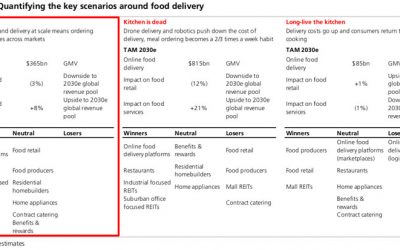
Wealth management and equity research firm UBS put out a thorough look at the food delivery world and its possible futures. The report, dubbed “Is The Kitchen Dead?” digs into the answers from more than 13,000 consumer surveys and detailed data analysis from apps and industry experts. Researchers estimate that global online food ordering will grow to $365 billion by 2030, growing 20 percent each year from the $35 billion market seen today. “Powering this are lower meal production costs, increased logistics scale and strong demographic trends,” wrote the researchers […]

Sam Timmreck used to pedal around 75 miles per week, delivering up to 2,500 pounds of coffee to Peace Coffee’s commercial customers who reside in a 10-mile radius of the roastery in south Minneapolis.
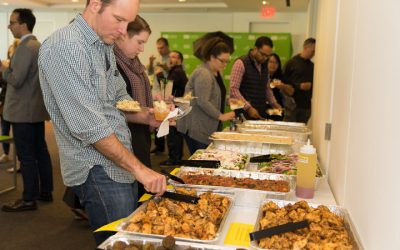
Several years into this dinner-on-demand revolution, catering has emerged as an adjacent option to give restaurants another avenue for adding incremental sales and revenue.
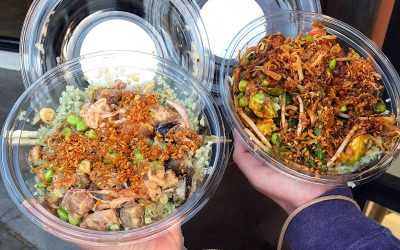
Seth Cohen feels as though his poké restaurant, Sweetfin, is “kinda like the guinea pig” in the world of fast-casual restaurants working with third-party delivery services. It’s a role that’s brought some headaches—Sweetfin’s small footprint means waiting delivery drivers create “a bit of a cluster”— but also insight into how operators can make delivery work to their advantage.
It takes a village to grow sales in a catering business, said Gracie Prasanson, director of sales at Jason’s Deli. “You need everyone in the store comfortable with sales.” But you also need to explain to everyone from kitchen staff to counter workers why catering is an important part of a fast-casual business.