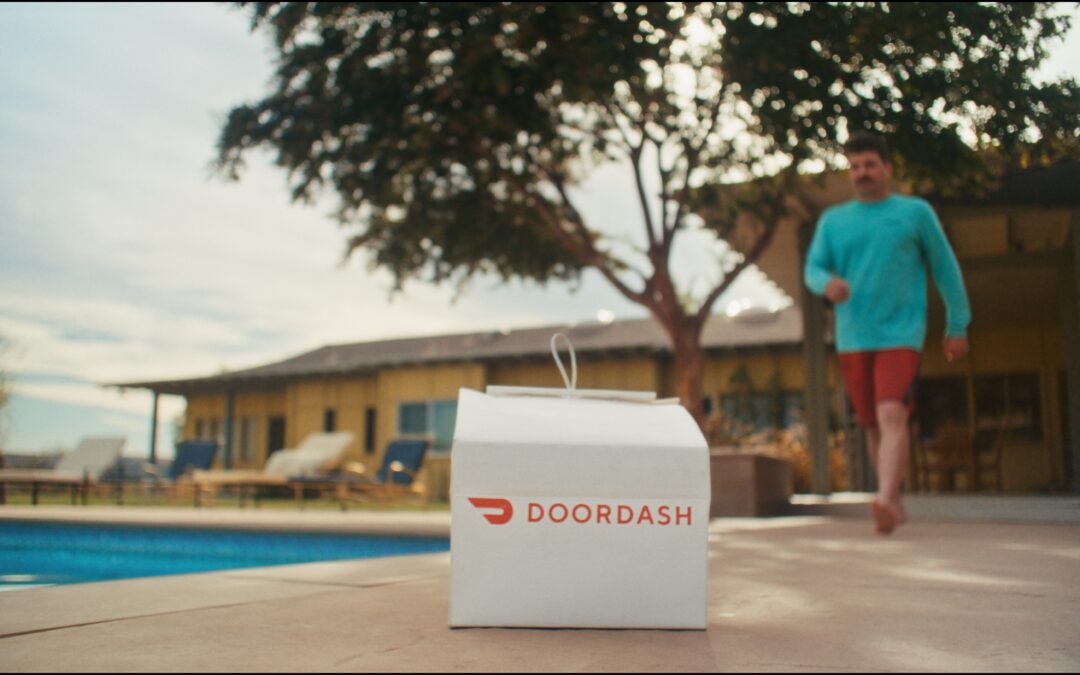
While DoorDash’s courier pool reached more 8 million gig economy workers who completed at least one delivery last year in the U.S., the third-party platform’s fleet is also expanding on the autonomous front, along busy sidewalks and into the airspace.
Positioning to meet anticipated need for autonomous delivery proved a recurring talking point for DoorDash executives during the company’s annual Dash Forward event September 29 in downtown San Francisco.
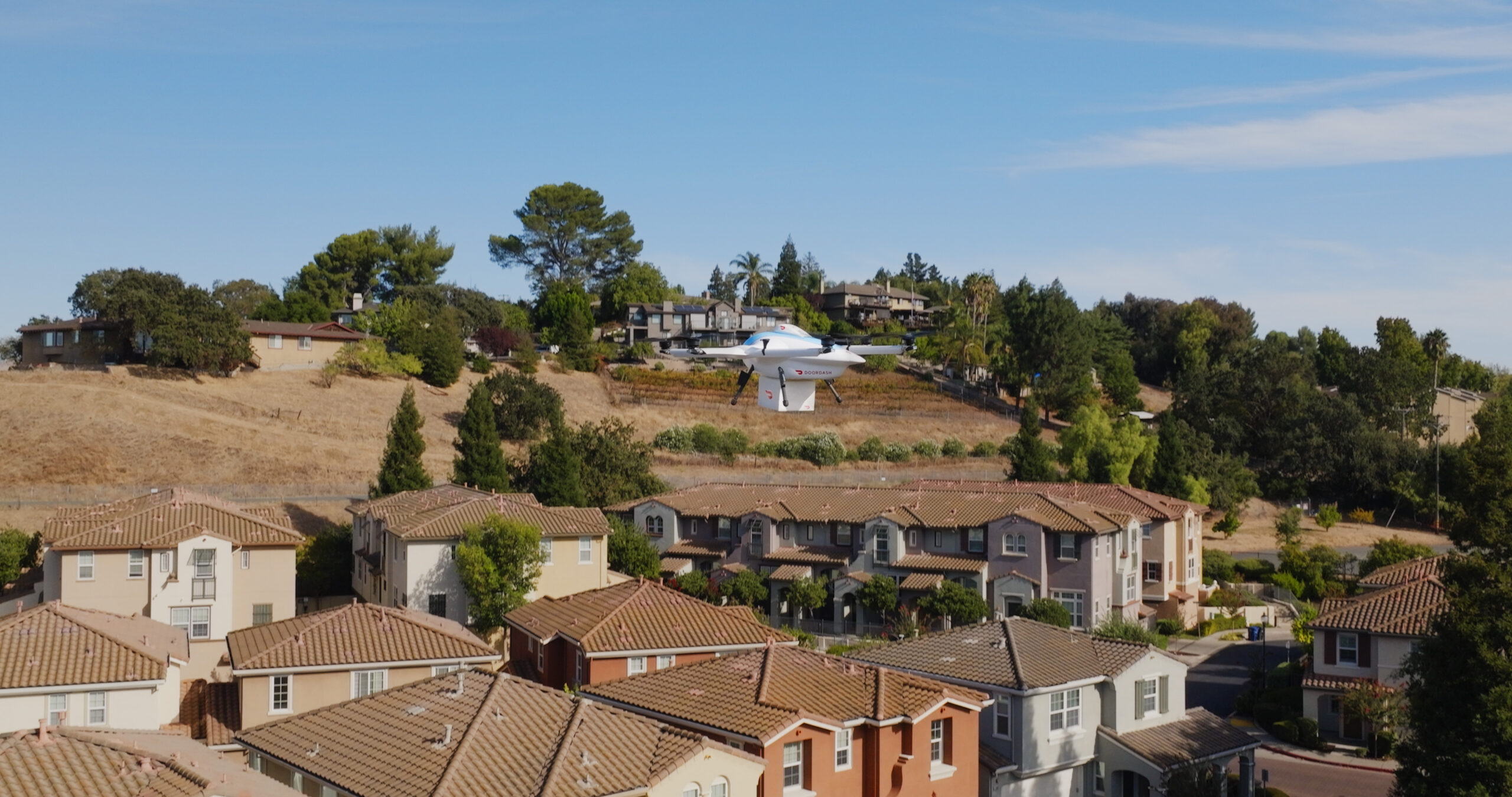
DoorDash announced an upcoming DoorDash Air pilot program during company’s annual Dash Forward event Sept. 29 in downtown San Francisco.
Almost precisely two months after receiving clearance from the Federal Aviation Administration to operate its fleet of delivery drones commercially, DoorDash leaders used the Dash Forward occasion to unveil the aircraft model designed specifically to transport orders through the skies for DoorDash Air, the 3PD giant’s in-house drone program.
“This is a DoorDash drone; everything about it took that into account,” Harrison Shih, head of DoorDash Air, told Food On Demand of the design process behind the new aircraft model. “The number of motors that we have on this is for redundancy and reliability, but that also changes the entire acoustic profile of it as well because we’re gonna put thousands of these things over cities. … This thing sounds like a passenger car driving by your house when it’s dropping off.”
During the event, DoorDash co-founder Stanley Tang said the drone delivery services will formally take flight with a pilot program in Northern California over “the coming months,” though, no additional timeline details were made available.
The early-stage drone initiative drew interest from national brands like Chipotle Mexican Grill and Popeyes Louisiana Kitchen, brands Tang described as “partners we completed hundreds of millions of deliveries with on the ground,” adding, “Now we’re building on that relationship as we take delivery into the air.”
DoorDash Air’s freshly unveiled aircraft was shaped by data from over 14 billion DoorDash deliveries, Tang said, which informed variables such as carrying capacity and delivery range. About four-fifths of standard restaurant delivery orders on the platform are light and small enough for the drone model to safely carry.
Arlie Sisson, Chipotle’s chief digital officer, said the fast-casual brand’s longstanding embrace of innovation and desire to provide multimodal delivery solutions to guests made partnering with DoorDash Air for the test program the “obvious answer.”
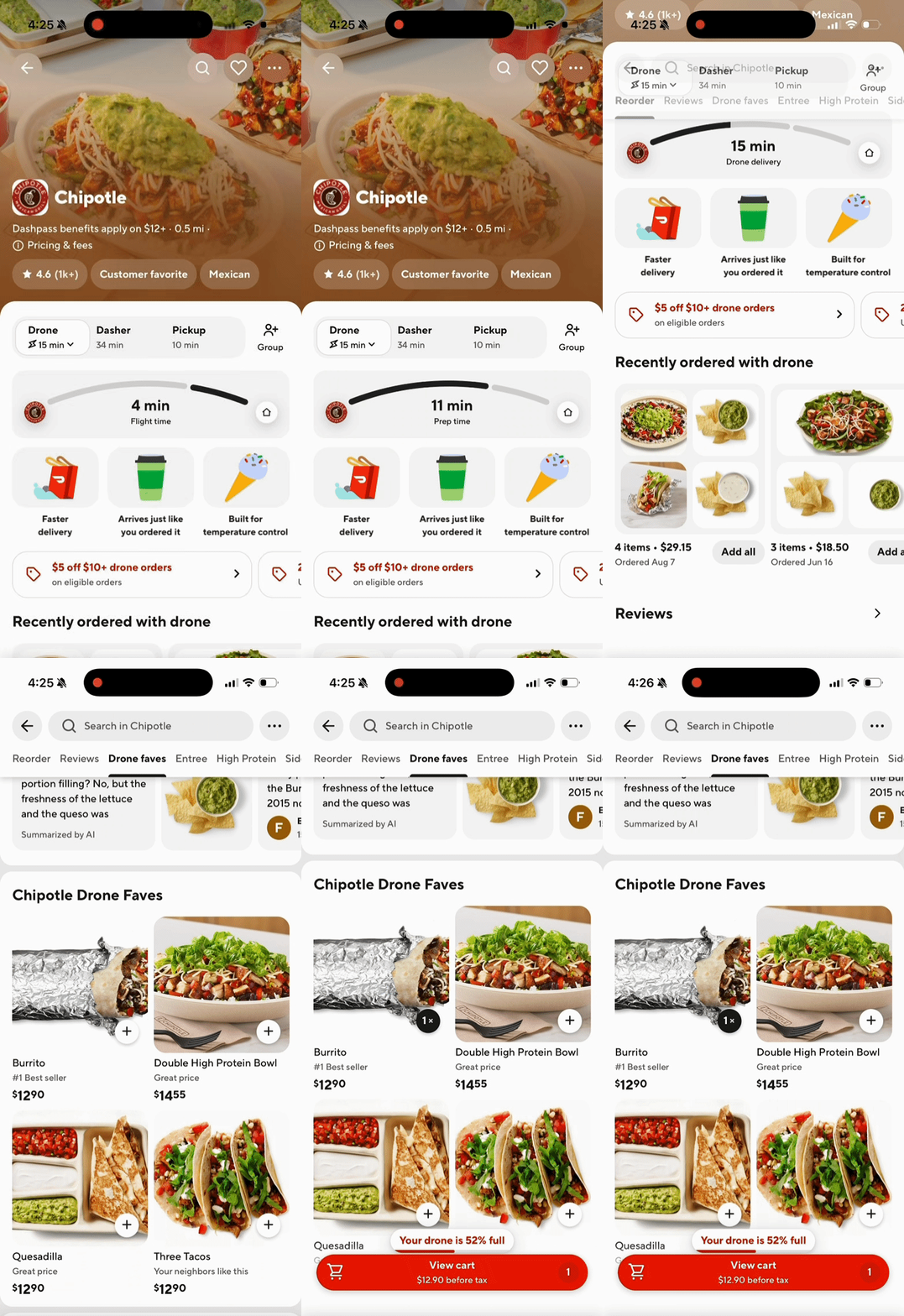
Chipotle Mexican Grill is among the early partners participating in DoorDash Air’s upcoming pilot program in Northern California.
For Popeyes, CDO James Huang said the decision to partner with DoorDash on drone delivery reflected optimism from previous efficiency-driving collaborations between the fried chicken chain and the delivery app.
“An example of that is we worked together on something called Smart Prep Time, which has been able to match driver availability with food readiness, and that has helped us reduce our driver wait time from 9 minutes to 3 minutes,” Huang said during the event. “That means that our guests are getting their food faster [and] quicker, and the team members are having a better handoff experience. That foundation is the foundation from which we can build a strong partnership.”
Achieving smooth handoffs once again emerged as a key focus for DoorDash in building the drone delivery system. Tang and Shih agreed operator compatibility guided the effort, and feedback consistently shaped the program.
“We learned that they don’t want a massive change to their operations; they just need it to work,” Tang said of operator feedback. “That’s why we started from the ground up; the handoff from the merchant to the drone needs to feel remarkably simple. It has to work whether they’re at the national chain or your local neighborhood coffee shop. Our drone handoff system is customizable and can be plugged seamlessly into the hundreds of thousands of different storefronts on our network.”
In addition to the drone delivery expansion, DoorDash leaders announced the growing use cases for ground-based autonomous delivery services with Dot, the artificial-intelligence-powered robot unveiled at the 2025 Dash Forward. In the year since Dot’s introduction, the program scaled to execute deliveries for more than 2,000 locations across Greater Phoenix, with partners ranging from regional brands like Broken Yolk Cafe to national chains such as Little Caesars.
During the Dash Forward keynote address, DoorDash CEO Tony Xu praised the drone and robot delivery teams for accomplishing significant progress since internal teams started tackling those issues. Still, he said it’s the autonomous delivery platform supporting Dot, DoorDash Air and autonomous vehicle partners that is the true “brains behind the scenes.”
The platform determines efficient and reliable options to reach a consumer, considering delivery distance, order weight and order contents—all while coordinating kitchen prep time, delivery timing and routing in real time.
“Our autonomous delivery platform uses the existing integrations that our over a million merchants already have,” Xu said. “That means using the exact same setup that merchants have with us; our partners will be able to get access to the best available AV technology, whether they’re built by us or our partner AV companies.”
While the keynote address and follow-up interviews did not reveal many details on the equipment and processes intended to simplify order handoffs from restaurant staff to the drones, Shih said DoorDash Air will employ several varieties dependent on the operator’s needs.
“Instead of a one-size-fits-all, we’re gonna have a very efficient handoff system, and Popeyes and Chipotle are gonna be very different from your chic coffee shop at the corner of your neighborhood,” Shih said, “but we want to service both of them.”